Before our hiking trip started, my Aunt and I spent the day exploring El Calafate (pronounced cal-a-fa-tay).
El Calafate is a town nestled on the southern part of Lago Argentino, the third largest lake in South America and largest in Patagonia. Tourism sprouted in the 1930s when mountain climbers from Europe began traveling to Patagonia. Before tourism, sheep farming was the main source of income. Before sheep farming, people tried to colonize Calafate but to no avail. Charles Darwin went to Calafate in 1834 on his famous voyage of the Beagle. While sheep farming does still exist in El Calafate, if you take one trip there you’ll see that tourism has taken over.
The population is roughly 15,000 in the summer (December to March-ish) and 6,000 in the winter.
Tip: When talking about El Calafate, you can shorten it to just Calafate.
The name calafate is derived from a bush with yellow flowers and berries. The calafate berry is similar in size, shape and color to a blueberry. Just a tad bit smaller. There’s also a legend behind the berry.



Note the thorns. Because of the thorns the berry is harder to pick and therefore more expensive.
There are different versions of the legend, but this one is more or less the most common one. Years and years ago when the Tehuelche tribe trekked north for winter, an older woman, Koonex, was too fragile to make the trip. She stayed in her tent and was left alone to die. She asked the birds to stay with her but there was nothing for them to eat in the winter so Koonex turned herself into a calafate bush – thick with berries for their food and with sharp thorns to protect them from animals. In Spring, when the tribe returned, they were greeted by beautiful bushes with golden flowers. The flowers eventually turned into berries. The Tehuelche loved the berries so much that each year they returned to where the berries grew. Now people say that if you eat calafate berries you will return to Patagonia.

There were lots of cute homes in El Calafate.


Avenida del Libertador: the main street in El Calafate. Filled with eateries, souviner shops and boutiques.
Even though the downtown area (the Avenida Libertador) was easily accessible and filled with shops, Calafate felt too touristy to me. Most of the shops had the same exact souvenirs: mate gourds, leather belts, cowboy hats, wool blankets, calafate jam. Everything seemed like it was made for tourists. Things they thought we’d want to buy.
 Although I did get some knickknacks, I wanted to buy something that the locals bought. A real souviner to me is something that locals would also buy and use. If you’re looking for something like that then definitely check out the Paseo De Artesanos area on the main street next to the casino. Local artists open booths to sell their work. I bought a hair wrap and hand painted book mark here. My friend bought a mask made from a lenga tree. The only tricky thing is that there isn’t a set of hours they’re open. The booths are open whenever the artist feels like being there. Although they did seem to be open Friday and Saturday nights around 8.
Calafate is one of those towns you go to on your way to somewhere else. It’s a hub for people traveling to different parts of the Parque Nacional Los Glaciares, especially the Perito Moreno Glacier. You fly in to Calafate, spend a night in town and then figure out where you’ll go next.
A wonderful thing about El Calafate: 
Lavender bushes were everywhere.
Day 2 in Argentina but Day 1 for our Hiking Trip:
We met up with everyone on the Backroads trip.
Before I dive into our day and the details of El Chalten, I’ll explain Backroads.
Backroads is an active travel company that specializes in cycling, hiking, and multisport trips all over the world. They set up our hiking itinerary, lodging, transportation (minus the flight) and meals. We had two Backroads guides the whole trip and we had local guides throughout the trip.
Backroads goes above and beyond just planning a simple hiking trip. Along with hiking, the Backroads trip included an empanada cooking lesson, an Argentine wine tasting, a mate ceremony, a cordero assado and more. Backroads wants to make sure you really get to experience the full culture of a place. I can’t say enough good things about Backroads.
Our hiking itinerary was incredible. The hiking trip was eight days, and we hiked around 80 miles total. Every single day was more and more thrilling. Our guides were extremely knowledgeable about Patagonia; we had a history lesson multiple times a day. Not only were they knowledgeable but they were amazing individuals who were constantly making our group smile and feel comfortable. I’d definitely go on a Backroads trip again and recommend the company to anyone.
Check out their website here. View our itinerary here.
The whole trip was very special. There were about 18 of us plus our two guides. The trip was composed of mostly couples in their 30s to 60s. I enjoyed spending time with everyone on the trip and by the end, I felt like everyone adopted me as their niece.
On that first day we drove down the infamous, Route 40. With its romance and ruggedness this route is similar to America’s Route 66 or Route 60. It’s the sole road that goes from Northern Argentina to Southern Argentina. Che Guevara traveled Route 40 by motorcycle; Butch Cassidy and the Sundance Kid used it as an escape route.
 It was a beautiful, clear day and we were able to see Cerro Fitz Roy in the distance.
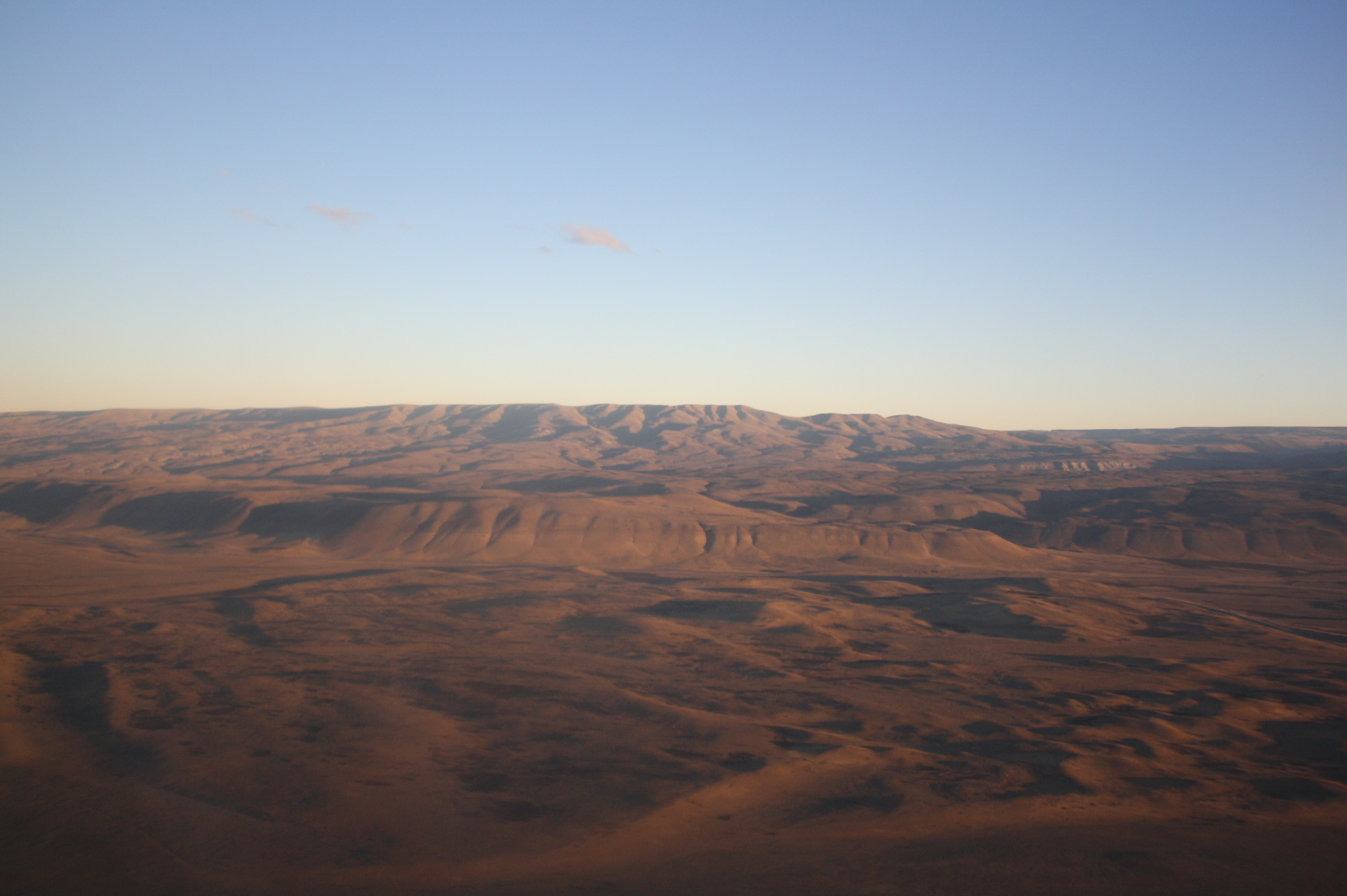
Out the window low, scrubby bushes and desert-like land stretched for miles. The mountains loomed in front of us. We were barely ten miles out of Calafate and it seemed like we were once again in the middle of nowhere.


Just as our guides were talking about guanacos and how we’d be lucky to see one, one sprinted out! They’re native to South America and similar to camels.
We ate a picnic lunch at La Estella, this cute lodge overlooking Lago Viedma and then we went for a quick 2 mile hike through the sand dunes to stretch our legs.

Then we continued to El Chalten, paradise on Earth. Read all about Chalten in the next entry.

 Smile and Be Free