The day I left Santa Teresa

It was one of those days where you don´t know whether to laugh or cry at the end of it. So I shook my head and did a little bit of both as I thanked the universe for everything that had been happening to me.

“Lord I´ve got to keep on moving,” Bob Marley sung over the speakers at Casa Zen as I was signing my farewell in the hostel´s guestbook. Even though I´d met some wonderful people and learned a lot, Bob Marley reaffirmed what I already knew, it was time to move on. I hugged my friends goodbye and sadness rushed through me. Goodbye. Why did my friend, Adrian, a yoga instructor at Casa Zen, say goodbye as he hugged me? Goodbye was too definite for me. After he left, I realized I should have said ´see you later´ or ´nos vemos.´

To get to La Fortuna from Santa Teresa, I had another long day of travel ahead of me. Buses and ferries and taxis, oh my. I took the 6 a.m. bus outside of Casa Zen to Cobano. There I transferred to the San Jose bus and told the driver I was getting off at San Ramon. Because they oversold the bus I had to stand the whole ride to Paquera, where the ferry was.

When I got off the bus at the pier, I was shocked to see what was in front of me. Adrian, my friend from Casa Zen, was standing there with a huge smile and open arms. “It´s a coincidence,” he said. He happened to be taking the same ferry.

We sat together and talked the whole ride. We spent the first part of the ride making animal noises and the second part of the ride talking about death.

“Are you afraid of death?” He asked me out of nowhere. He told me that all fears stem from a fear of death. To be aware of death is to be aware of life. To live for each moment with the constant knowledge that death can happen at any moment. From that we started talking about attachments and letting go. He said that we´re like monkeys reaching for vines. We grab on to one, use it to help us on our way and then we let go. So we must be attached for a certain amount of time; we cannot be completely unnattached. We are attached to our bodies, and through our bodies we are able to express our minds. Without our bodies, we would just be floating in consciousness. In this way we cannot become deattached.

As I spoke about letting go, Adrian stopped me. “You are referring to letting go in the past tense. We have to let go in the present too. This moment that we´re having already passed.”

He showed me that letting go means letting go of small moments and not just the big moments. Letting go means being able to release every single moment. We agreed how important it is to try to let go of something everyday and then we had to let go of our shared ferry ride. We each went separate ways, but we didn´t say goodbye. We learned to say see you later.

On the next bus ride my mind was still reeling over my conversation with Adrian. I boarded the same bus after the ferry and then got dropped off in San Ramon. From there I had to take a taxi to the next bus station. While I was on my final bus to La Fortuna, a boy with long dreadlocks sat next to me. We found out that where I was going was down the street from where he was going. At the bus station, my ride wasn´t there so without my knowledge Juan phoned Rancho Margot to arrange a ride for me. I was so grateful for his kindness.

After I ate my first meal of the day at a soda, which I was so pleased to find was 500 colones cheaper than anywhere Id been, I walked back to the bus station. A man with gray-tinted facial hair, green eyes, a cowboy hat with feathers attached and a long, thin braid approached me and asked, “Are you coming or going? Let me help you with your bags.”

He lead me around the corner to Red Lava, an information center. He told me he´s on morphine for bone cancer and mentioned the book that´s being written about his life. At Red Lava, a tico teenager with short dreadlocks and lots of friendship bracelets brought my bags upstairs and hid them in a dark corner as he reassured me in perfect English, “Don´t worry, these are incredibly safe.”

Jesus, the cowboy known to the locals as Tomas, asked me if I wanted anything to drink. When I told him I didn´t have money, he said, “Ah some women never change. Come on sweetheart, I´ll buy you something.”

On the way to the supermarket he mentioned the book again and said, “Maybe you´re too young to know about the revolution in Cuba and my father. Did you look at my name on the card? I glanced at the business card he handed me. Jesus Ernesto Guevara. “Che was my father.”

For the rest of the afternoon while I waited for my ride, Che´s so-called son took me around town. He pointed out the best foods and wines to buy and ones not to buy. He picked me flowers and named each one.  He waved at everyone on the street, knew them by name and introduced me to them. Throughout the afternoon he kept making vague references to friends of his like John Lennon and Bob Dylan and referencing dirty jobs he had to do to protect people, jobs like the ones in the movie The Dirty Dozen. He said if I ever needed him, show up in town, mention his name to someone and he´d be there within minutes. When I told him my name he smiled like he knew it all along. “I knew I´d seen those eyes before. My first wife´s name was April. She was both an angel and the devil´s wife.” He said he felt like he was back in the ’70s.

Back at Red Lava I swung in a chair hammock as I continued to wait for my ride. Tomas continued to bring me flowers and he even brought me a baby rabbit. When my ride showed up, Eric, the tico teenager who worked at Red Lava, took off his neckalace that I mentioned I liked and handed it to me. “A present for you. Welcome to La Fortuna.”

When I arrived at Rancho Margot, the first volunteer I met was William. Within five minutes we discovered that he lived on the same floor as my best friend did their first semester of college at University of Nevada Reno.

“There are no such things as coincidences,” he said. No such thing as a coincidence.

Traveling Cultivates Gratitude

After a full day of travel, running right into the ocean is the most refreshing thing.

This is exactly what I did as soon as I arrived in Santa Teresa.

The day before I left Guiones a fellow Solo Bueno-er gave me his japas malas beads, Buddhist prayer beads.japas malas A set normally consists of 108 beads, which symbolize impurities and flaws we as people must overcome. 108 also represents a certain formula that involves the senses, conditions of the heart, time and emotional states. As a repetition of mantras, the beads bring focus into your meditation and prayers. I felt like they also brought certain people into my path. It could have been a mixture of the attitude of gratitude I’ve been cultivating and the angels my Mom said she sent with me, but I never took off those beads while I was in Santa Teresa. You could say they were a bit of a good luck charm.

I’d been in Guiones 12 days, and I was ready to explore the next town. Everytime I asked someone how to get to Santa Teresa, I got a different response. So I walked to the bus stop to catch the 7 a.m. or 7:30 a.m. bus. Like all the unclear answers about the route to Santa Teresa, everyone told me different bus times. “Oh the bus comes at 7. Maybe 7:30, maybe 8,” they’d say. Ticos have a different concept of time.

Before the bus arrived, a man drove by, reversed and asked if I needed a ride to Nicoya, where the bus was going. It was Ariel, a Tico I’d met days before when I spent hours playing with his kids and getting to know his wife at the pool. I instantly accepted his generiosity and was incredibly grateful for the ride and his help at the bus station, where barely anyone spoke English. The route to Santa Teresa was more complicado than I thought. Even though Santa Teresa was on the same peninsula and just south, no buses went directly there.

I was in Nosara and I was headed to Santa Teresa, yet I would have to go to San Jose and then take the ferry back to the Peninsula.

I was in Nosara and I was headed to Santa Teresa, yet I would have to go to San Jose and then take the ferry back to the peninsula.

I´d have to take a 4- to 5-hour bus ride to San Jose, change buses, take a ferry back to the Nicoya Peninsula and take more buses. I was about to board the bus and brace the rides when I heard three backpackers say Santa Teresa. They were also confused about the bus system (there isn´t really any specific bus schedule.) and were trying to find an easier route. The bus was boarding so I got in line and prepared for my long day ahead. One of the backpackers approached me and asked if I wanted to share a shuttle with them instead. So I paid $20 to share a ride to Paquera, the next bus station, and gained three German friends.

The first few nights in Santa Teresa I camped at a hostel on the beach, falling asleep and waking up to the roar of the ocean. I ate casados at traditional Costa Rican sodas with my German friends and other Europeans we picked up along the way. I ended my nights at bonfires on the beach, cheersing pura vida with each Imperial we drank and learning bits and pieces of German.

I loved camping on the beach, but because I didn´t have access to a kitchen or the proper camping cooking gear, I felt like I was wasting money at restaurants for three meals a day. I also didn´t feel completely safe storing my belongings in my tent when I wasn’t there.

I spent the next day exploring and thinking about a hostel-hop. Dehydrated, sweaty and dusty with a growling in my belly I walked into the next restaurant I saw. I was alone at a table meant for a group. A group came in. I offered them my table. They insisted I had lunch with them. It was the owner of a nearby hostel and a few of her guests. I recognized one woman from the bus who I heard say she was going to Casa Zen. Casa Zen. They were all from Casa Zen. I liked them instantly.

After our meal the woman from the bus, Erin, gave me a tour of the hostel. There weren’t any openings at the hostel, but they said to check daily. The next day I took a yoga class at Casa Zen’s open air balcony studio. The girl who first suggested I join them for lunch invited me to share her room since she reserved a room with two beds. I moved in as soon as I could.

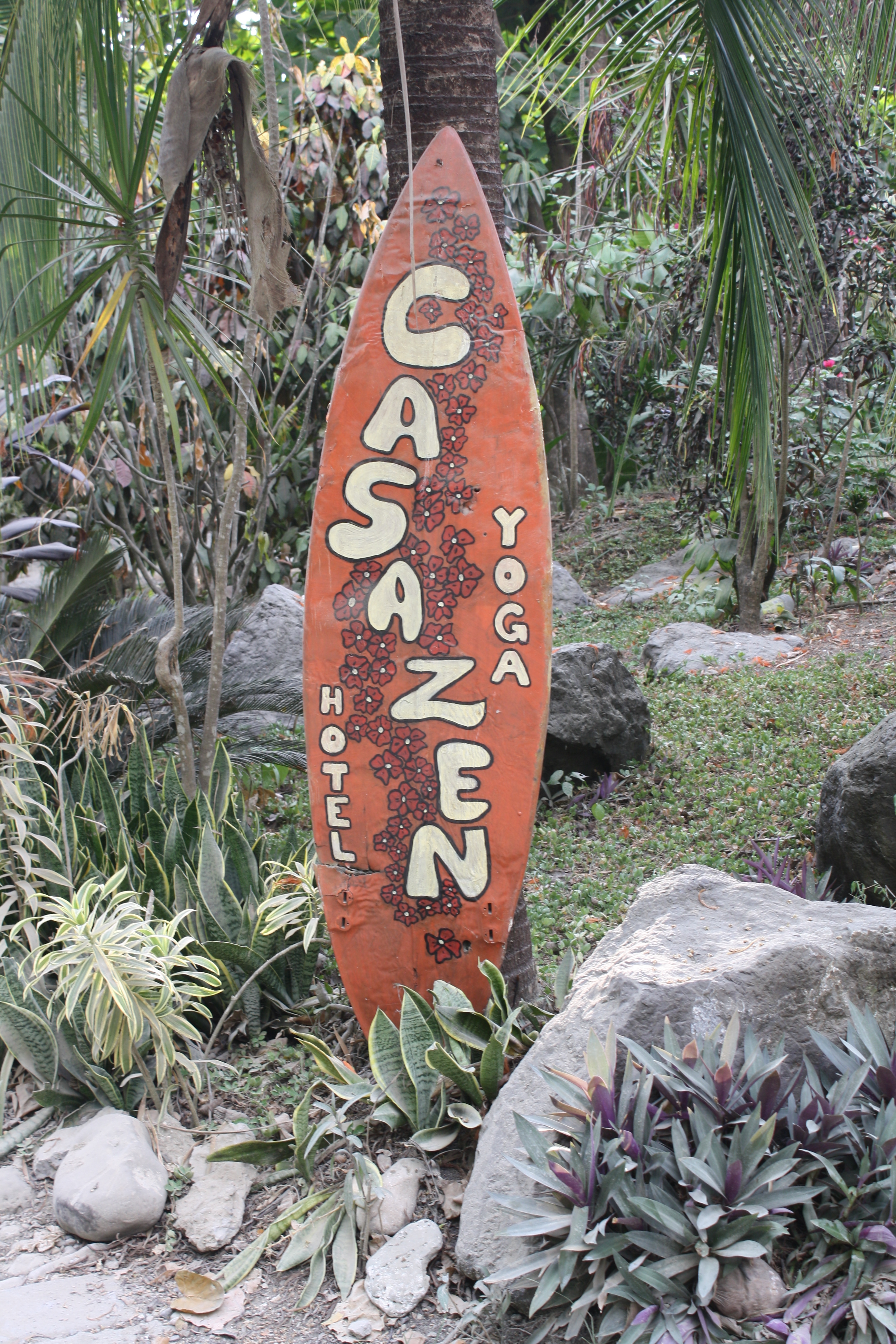
Casa Zen is away from the dusty road and close enough to the beach to catch a glimpse of the water sparkle between the trees. When I arrived I saw a surfboard out front with the words, Casa Zen Yoga Hotel.Casa Zen

A yoga hostel. While I was staying at a surf hostel in Guiones, I kept wondering why there wasn’t a yoga hostel around. I shared this thought with a few other people. Here I was standing in front of a place I had envisioned.

My first night at Casa Zen I was serenaded by a Casa Zen regular, a Canadian with shoulder length curly hair. As he sung and strummed his acoustic guitar, people walked by and sung, ‘Welcome to Casa Zen!’

Right from the start, my experience at Casa Zen was welcoming and filled with wonderful people who each helped me along my way.

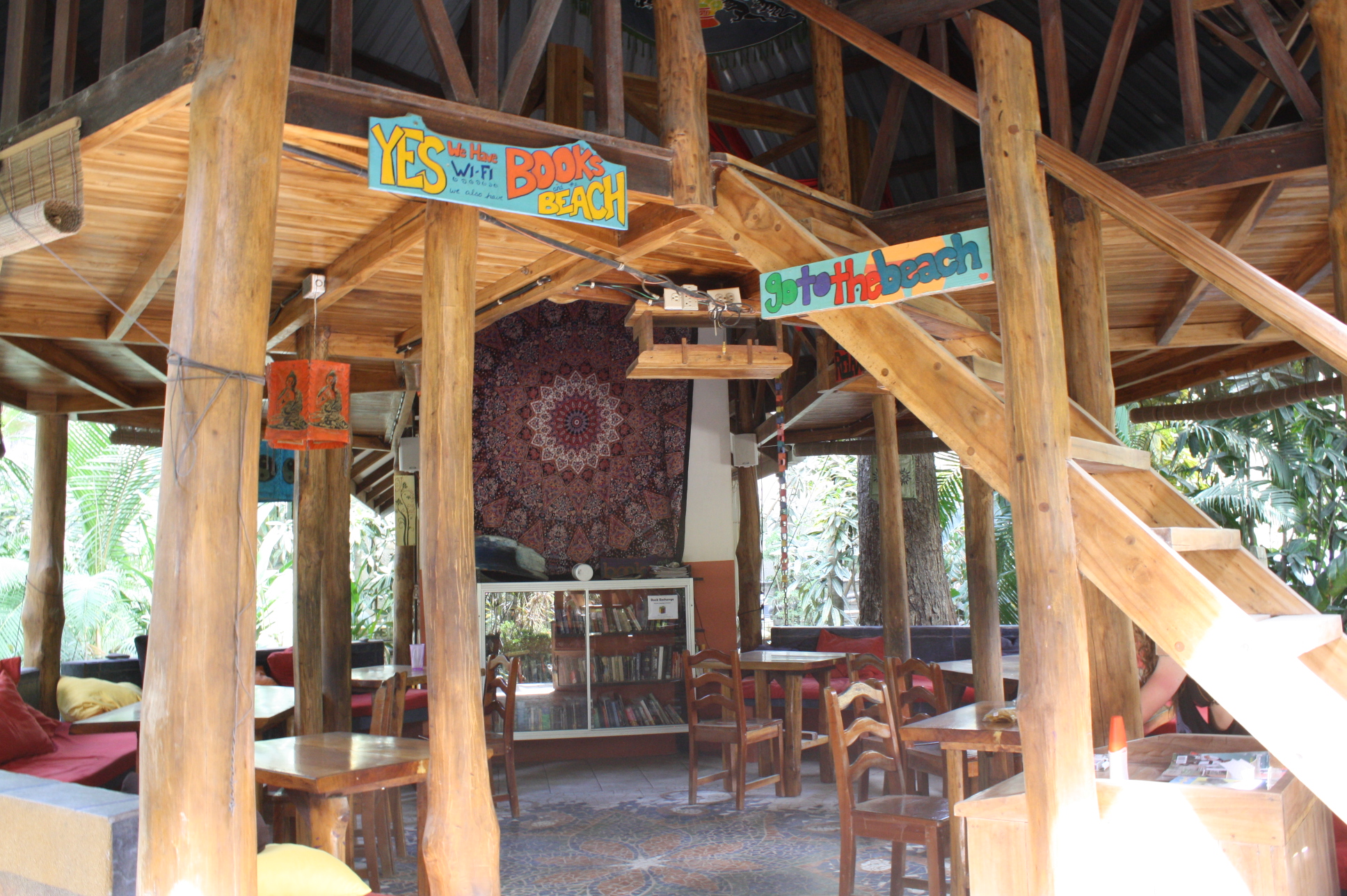
The Lounge Area

The Lounge Area

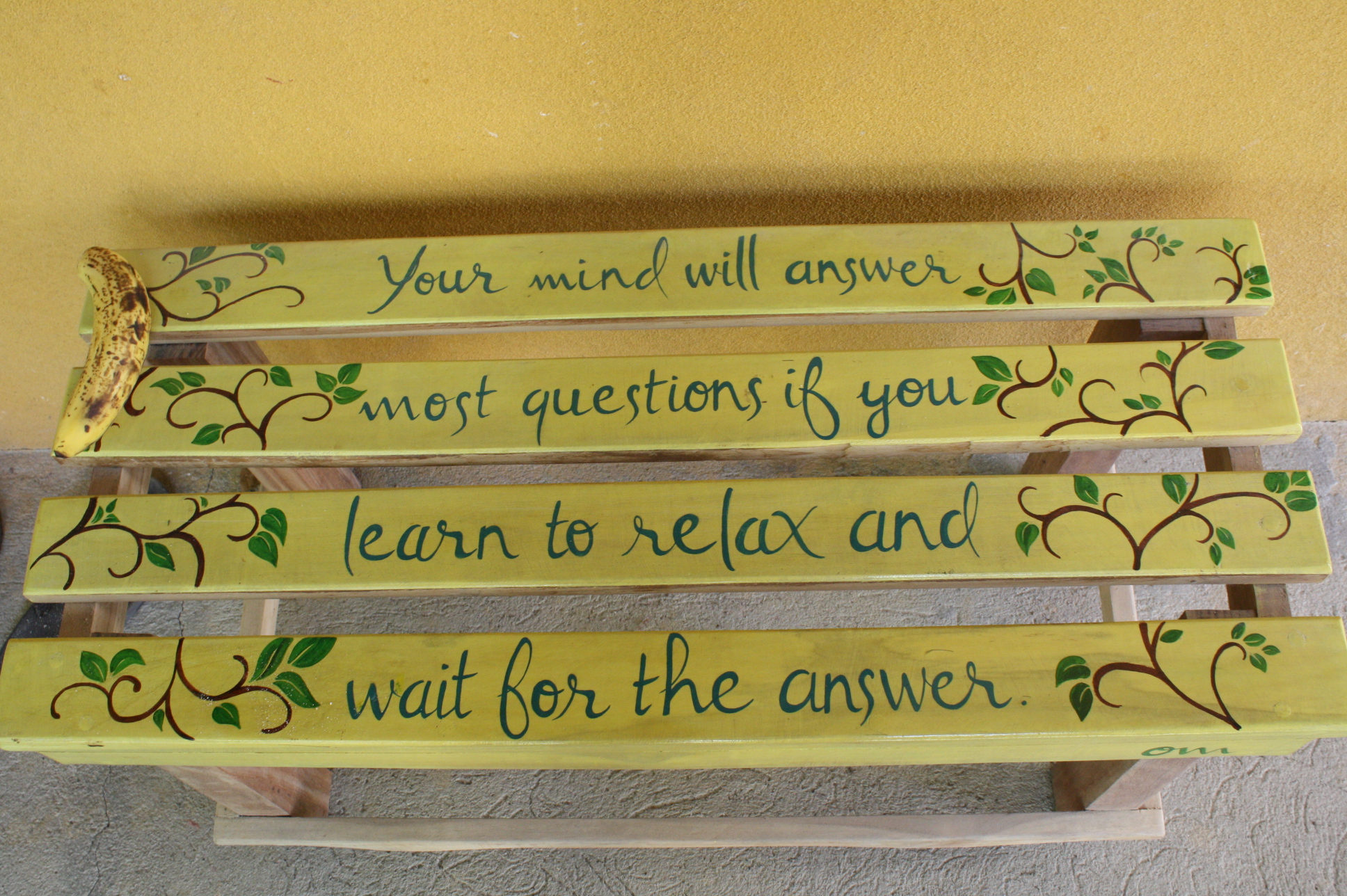
All of the benches at Casa Zen were painted.

All of the benches at Casa Zen were painted.

So many wonderful reminders at Casa Zen.

So many wonderful reminders at Casa Zen.

I had some really fun times at Casa Zen. I went to a pre-full moon party at Ranchos Itaúna, a bar right on the beach, danced and lost track of time until my roommate and I went home and couldn’t believe it was 4 in the morning.

The day after the full moon, Nate, the guitar-playing regular at Casa Zen, gave me my first card reading. They weren´t tarot cards, but they were similar. The cards I choose, or I should say the cards that chose me, resonated with me. One card was the High Lord of Gratitude and Service.

This card has arrived to help you find your true purpose today. Feeling gratitude for each moment you experience, and loving what is and what has been, will remind you that every breath you take holds a deep and profound awareness. The presence of this ally lets you know that you are on the correct path of fulfilling your desires. There are no friends or enemies, just teachers along life´s journey.

Since recieving this card, I´m trying to be as grateful as possible about as much as possible. From now on I will begin my blog posts listing things I´m grateful for.

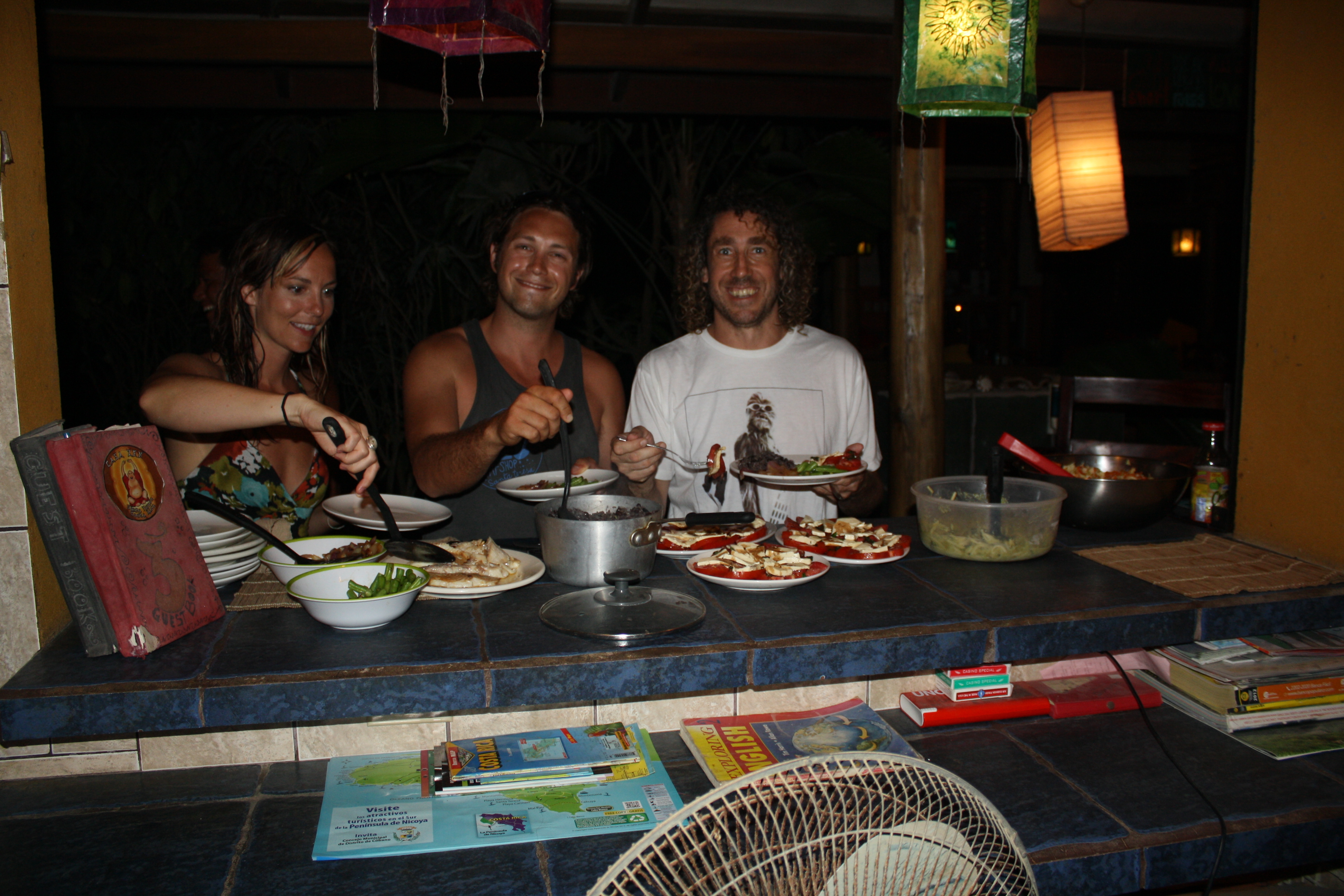
I spent most nights at Casa Zen cooking with friends, having potlucks, playing jenga and playing card games. My group of friends at Casa Zen quickly and easily transformed into my family. I felt like I could open up to them about everything in my life and they welcomed me with  loving hearts and no judgements. They were shoulders to cry on, people who opened their arms when I needed a hug, friends to practice yoga with. We were all kindred spirits.

Ladies beach day

Potluck

card gamesIf I hadn´t met the people I met at Casa Zen, I probably wouldn´t have stayed in Santa Teresa as long as I did. Santa Teresa is basically one long street lined with eateries, hotels, and shops that parallels the beach. It was more expensive than Guiones. Most people there were vacationing and a lot of people were there to party. There were a lot of eateries with full menus in English, often no menus in Spanish. There was a plaza right before Santa Teresa in Playa Carmen, which I was shocked to see. After being in Guiones, I wasn´t expecting so much development, I guess. A plaza!? I couldn´t believe I was looking at a plaza.

I quickly realized that Santa Teresa wasn´t as underdeveloped or lowkey as Guiones. It wasn´t the typical backpackers´town. I saw shirts hanging in the windows of shops that said, ´What happens in Santa Teresa stays in Santa Teresa.´ There weren´t as many people with smiling faces walking down the street as there were in Guiones. But I learned that you can´t compare one place to another. You have to appreciate things for what they are.

I wore my japas malas beads the whole time I was in Santa Teresa. The one time I took them off, while acroyogaing on the beach, I accidentally left them behind. I only had a couple days left in Santa Teresa anyway.

I feel like their presence in my life signified a few things. The japas malas beads were another gift along the way, another act of kindness, another reminder to give, a reminder to be free of things. More importantly the japas malas beads were another reminder to not be afraid to leave pieces of ourselves behind and to share pieces of the journey as much as possible.

Playa Guiones: The Paradise of Surf and Yoga

When you read about Guiones in the travel guidebooks, most of them say something along the lines of:

“The town attracts residents whose idea of Heaven is to perfect their headstand, amble along one of the three absolutely pristine beaches, or paddle out to surf. A town so laid back that each day seems to last a week.”

Everyone I met in Guiones agreed, “People are here to surf or practice yoga.” People travel to Guiones from all over the world to do both. Most of the people I encountered were locals, expats, families or people vacationing. It´s not a crowded tourist town, which I was very thankful to find out. I´d pass the same people on the street multiple times a day.

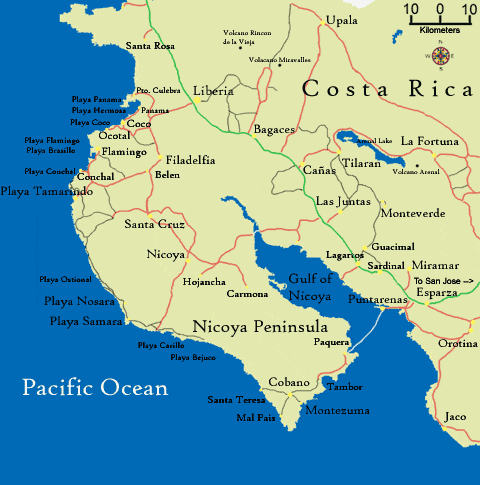
Playa Guiones (pronounced ge-oh-nays) is a jungle beach town located in Nosara, in the Guanacaste Province on the Nicoya Peninsula. The peninsula is on the west coast of Costa Rica, and it looks like a limb reaching towards the sea. Or if Costa Rica were a seahorse, the Nicoya Peninsula would be the head.

guiones beach

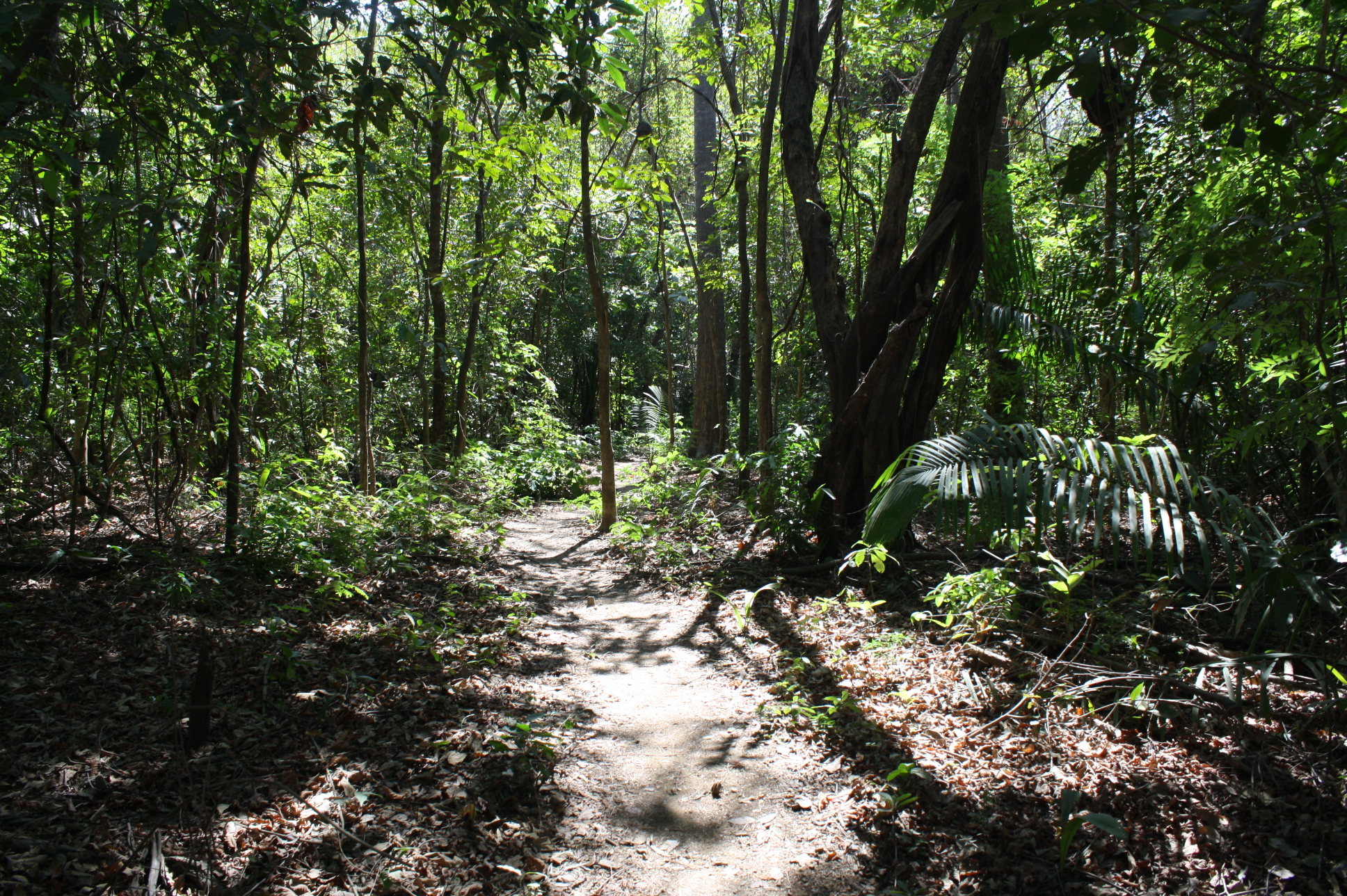
Wherever you need to go, a jungle path will take you there.

Wherever you need to go, a jungle path will take you there.

The province is named after Costa Rica’s national tree, a guanacaste. This tree is pictured on Costa Rica’s 2000 mil bill.  Nosara is named after an indegienous woman who slit her wrists rather than reveal her tribe’s treasure to a rival tribe. Her blood formed the Nosara River.

Guanacaste, the hot and dry province, is said to get more sun than any other part of the country. At this time of the year, January February  the tree leaves and bushes are brittle. It’s almost as if you can hear them breaking from the dryness when you pass.

To get to Guiones from the Liberia Airport we drove along a main road for about an hour and then turned down a 22mile unpaved rocky road. Barely any of the roads in Guiones are paved, and everything is covered in dust. Quads, motorcycles and dirtbikes are main modes of transportation. You see people of all ages riding them, often with other people squeezed between their laps.

A street in Playa Guiones

A street in Playa Guiones

Street signs covered in dusty

Street signs covered in dust

Because of the rocky roads, I was very thankful I brought my Reef flipflops which are very durable, and even more thankful I brought my Vibram Five Fingers. Because of the constant dust, I was thankful I had my bandana always handy to cover my mouth and nose. And because of the darkness after sundown, I was glad I had a headlamp and my flashlight.

The downtown area of Guiones is in the southside of town where there are a few versions of a typical yoga boutique: organic and bamboo clothing, paisley patterned scarves and gemstone jewerly. Everything was overpriced and in those types of shops I didn’t see anything that I thought really captured the spirit of Nosara. I was surprised to find that prices are pretty similiar to prices in the United States. Even the food at mini supers and restaurants. The best and least expensive place was Rosies, a soda on the main road, close to Coconut Harry´s Surf Shop. Sodas are family owned cafes that sell traditional Costa Rican food for great prices.

Downtown Guiones

Downtown Guiones

Downtown Guiones

Downtown Guiones

My favorite part of Guiones is that its a very health-conscious community. Not only are there countless yoga classes, there´s a juice bar, an organic grocery, vegetarian options at restaurants and a farmers’ market on Saturdays. There are also stands at the beach entrance where locals sell, pipa, fresh coconuts for 500 colones or $1. Drinking fresh coconuts daily was one of my favorite parts about being in Guiones. It gets dark early, usually around 6 p.m., and because there aren’t any streetlights, it gets really dark. Bars close around 11 p.m. so people go to bed early too.

A traveler I met who has been all over the world, said that Guiones is one of the most spiritually enriching places he’s ever been. “I think this place draws a certain type of person,” people said to me often. And often followed by, “You´ll travel all over Costa Rica but you´ll come back here.” Guiones gives you the time to look inside yourself, to  melt into the rhythms around you, to relax, to not worry, to take your time.

I too was in Heaven practicing yoga numerous times a day. Here´s a list of the yoga studios I practiced at in Guiones:

(Most studios provide free mats. Most studios have a free community class.)

Nosara Yoga Institute 

Nosara Yoga Institute

Nosara Yoga Institute

Nosara Yoga Institute

Nosara Yoga Institute

A world-renowed yoga institute that hosts teacher trainings.

The classes are held in a treetop studio, and yes, it’s exactly what it sounds like. The first time I took a class there (It was a sunset flow class) was also the first time I saw monkeys! You walk through the jungle to get to the institute. I love this studio because of how soothing it is to be eye-level with the tops of trees and how beautiful the surroundings are. It´s one of the most serene places I´ve ever been. They mostly have hatha flow classes. Drop-in classes are $10.

*Personal bias: This is my favorite studio in Guiones.

The Healing Centre at Harmony Hotel

The juice bar at the Harmony Hotel

The juice bar at the Harmony Hotel

Another beautiful outdoor space. The Harmony Hotel is a beautiful space to relax in general. They have huts nestled within the jungle and a wonderful juice bar. They have a variety of classes: kundalini, vinyasa, sandy feet on the beach. I tried aerial silk yoga and acro yoga for the first time here. Most classes have a drop-in rate of $12.

Yoga House

Yoga House

Yoga House

There´s an indoor and outdoor practice space. For the month of January they had a free lecture series on Monday nights sponsered by Blue Spirit’s Omega Series. They mostly have flow and restorative classes. There was a community Kundalini class on Sundays. The drop-in rate is $12.

Heart of Guiones Wellness Center

Wellness Center

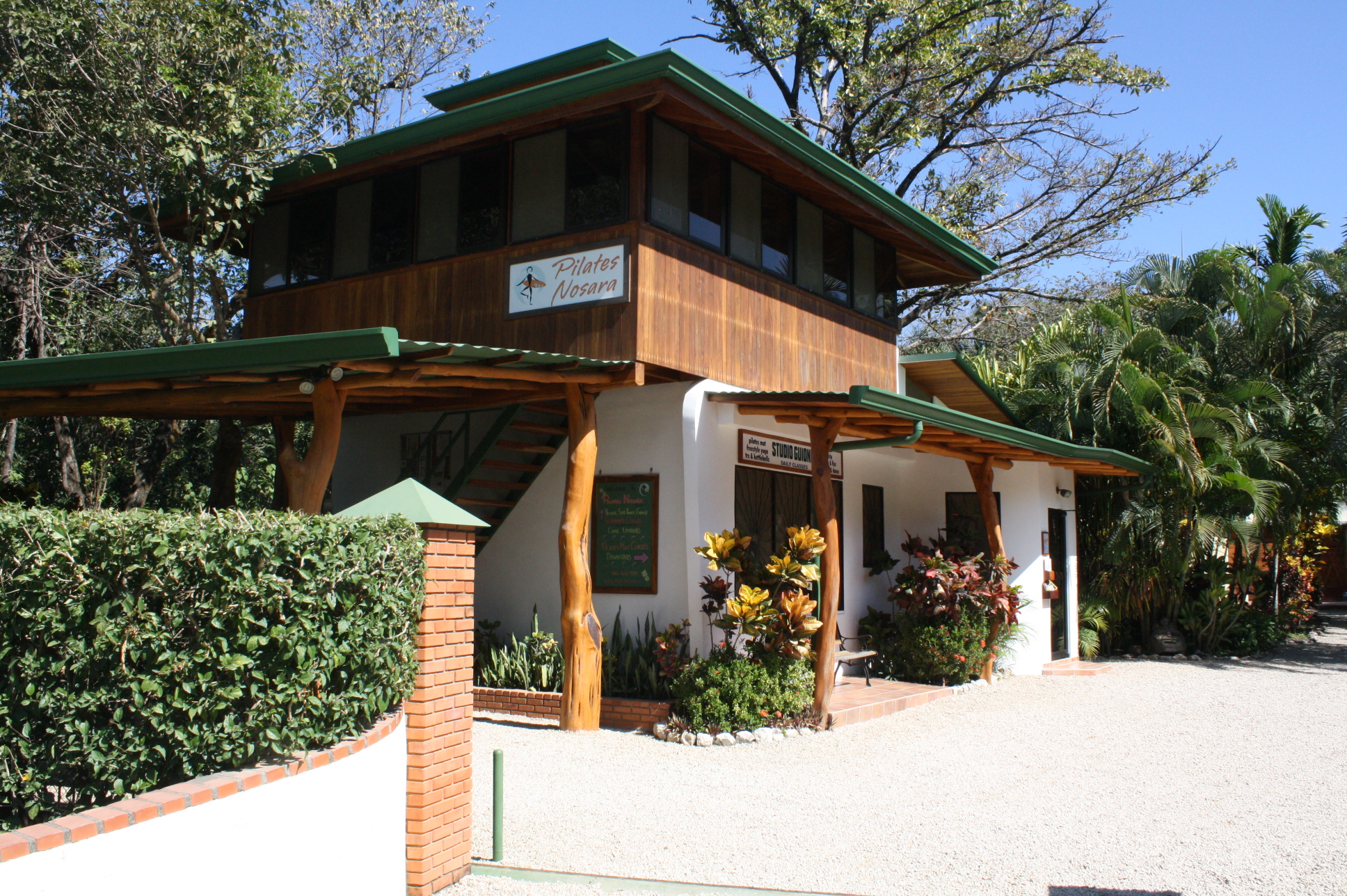
Across from Tica Massage. On the same road as Casa Tucan. They offer a free community pilates class on Saturdays. I tried Ashtanga yoga here with Laura Waite and fell in love with the practice.

Blue Spirit, a hotel for yoga retreats, is also located in Guiones.

And now on to lodging:

Solo Bueno Hostel:

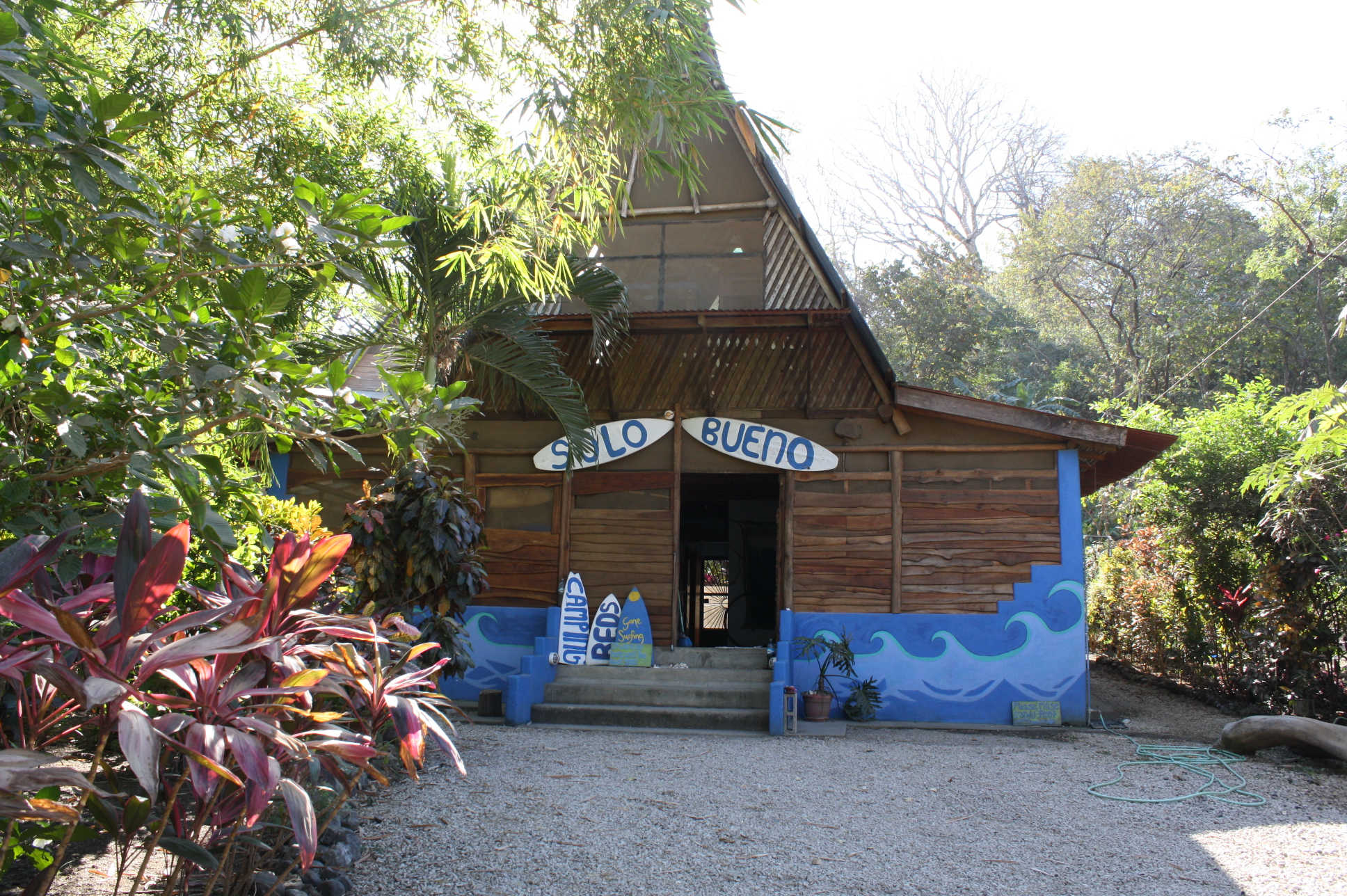
Solo Bueno

In Espanol this translates to only good. This place is known as a surf hostel. If you look around you’ll notice that many things are made out of broken surfboards.

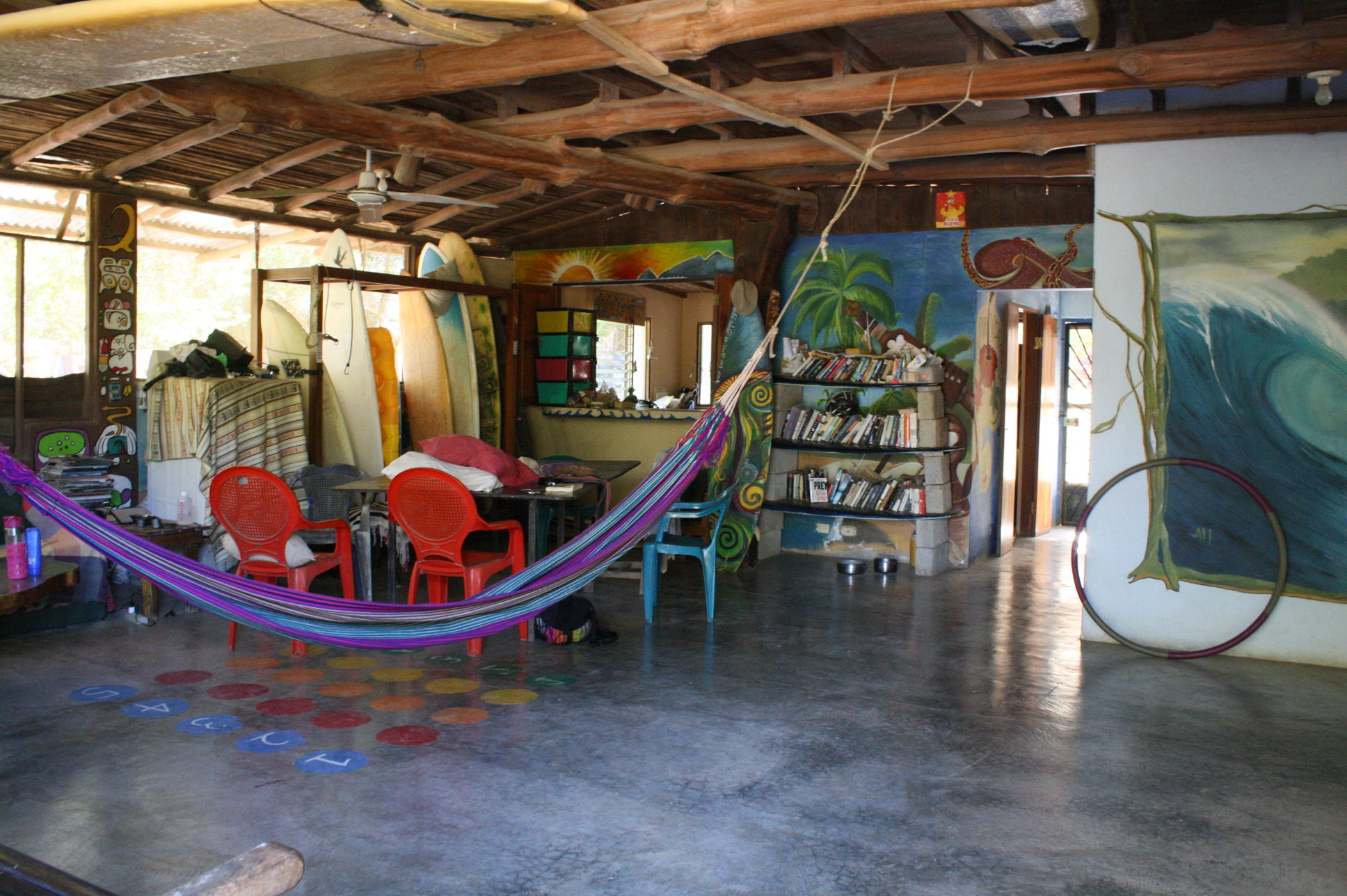
Solo Bueno Common Room

Solo Bueno Common Room

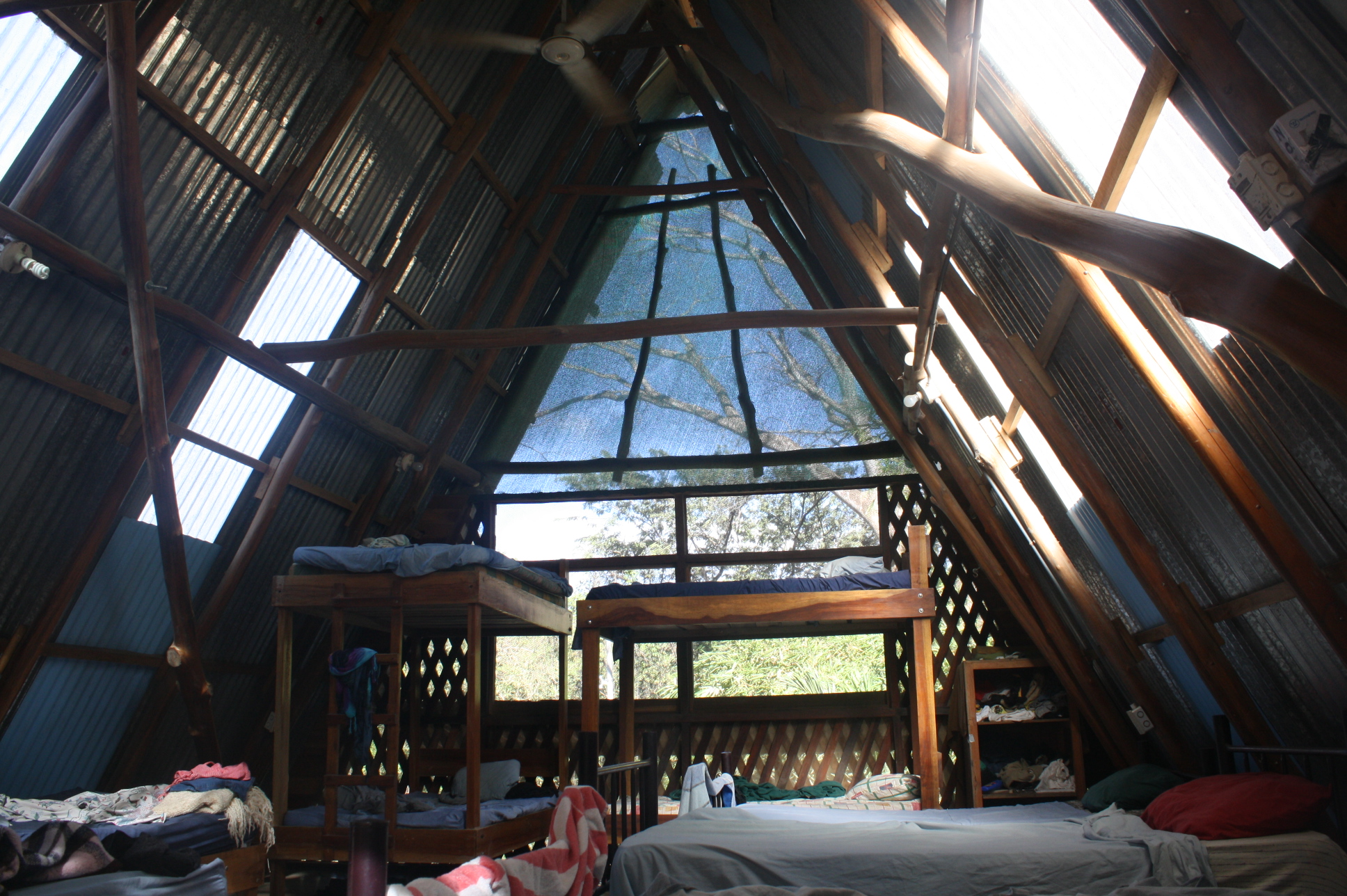
When you walk in the front door there’s a common room with two hammocks, a couch, a table. There’s a communal kitchen with access to a fridge and applicances. There are cubbies to keep your personal food. There are lockers. There’s one room downstairs with three beds and an open room upstairs with all the other beds.

Upstairs room

Upstairs room

A bed is $14/night, camping is $10/night. If you stay for a week you get a reduced rate of $13 or $9/night. Because of the size, this place feels much homey-er than most hostels I have stayed at.

A few other inexpensive places to stay in Guiones:

4 You Hostal

Nosara Beach Hostel

Kaya Sol

The Gilded Iguana

Random Tidbits about Guiones:

With most of the toilets in Guiones and most parts of Costa Rica, you have to dispose toilet paper in a wastebasket. You can’t flush anything else down the toilet because of fragile jungle septic systems.

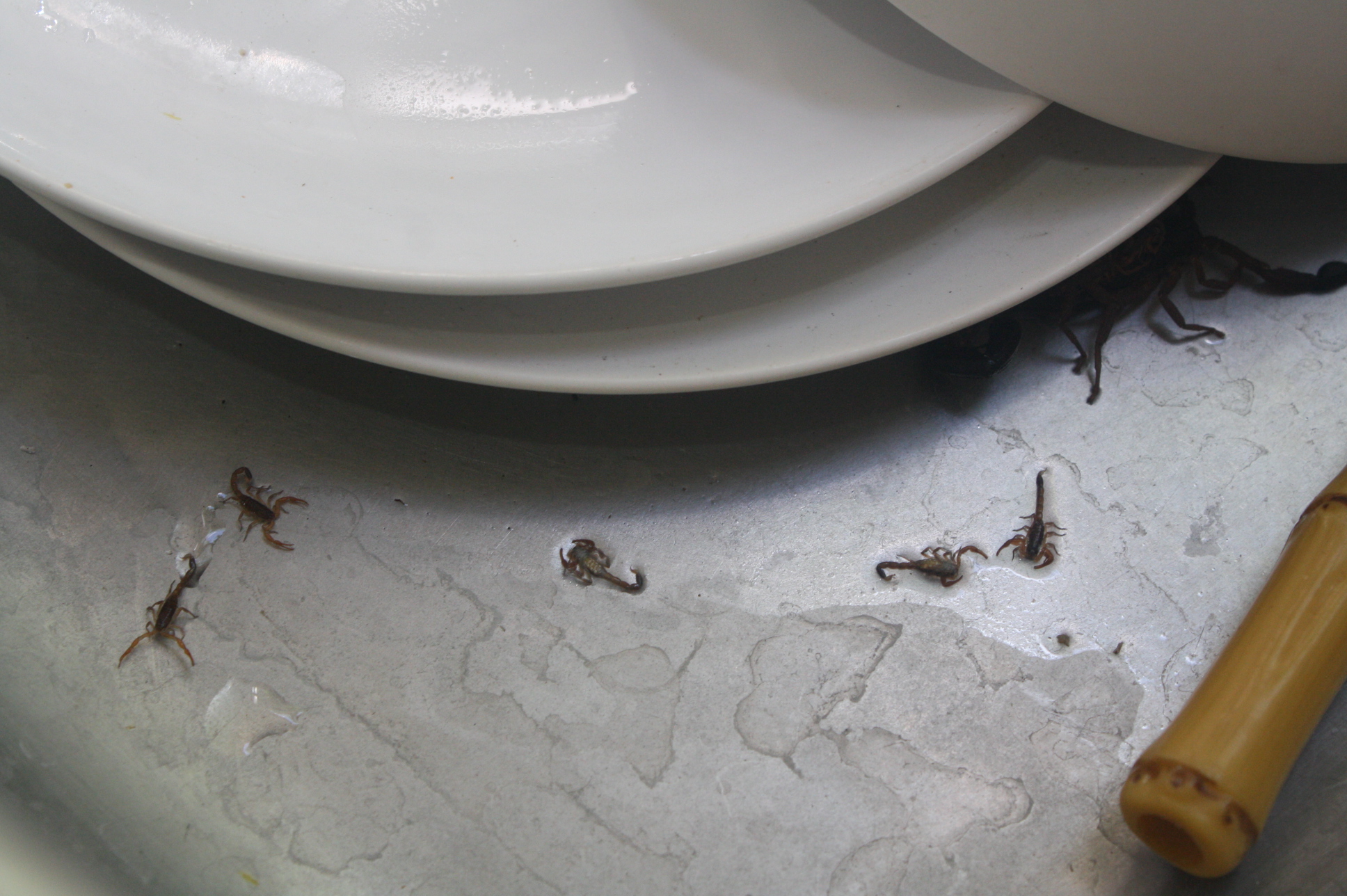
Keep an eye out for scorpions and snakes.

This family was in my friend´s sink.

This family was in my friend´s sink.

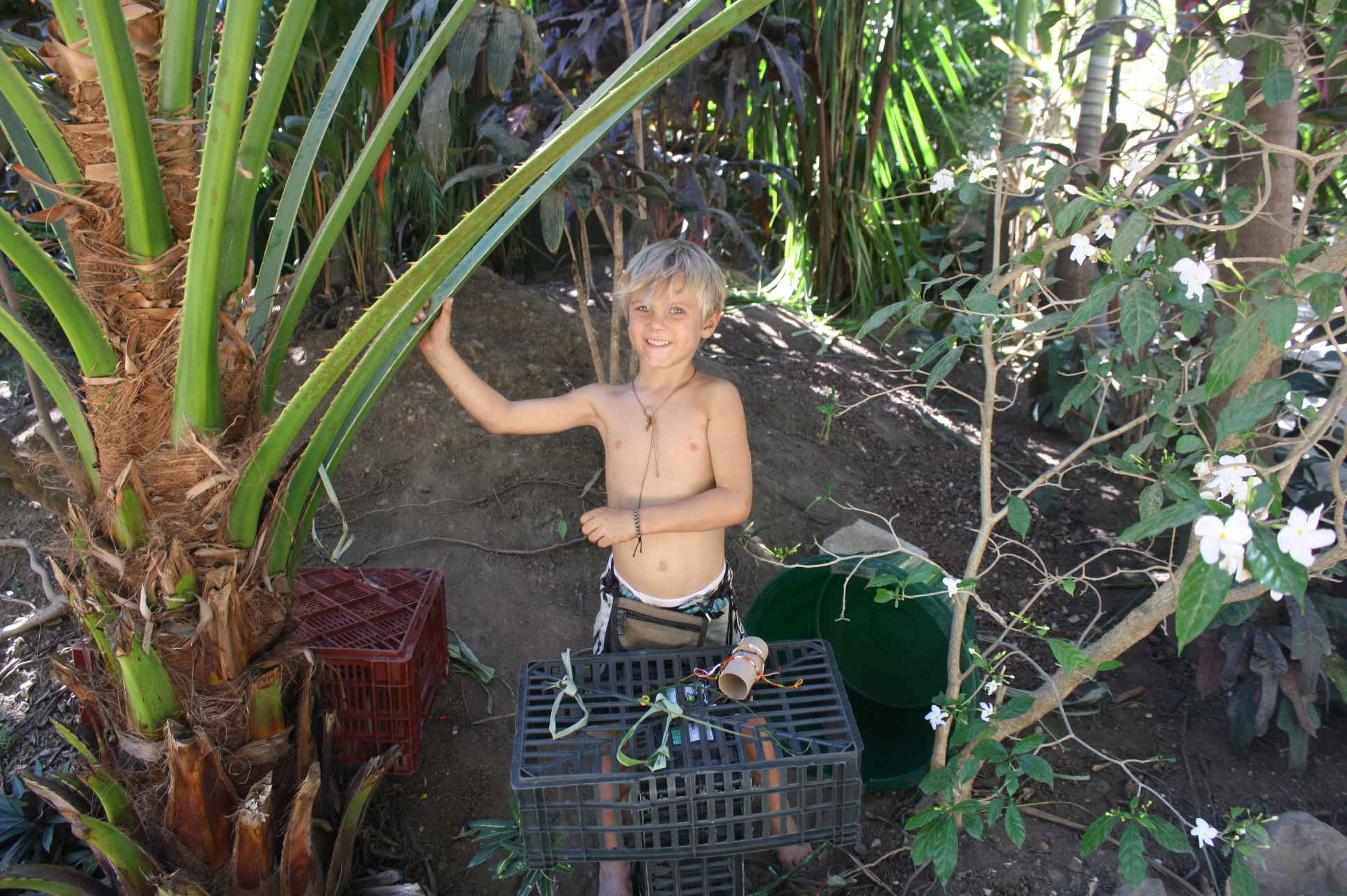
Nicaraguans walk the beach selling pottery, but they won´t bother you if you´re not interested. Other craftsmen set up tables outside the section of the beach by town mainly selling jewelry. But you really need to be aware of swindlers like this one:

Fin, the best jewelry maker in town.

Fin, the best jewelry maker in town.

Do what you will, while you’re able. Find what it is that you seek. Only I’ll fly, fly, fly above the ocean. I will fly so high above the sea

I’ll admit, I was nervous booking a hostel and a shuttle service from the airport in another country via email for my first time traveling to another country alone.

Right after I arrived in Costa Rica and went through customs, I still had butterflies as I searched for my driver among the crowd of taxi drivers holding signs for different hotels, resorts and hostels. But as soon as my driver greeted me, “April, hi, nice to meet you,” in a slow, relaxed tone, my nerves slightly sunk away. He said, “First time here and you picked Solo Bueno Hostel? You picked a good place. Only the crazy people go there.” (Sidenote: Sometimes I see him in town. He remembers my name and always greets me with a hug and kiss on the cheek.) He led me to a different driver who drove me all the way to my hostel.

Once I got in the shuttle, Marvin, the driver, handed me a map of Nosara and said, “Your first present in Costa Rica.” As we passed sugar cane fields and mango trees throughout Nosara, Marvin kept saying how beautiful everything in Costa Rica was and especially how beautiful Guanacaste was. “Guanacaste es que lindas,” Marvin would say and bring his fingers to his mouth to blow a kiss in the air.

Guanacaste is a province (similar to a state) located in the northwestern part of Costa Rica.  Nicoya is a canton (similar to a county) in Guanacaste. Nosara is a city in Nicoya. Guiones is a beach town that’s part of Nosara. So Playa Guiones is in Nosara, which is in Nicoya, which is in Guanacaste. And that’s where I started my Costa Rican journey.

About 22 miles from Playa Guiones (pronounced ge-oh-nays) we turned down an unpaved rocky road that led to the town. All the street signs were covered in dust and there were no street lines painted on the streets. There were no street lights either.

I arrived at the hostel minutes before sunset. I walked right into the common room of the hostel. There wasn’t a front desk or sign-in area. Kimberly, the the woman-in-charge of the hostel spoke to me from the kitchen,

“These are the rules: No smoking tobacco in the house. I don’t care about pot. And we’re having a feast tonight.”

I jumped on Kimberly’s golf cart, and she drove us to the beach where we watched the sun set over the Pacific Ocean. When I woke up in the morning, Kimberly handed me a cup of the best coffee I’ve ever had. It came from her friend’s farm in the mountains. Everything still felt like a dream.

***

I’ve been in Guiones for 12 days now. As I walked around town on my first full day here, excitement ran through me as I giggled like a schoolgirl with a new crush. I still feel this giddiness when I look around me and realize that I’m living in Paradise. It’s like being at a music festival or Burning Man; it’s like falling in love.

As ticos, (nickname for Costa Ricans) would say, it’s Pura Vida, which translates to pure life, and means any variety of: this is living, all is good, life is amazing. Ticos often greet each other with this saying or slip it into casual conversation.

In Guiones I wake up when I hear the birds chatting or when the sun comes up. I spend the majority of my days outside. I spend each moment doing what it is I want to do at that moment. I take yoga classes everyday. I explore. I ride my rented bicycle. I walk through the jungle. I swim in the ocean. I drink fresh coconuts from the beach stand. The only time I follow time is to make sure I make the yoga class on time. Other than that there’s no need to. I eat when I’m hungry and go to sleep when I’m tired.

I’ve had some really incredible days here. I’ve met people, been in certain situations and had certain conversations that I wouldn’t have had if I wasn’t alone. I’ve met people on the street just by smiling and waving. I’ve done things I wouldn’t have time to do at home. Each day I’m learning to quiet the voice in my head that wants to constantly be busy, that feels compelled to always be in motion. With each moment that passes I’ve been falling into a tranquilo state of doing what comes naturally and not worrying too much about anything else.

Life Lessons I Learned At Burning Man

It’s almost been a year since I wandered to the playa for the first time. With Burning Man right around the corner, I’ve been thinking more and more about my experience there, and I wanted to share some things I learned. While there are plenty of Burning Man guidelines online, this isn’t about the basic necessities to bring, this is about the something more that the playa provides. To everyone venturing to the Burn this year, let yourself let go, be free, set your heart on fire and open yourself up to the wildness of life. To those who can’t make it, remember how beautiful life can be when you let it. Here’s a piece of Burning Man that I hope everyone can carry with them wherever they are.

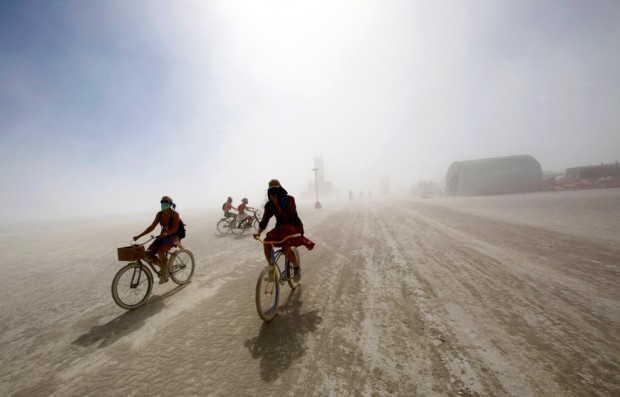
Burning Man Arrival: Wiping sleep from my eyes, I gazed out the windows of our rented U-haul just past sunrise. After the usual instant confusion of waking up in an unfamiliar place, I kept blinking to try to absorb my surroundings. In the distance, mountains protected every angle. Before us, a barren desert-like space stretched out as far as I could see. Hazy, white dust danced throughout the air making everything still seem like a dream. That’s how the rest of the week would feel. I had arrived at Black Rock City aka Burning Man.

I entered Black Rock City straight off a summer of music festival hopping. I was full from all the new friends and experiences I gathered. Yet I was still slightly heartbroken from graduating college, moving across the country, and leaving a special someone behind in the process. The whole summer had been one big lesson in letting go. Prepared or not, I had no choice but to let the day and journey of Burning Man begin.

Aside from the basic Burning Man lessons like “Leave No Trace” and pack lots of water, Burning Man taught me something more. Something more about myself. About people. About this great big/small world we live in.

And here are the lessons:

-Very early in the week I learned that every place has a balance of good and bad. Not everyone everywhere (not even at Burning Man) will always be welcoming or nice. The light needs the darkness just as much as the darkness needs the light. The world needs the balance to keep going.

-Spending time at Burning Man means learning how to pick and choose anything within sight or arms reach and make it work. In life certain situations, objects, people, breeze, dance, storm right on in. Sometimes you have no other choice but to take what’s around you and create the best situation possible. Don’t go searching for something more. Make the most out of what you have.

-Whether good or bad, people touch your life and give you certain things at certain points in your life. No matter what happens, appreciate it for what it was. I’ve been in so many whirlwind romances that are over as quickly as they began. Mystifying, dizzying, filled with fire but then abrupt endings. So many people will exit and enter your life. People leave. Sometimes they never come back. Appreciate it for what it was and move on.

-Before I got to Burning Man I visioned it to be something like a trading/bartering zone of sorts. I didn’t quite yet understand the meaning of “gift giving.” I made a bunch of Burning Man passports: small notebooks with scattered inspirational quotes, a pen and plenty of free space to let thoughts free flow to handout and give to people I connected with, but I still didn’t quite understand the whole concept of gift giving. Everyday someone (usually a stranger) would put a necklace around my neck or a hat on my head or hand me some sort of knickknack. But as the days went on and the connections between people grew deeper, people were giving me items that were “theirs.” When I’d try to return the items, the owners would tell me to keep them. It was then that I questioned, “What is a material possession anyway, possession of any kind?” If you truly love something, shouldn’t you give it away? If you’ve worn something or used something a gazillion times shouldn’t you want other people to experience that same love and joy?

So then I put flowers in my friends hair, dressed them up in my jewelry, accessorized everyone. I met a man on the dance floor and when I departed I wrapped my favorite headband around his head. “Until I return.” When I returned I realized that I wasn’t getting that headband back and even though it was my favorite headband, it was okay. When I look back on my life, I won’t remember all my accessories and knickknacks. I’ll remember the moments I shared with people, the way people made me feel, the goosebumps a certain moment, place, song gave me. I grasped the concept of gift giving and I let it take me to new levels. I started giving away pieces of myself, building deeper connections with people in my camp, opening up to strangers in ways I normally wouldn’t. Burning Man taught me the true act of giving and what it means to be open and generous. If you open yourself up to others, the universe will open up to you in ways you didn’t think possible.

-One of my favorite sayings written on the temple: I love still. No matter what keep growing, giving, believing, loving.

-Another favorite writing on the temple: As we journey we must remember to remember who we are. And that life is more than who we are.

-As the temple burned, small pieces of wood, paper, memories, swirled above our heads. When someone loves you/when you love someone, they spark a flame in your heart that burns forever. They stay a glow fire-red dancing above us. People we love never truly leave us.

-Burning Man is not a festival but a way of life. An example of what happens when you let people be whoever it is they are or want to be.

-As we waited in the line of cars to leave Black Rock City, I jotted down lingering thoughts in my journal, one last lesson the playa left me with:

I greeted Black Rock City as the sun was rising. Days, hours, lifetimes later we leave, changed people, as the sun rises again. We ride in the opposite direction of the sunshine, leaving behind all of its sweetness. Now we must remember to carry on the joy Burning Man has given us. The ability to be free and childlike, the gift of truly giving, of letting go and forgiving.

From our position in the packed car, we can’t look back. All the colors, beauty and brightness that come with the new day are behind us. We ride forward. To create our own beauty, our own reality. We continue onward.

Earth Jam Festival at Plymouth State University

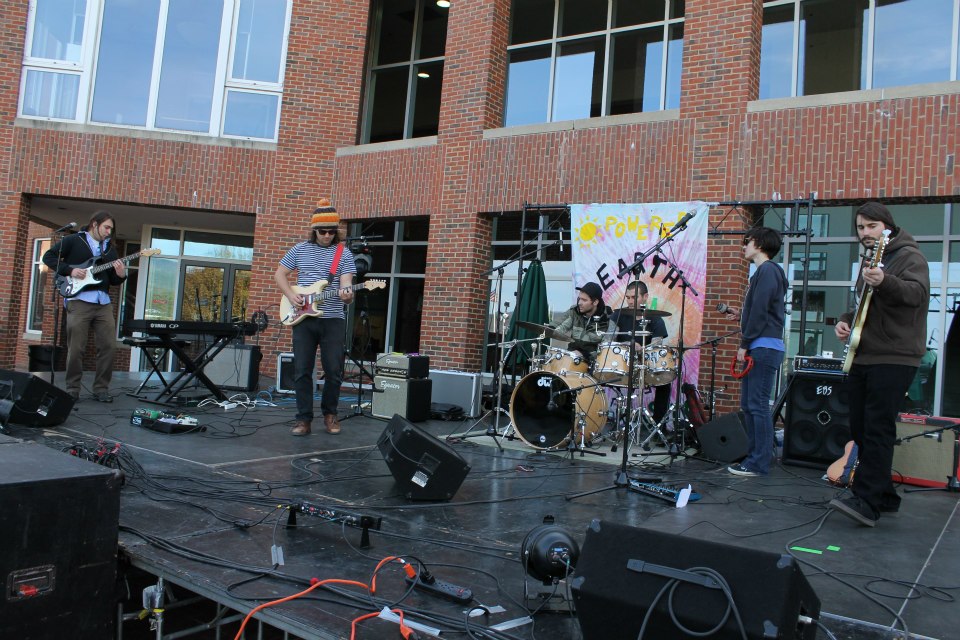
Over the weekend my friends and I roadtripped to central New Hampshire for Plymouth State University’s Earth Jam Festival.

We lucked out with a sunny Saturday with temperatures in the 50s-60s. (It was snowing when we drove up.)

PSU is wedged between one of the most beautiful parts of the East Coast: the White Mountains and NH’s lake region.

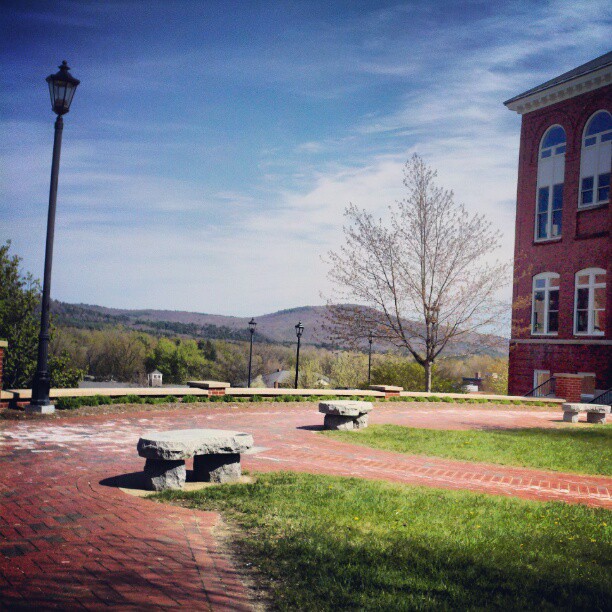
From campus you can see the White Mountains.

Plymouth is a quaint college town with a down home New England feel. Boutiques, a bookstore, an artisans’ co-op, a few pizzerias and bakeries dotted Main Street, which stretched for maybe a mile or two.

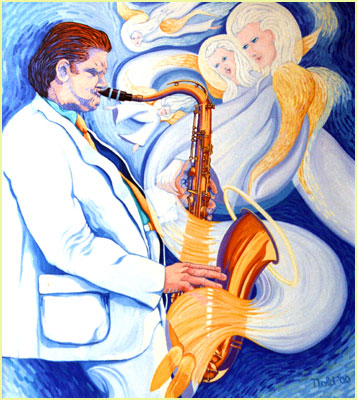
One of my favorite paintings at Artistic Roots. Artist: Fred Nold

The artisans’ co-op, Artistic Roots, was my favorite shop. Local artists display and sell their work there and split working time.

I love the feeling of exploring a town for the first time, of aimlessly wandering into shops and learning the character of a place and its people. I love talking to locals about the city they live in and what the place means to them.

After exploring town we went to campus for the festival. With an undergrad population of 4,3000, PSU has a comfortable small town feel. Aesthetically, it’s the kind of place with that distinctive classic New England look. But what made PSU special was the lack of pristineness. It was aged and beautiful but not so kept up that it appeared stiff. The grass was played on and lived in; some buildings were washed out and faded; vines clung to some walls.

Earth Jam is an annual free event hosted by Common Ground, a student environmental and social justice organization.

Hula hooping, slack lining, face painting, tie-dying, live music playing– that’s what sunny days are made of. Earth Jam consisted of those activities and more from noon till 11 p.m.

It felt so good to be a part of a festival again even if it was a small one day event. As I hula hooped barefoot, I grinned, knowing that festival season and happy days are just around the corner.

The stage ran on solar energy.

NJ band Indian Princess

While I was at the artisans’ co-op, I had a conversation with one of the artists about appreciation and priorities. We talked about her proximity to the White Mountains and how often she actually hikes. We agreed that nature nourishes us and spending time outside feeds our souls, yet we often get so caught up in other things that we forget what’s most important. We forget to take the time to really look around us and realize our surroundings. Why do we do this? Do we get so used to our realities that we forget to take a breath and look around?

Our conversation sparked some questions that I wanted to share with you all and think about myself:

What are your priorities? Where does nature and appreciating the Earth stand on this list?

What natural surroundings (forests, mountains, lakes, etc.) are around your home? How often do you take time to explore these places and appreciate them?

What makes you feel the most nourished, happy, whole?

How can you incorporate these activities (the nourishing, happy ones) more into your everyday life? Is there anything you can cut out of your world/spend less time on so you can spend more time doing what you love?

Feel free to share your responses in the comments section. I’ll be thinking about the questions as well and possibly posting another post with my answers.

Cheers to a continuous blooming and awakening into a nourished, happy, and whole life…for all of us.

Patagonia: Hiking to Heaven in El Chaltén

Getting outside brings out the best of what’s inside you. When I’m surrounded by nothing but mountains, trees, and sky, I can’t help but feel like I’m more a part of the Earth. When I hike, I hike to be outside, to be captivated by nature, to experience the natural rhythm of life, to learn how to be more in rhythm with this rhythm, and to learn how to listen to the silence and sounds that are already there without me.

This wonderful mass of the universe that we live on is already moving, breathing, living, and functioning on its own, without us. To be able to experience that buzz of life without interruption and to really feel like a part of it all. That is why I go hiking. I experienced that and more the day we hiked the Laguna de los Tres route in Chaltén.

Our first viewpoint: Laguna Piedras Blancas

With our Backroads group we started the hike around 9 a.m. Four of us finished the hike around 9 p.m., completing a 12-hour hiking day, encompassing 13.4 miles while summiting a 4,000 foot peak. The day, exhilarating, overwhelming, and exhausting, was one of the best hiking days I’ve ever had.

Like almost all of the days on our trip, every element of the weather came together to be the perfect formula for a hike. The sky was clear; there was no wind; and the air wasn’t too warm or too cold (temperature in mid-50s to mid-60s). But don’t be fooled by this too-good-to-be-true weather report.

Travel Tip: With Patagonia weather, you never know what you’re going to get. Be prepared (both mentally and gear-wise) for high winds, frequent and unpredictable showers (rain or snow), and intense sunshine at any time of the year.

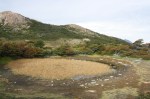
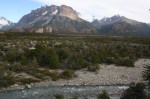
We hiked through forests, fields, mountains, and stopped along rivers and lakes. One minute we were enclosed by tree branches with only glimpses of sky and peaks. The next we were walking into a wide open field, sky stretching all around us, with low, scrubby bushes at our feet. The next we stood on top of a mountain with snow-capped peaks staring back at us. With each step, we experienced such vivid contrasts.

Laguna de los Tres, the lagoon of the three, is known as the best viewing spot for the Fitz Roy mountain range. De Los Tres refers to the three highest peaks you can see from the lake’s shore: Fitz Roy (11,073 ft), Poincenot (9,849 ft), and Saint-Exupéry (8,392 ft).

                  The peak above the man in the gray is Saint-Exupéry and then to the right there’s Rafael, Poincenot and Fitz Roy.

Fitz Roy is the highest spire in Argentine Patagonia. Even though it’s less than half the size of the world’s greatest peaks, it’s one of the hardest peaks to climb. The difficulty is part challenge and part unpredictable weather conditions. The area has also been pretty inaccesible until the more recent developments of Chaltén. Hundreds of people may reach the summit of Mount Everest in a day, but Monte Fitz Roy may only be successfully ascended once a year.

Saint-Exupéry is named in memory of Antoine de Saint Exupéry, a French aviator who delivered mail to Patagonia by plane in the early 1930s. He’s also the writer of the best-seller, “Le Petit Prince” (The Little Prince). He disappeared while flying over the northern part of Corsica. His death remains a mystery.

Poincenot is named after Jacques Poincenot, a member of the French expedition set to conquer Fitz Roy in 1952. While attempting to cross the Fitz Roy river, Jacques fell in and died. His team carried on and named the peak in his memory.

After about 5 miles of hiking through the forest and fields, we decided to power on for the climb to Laugna de los Tres. Up until this point the views had already been incredible. But it was about to get even better.

While mapping out the trail in the dirt with his hiking pole before our final steep climb, David, our local guide, said, “You’re going to arrive at a place where the mountains make you say, ‘Wow.’ If you don’t say that then you haven’t arrived.”

Laguna de los Tres: Our ‘wow’ viewpoint from the top. I think we arrived.

Once we reached the top we stopped to eat lunch. I wanted to stay there forever. Not only were the highest peaks in front of us, but behind us more mountains rolled on, fields spread, and the river snaked into the horizon. We were on top of the world. There’s nothing more rewarding than a view like that after a long hike and a steep climb.

Avalanche ring

As soon as we finished eating lunch, an avalanche erupted into the water. It was such a powerful booming noise. We just happened to be at the right place at the right time to hear it.

When we started to walk down one of the peaks, a cloud shaped like a halo formed over the peak in front of us. Once again we were in the right place at the right time. If you take the time and effort, the Earth will reveal its magnificence to you. You will be rewarded in ways you can’t even imagine.

Cloud halo

To know that this will always be here- this all knowingness that the forest already holds, that the mountains already whisper, shakes me to the core in the best possible way. I’ve always felt another kind of spiritual presence in the woods and I could never really relate to that feeling with mountains, but on this day I did. Even just staring at them in the distance. Being surrounded by nothing else.

The rest of the Backroads group hiked ahead and David stayed with my Aunt, Susan and I.  For the hike back, David was our personal tour guide. He stopped us every five minutes to teach us about our surroundings—why the clouds were shaped like they were, how the rocks formed, what happened to the trees, etc, etc. It was such an incredible way to experience hiking in Patagonia. David was so generous with his time, so extremely knowledgeable and helpful. He’s also an excellent photographer. You can view his pictures here.

We hiked at our own pace, taking our time to really absorb everything. Aside from taking pictures of every single thing I saw, I wanted to fully absorb my surroundings. I wanted to really look at things: pebble-sized rocks, skinny trees, huge mountains. I wanted to understand my surroundings as best as I could. I like to take my time, especially when I hike.

To observe is to truly be in the moment.

Some of our views on the hike back:

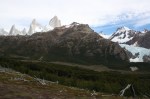
Another view of Fitz Roy

Even the rocks in Patagonia are happy.

Laguna Capri

It’s hard not to look back when things are this beautiful.

On our final descent, the sun started to set over Chalten. This picture does no justice.

There’s a lot of useful information online about this hike if you’d like to take the same route.
How we did it:

From Chaltén shuttle 20 minutes to Hosteria El Pilar, a hotel 17 kilometers (10 miles) from town. Take the trail to the right of the Hosteria, keeping the river on the right. Continue straight; follow sign for Rio Blanco. After about 5 km you’ll reach a T-intersection. Turn right to pass through Campamento Poincenet. Turn left to go back to Chaltén. If continuing on, follow signs for Laguna de los Tres and Campamento Rio Blanco.

The hike back:

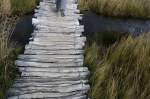
After climbing down the mountain, pass through a flat section of wetlands and wooden boardwalks. Turn LEFT at T-intersection toward El Chaltén and Laguna Capri. At next intersection veer RIGHT uphill and turn RIGHT toward Laguna Capri. Continue straight through Campamento Capri and follow signs for Chaltén.

And of course after the hike, don’t forget to stop in at La Cerveceria, a local microbrewery. A very rewarding stop after a full day of hiking.

Happy Trails!

Keep Patagonia Patagonia

I just came across this quote online about the build up of El Chalten.

After a visit to the area in 1989 famed Swiss climber Michel Piola wrote,

“The village of Chalten in its frenetic build up…. All these factors force us to recognize that this region of Patagonia is hopelessly evolving towards a concept of accessibility and civilization similar to the standards defined by our modern world. The disfigured landscapes and the bulldozers marking out the road of ‘progress’ are challenging us and asking us to pause and reflect: will man ever succeed in restraining his bulimic hunger for material things, and finally have enough respect for a place to agree not to provide it with ‘amenities’? That’s the price that we must pay if we don’t want to turn the world into a giant structured Lunapark, in which the Human Being will only be a pawn without personality or initiative. We do not deserve that, and neither does Patagonia.”

Patagonia: El Chaltén: The Heart of Patagonia

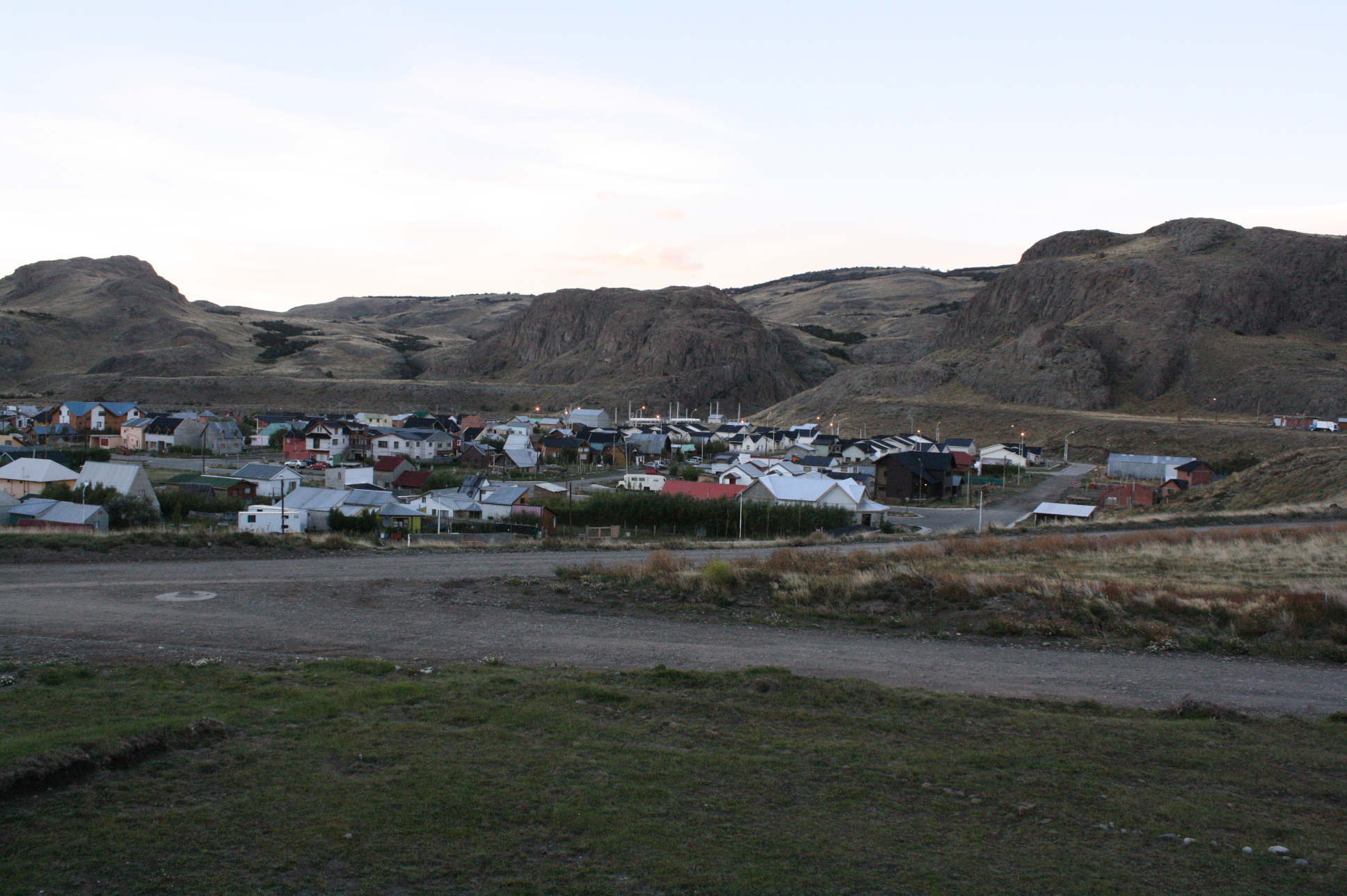
You know how certain places give off a certain feeling and in return evoke a certain feeling within you? El Chaltén is one of those places. It’s a town that completely captures you. It’s a certain kind of paradise.

El Chaltén is a small village set within a valley at the base of the Cerro Fitz Roy and Cerro Torre mountain ranges, the two most iconic mountain ranges in Argentina. Known as the unofficial national trekking capital of Argentina, the town is a part of the Parque Nacional Los Glaciares.

El Chaltén formally became a town in 1985 when a territorial dispute between Argentina and Chile intensified. To fully claim the land the clever Argentines built houses and started living there. When it was time to make a decision, Argentina got the land because they already occupied it.

Before Chaltén was an official town, early pioneers inhabited the area. Andreas Madsen, one of the most well known pioneers in Chaltén, came to Argentina from Denmark in the early 1900s. When we hiked in Chaltén we saw his house in the distance and our guide told us the story.

Andreas Madsen worked as a cook on an expedition with the famous Argentine explorer, Perito Moreno. So enamored by the natural landscape he built a farm, Estancia Fitz Roy, and settled there with his house facing the mountain. He returned to Denmark to find the love of his life, found her, married her and brought her back to Patagonia. They raised their four children (one named Fitz Roy) on the farm. They were truly out in the middle of nowhere, living off the land and surviving through Patagonia’s harshest conditions.

                                “Patagonia!” he cried. “She is a hard mistress. She casts her spell.

                               An enchantress! She folds you in her arms and never lets go.” 

I found this picture of the Madsen house online.

Andreas wrote two books: “Patagonia Vieja (Old Patagonia)” and “Cazando Pumas (Hunting Pumas)” which I’d love to read, but I can’t seem to find much information about online.

I absolutely loved everything about El Chaltén. Similar to saying just Calafate, you can refer to it as Chaltén. The name is prononuced exactly as it looks. Chal and then ten.

Chalten From Above

Chaltén felt much more real to me than Calafate. There was no center of town or shops overdone with souvenirs. There were no supermercados, just a few grocery markets. Most of the people there were there to climb, hike or explore the outdoors. Chaltén felt the way Patagonia should feel.

This slideshow requires JavaScript.

You know when you meet someone that listens so intently and truly cares about what you have to say, someone that isn’t afraid to express their feelings, someone that touches your life just by being present, someone that is so refreshing to meet, someone that is completely real. Chaltén is that person. Chaltén is genuine, down to earth, simple and peaceful. When it’s located in such a beautiful part of the world and inside a national park, it’s hard for a place not to posses those characteristics.

There’s something about mountains that bring serenity to a place, to people who live there. Chaltén rests comfortably at the mountains’ feet, like a child being watched over by a grandfather. The mountains exude their wisdom and patience down to Chaltén. Can you imagine being invigorated with this every single day?

Pondering the possibilities of the day by gazing out our hotel room’s window.

Chaltén is one of those places that still belongs completely to the Earth. Some streets are paved; some streets are just mud and gravel. I can’t find a reliable source online, but it seems that the town’s permanent population is generally around 1,000 people, maybe less. With a lot of the houses it was hard to tell what stage the construction was in. I couldn’t tell whether they were abandon or being fixed up. There isn’t an efficient home telephone network or cell phone service; internet connection is slow and expensive. There are no banks or money exchange places. I think there’s one ATM. No mayor, churches, newspapers. Because these general distractions from life are eliminated in Chaltén, you feel even more plugged in with the natural environment. You feel incredibly connected to nature.

Tips: There is no fee to go hiking or climbing in the park. If you plan on climbing you just need to register with the park service before you go.

The name Chaltén derives from the native Tehuelche’s word which means “smoking mountain.” The Tehuelches called the Fitz Roy mountain, “Chaltén” because there was always a cloud of smoke around its peak. They thought it could even be a volcano.

Perito Moreno renamed the mountain Fitz Roy in honor of Robert Fitz Roy, the captain of the Beagle, Darwin’s ship. But the name for the town stuck.

Chaltén is about a three hour bus ride from Calafate. Before the airport was built in Calafate in 2000 the only way to Chaltén was a ten hour bus ride from Rio Gallegos.

We spent three nights in Chaltén at the hotel Los Cerros. We spent two and a half days hiking in the national park. Those days were some of the most incredible days of my whole life. Stay tuned for another post that includes jaw-dropping pictures of the days spent hiking in Chaltén.

I left piece of my heart in Chaltén and will definitely make my way back someday.

Our hotel in Chaltén

View from our room

Patagonia: Days 1 and 2: El Calafate and Backroads

Before our hiking trip started, my Aunt and I spent the day exploring El Calafate (pronounced cal-a-fa-tay).

El Calafate is a town nestled on the southern part of Lago Argentino, the third largest lake in South America and largest in Patagonia. Tourism sprouted in the 1930s when mountain climbers from Europe began traveling to Patagonia. Before tourism, sheep farming was the main source of income. Before sheep farming, people tried to colonize Calafate but to no avail. Charles Darwin went to Calafate in 1834 on his famous voyage of the Beagle. While sheep farming does still exist in El Calafate, if you take one trip there you’ll see that tourism has taken over.

The population is roughly 15,000 in the summer (December to March-ish) and 6,000 in the winter.

Tip: When talking about El Calafate, you can shorten it to just Calafate. 

The name calafate is derived from a bush with yellow flowers and berries. The calafate berry is similar in size, shape and color to a blueberry. Just a tad bit smaller. There’s also a legend behind the berry.

Note the thorns. Because of the thorns the berry is harder to pick and therefore more expensive.

There are different versions of the legend, but this one is more or less the most common one. Years and years ago when the Tehuelche tribe trekked north for winter, an older woman, Koonex, was too fragile to make the trip. She stayed in her tent and was left alone to die. She asked the birds to stay with her but there was nothing for them to eat in the winter so Koonex turned herself into a calafate bush – thick with berries for their food and with sharp thorns to protect them from animals. In Spring, when the tribe returned, they were greeted by beautiful bushes with golden flowers. The flowers eventually turned into berries. The Tehuelche loved the berries so much that each year they returned to where the berries grew. Now people say that if you eat calafate berries you will return to Patagonia.

There were lots of cute homes in El Calafate.

Avenida del Libertador: the main street in El Calafate. Filled with eateries, souviner shops and boutiques.

Even though the downtown area (the Avenida Libertador) was easily accessible and filled with shops, Calafate felt too touristy to me. Most of the shops had the same exact souvenirs: mate gourds, leather belts, cowboy hats, wool blankets, calafate jam. Everything seemed like it was made for tourists. Things they thought we’d want to buy.

Although I did get some knickknacks, I wanted to buy something that the locals bought. A real souviner to me is something that locals would also buy and use. If you’re looking for something like that then definitely check out the Paseo De Artesanos area on the main street next to the casino. Local artists open booths to sell their work. I bought a hair wrap and hand painted book mark here. My friend bought a mask made from a lenga tree. The only tricky thing is that there isn’t a set of hours they’re open. The booths are open whenever the artist feels like being there. Although they did seem to be open Friday and Saturday nights around 8.

Calafate is one of those towns you go to on your way to somewhere else. It’s a hub for people traveling to different parts of the Parque Nacional Los Glaciares, especially the Perito Moreno Glacier. You fly in to Calafate, spend a night in town and then figure out where you’ll go next.

A wonderful thing about El Calafate:

Lavender bushes were everywhere.

Day 2 in Argentina but Day 1 for our Hiking Trip:

We met up with everyone on the Backroads trip.

Before I dive into our day and the details of El Chalten, I’ll explain Backroads.

Backroads is an active travel company that specializes in cycling, hiking, and multisport trips all over the world. They set up our hiking itinerary, lodging, transportation (minus the flight) and meals. We had two Backroads guides the whole trip and we had local guides throughout the trip.

Backroads goes above and beyond just planning a simple hiking trip. Along with hiking, the Backroads trip included an empanada cooking lesson, an Argentine wine tasting, a mate ceremony, a cordero assado and more. Backroads wants to make sure you really get to experience the full culture of a place. I can’t say enough good things about Backroads.

Our hiking itinerary was incredible. The hiking trip was eight days, and we hiked around 80 miles total. Every single day was more and more thrilling. Our guides were extremely knowledgeable about Patagonia; we had a history lesson multiple times a day. Not only were they knowledgeable but they were amazing individuals who were constantly making our group smile and feel comfortable. I’d definitely go on a Backroads trip again and recommend the company to anyone.

Check out their website here.    View our itinerary here.

The whole trip was very special. There were about 18 of us plus our two guides. The trip was composed of mostly couples in their 30s to 60s. I enjoyed spending time with everyone on the trip and by the end, I felt like everyone adopted me as their niece.

On that first day we drove down the infamous, Route 40. With its romance and ruggedness this route is similar to America’s Route 66 or Route 60. It’s the sole road that goes from Northern Argentina to Southern Argentina. Che Guevara traveled Route 40 by motorcycle; Butch Cassidy and the Sundance Kid used it as an escape route.

It was a beautiful, clear day and we were able to see Cerro Fitz Roy in the distance.

Out the window low, scrubby bushes and desert-like land stretched for miles. The mountains loomed in front of us. We were barely ten miles out of Calafate and it seemed like we were once again in the middle of nowhere.

Just as our guides were talking about guanacos and how we’d be lucky to see one, one sprinted out! They’re native to South America and similar to camels.

We ate a picnic lunch at La Estella, this cute lodge overlooking Lago Viedma and then we went for a quick 2 mile hike through the sand dunes to stretch our legs.

Then we continued to El Chalten, paradise on Earth. Read all about Chalten in the next entry.