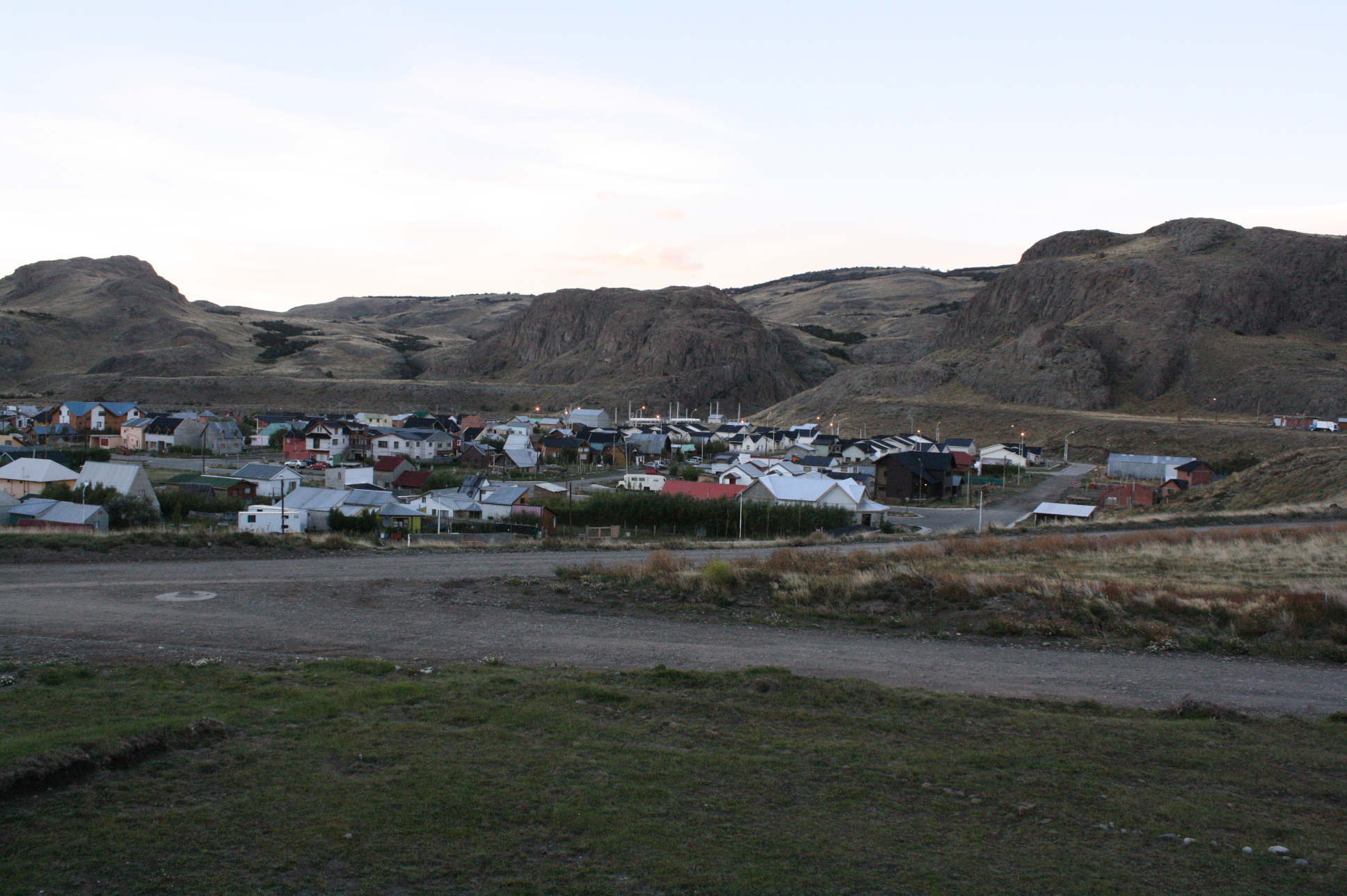
I walked into Panama

Attitude of Gratitude:

I’m thankful that I’m no longer getting bit by Panamanian bugs. I’m thankful for the days I’ve been starting with delicious, balanced, home-cooked breakfasts. I’m thankful that I overheard my British friend and her Mom skyping about knickers and the laughing that ensued. Read my previous blog post here to learn about my attitude of gratitude.

I’ve always loved the idea of suspension. Of being in two places at once, of being between two ideas, two realities. Crossing the border from Costa Rica to Panama on foot on a rainy day over an unstable, slippery bridge wasn’t as romantic as my thoughts of suspension. The wooden bridge had an old railroad track down the middle with wide open gaps between some steps. Boards shook when you stepped on them. Between the gaps the dirty river raged below.
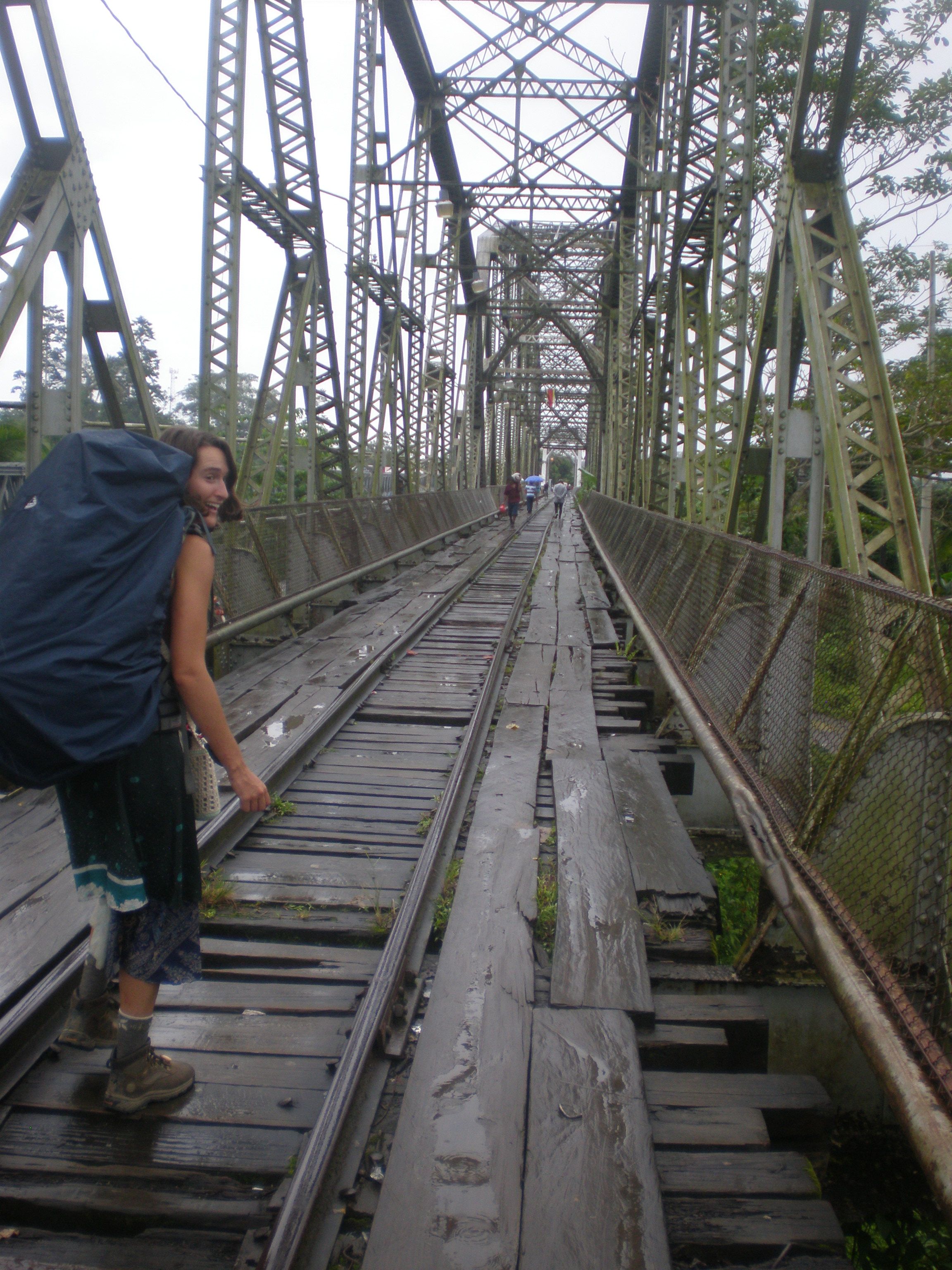
Here I am bracing the bridge

Here I am walking into another country. Good thing I wore my hiking boots.

Entering y Exiting Costa Rica:

As a United States citizen you don’t need a visa to enter Costa Rica. All you need is your passport and proof of leaving within 90 days. Once the 90 day mark comes, you need to leave the country for 72 hours before you can return. For more information about traveling to Costa Rica as a United States citizen head to the U.S. Department of State’s page here.

Many people recommended Bocas del Toro, islands of the  northwest coast of Panama, and my friend from the States was heading there, so it was perfect time for a border run.

Logistics of a border run:

My friend and I started in Cahuita, a town on the Caribbean side of Costa Rica. If starting in Cahuita, make sure you have colones at the bus station to pay for a bus ticket. They wouldn’t accept American dollars. We missed the bus because of this. But also make sure you have American dollars before you enter Panama because that’s the currency in Panama.

From Cahuita we took the 10 a.m. bus to the border town of Sixaola. We were confused because we heard people say Sixaola and thought they were saying six hours. It took two hours to get to Sixaola from Cahuita. The bus deposited us at the bottom of the hill at the end of town. The only way to go was forward, towards the bridge. Before walking across the bridge we had to go to the immigration office on the right. We had to fill out an immigration form and get an exit stamp from Costa Rica. Once in Panama we could have walked right into the country without anyone stopping us. We walked into another country like we were walking home from a neighbor’s house.

Once off the bridge there’s a border office to the left to get an entrance stamp. Like Costa Rica, in order to enter Panama you need proof that you’re leaving. I was able to show my flight out of Costa Rica as proof. My friend had to buy a bus ticket from the stand down the stairs on the side of the big building. For $14 he bought a ticket that was valid for a year. He had to write his name and passport number on the ticket. The whole border process took about an hour. There was no fee to enter Panama.

The stand to buy a bus ticket is behind the white van.

One of my first glimpses of Panama. The stand to buy a bus ticket is behind the white van.

On the Panama side there were a lot of people just hanging around, watching. I didn’t feel threatened but it was a little unnerving. Most of them seemed like they were just trying to make money by helping. We took a van(one of the men hanging around was advertising the shuttle service) for $10 to the port where we took a boat for $4 to Bocas Town. Once we got into the van, the soundtrack of old school Ja Rule and 50 Cent gave me hope for the way things were working out. But once we got to Bocas Town, I quickly learned that it wasn’t where I wanted to spend my time.

Bocas Town, Bocas del Toro, Panama

Bocas Town is a small slice of a town at the bottom of Isla Colón. It’s the most developed and most visited area of the six islands that make up the Archipiélago of Bocas del Toro. Isla Colón is named after Christopher Columbus, who sailed to Bocas del Toro in 1502. The islands eventually turned into Chiquita banana plantations. Workers came from Jamaica and the West Indies, which increased the Caribbean vibe. Now there are hotels along the water, homes raised on stilts that are painted vibrant colors with a mix of tropical and colonial porches, and tons of water-activity based tours to go on.

Who names paradise?

For the first time in my travels I experienced what people deem “paradise” right alongside stark poverty. Being in Bocas Town made me feel sad and uncomfortable. Being there made me feel like I should be doing something to help instead of bar-hopping like most people. I started thinking about who deems a certain place paradise and how someone else could experience it completely differently. It looked like the locals were getting pushed out to construct hotels and places for visitors. Many areas were littered with trash and many locals homes were just piles of wood planked together. Are the locals enjoying the islands for the turquoise water and pristine beaches or are foreigners the only ones able to enjoy all the paradisiacal activity? It was also my first stop that wasn’t a backpackers’ town and instead a place where wealthy people vacation. I wasn’t used to not seeing smiling passer-bys on the street, not being able to find a decently priced meal containing vegetables and not freely going up to strangers to chat.

Here are some homes in Bocas Town:

There were places I enjoyed in Bocas Town, but I think three days is enough to experience what Bocas Town has to offer.

My suggestions:

-Rent a bicycle and ride out of Bocas Town towards the main part of the island. Ride towards Playa Bluff. Before the beach there’s a cool lounge on the water called Paki Point. Great place to chill, eat, drink. Playa Bluff was one of the most beautiful beaches I’ve been to.

-For food: Bocas Blended. A food truck two doors down from Tropical Markets, next to a house with a sign that says Marisqueria. It’s on the road along the water. I had a Mediterranean veggie wrap, Thai salad and mojito lemonade for $7. Any combination of wrap, salad and drink is $7. So fresh and delicious. I would definitely go again.

Bocas Blended

Bocas Blended

La Casbah: Located on Av. Norte between Calles 3 and 4. Very fresh food and reasonably priced. I had a falafel plate with pita and veggies on the side for $6.50. Split bruschetta for $5.50. Great atmosphere.

La Buga: on the water. Had good veggie options for lunch.

Cosmic Crab: on Isla Carenero. Need to take a $1 water taxi from Bocas Town. Right on water. Great place to go for sunset. Good specials.

Favorite store: Island Traders. Two doors down from police station. They have traditional mola patches, unique jewelry, beautiful displays of local art, among other things.

My favorite store on the island

My favorite store on the island

Favorite place to take yoga: Bocas Yoga. In a big purple house. For $5 you can’t beat it.

Cool hostels in Bocas Town:

Casa Verde (right on the water), Mondo Taitu (a party hostel), Mare Iguana (not in the center of town), Hostel Hansi

The inevitable thing in Bocas:

I can’t blog about Bocas without writing about the bugs there. I’m naturally prone to bug bites, so I might be a little biased. But out of all the years of my life of constant bites, swelling and infections, I’ve never experienced bites to the degree that I did in Bocas. Bocas is known for its invasion of no-see-ums or sand flies. In clusters they attacked my ankles and pretty much every part of my body. After itching them they would burn for hours. This hasn’t happened to me with other bites. I’d wake up in the middle of the night to partake in scratch-a-thons. I wouldn’t be able to fall asleep. No bug spray or medicine helped. I did use a relief oil that I bought on the island. “Stop Scratchin Bite Relief” had jackass bitters, mataratton, aloe vera, coconut oil and beeswax. This helped but I had to apply it constantly.

If you have any questions at all about more information in Bocas or want to know more specific details about what I mentioned, message me or leave a comment and I’d be happy to help.

One last thing

I can’t write about Bocas without mentioning Sweet Love. Sweet Love was graffitied everywhere. You couldn’t walk down the street without it making an appearance. I’m not exactly sure why or where it came from, but there’s no denying that sweet love makes everything better. Here’s hoping there’s more sweet love for all of us.
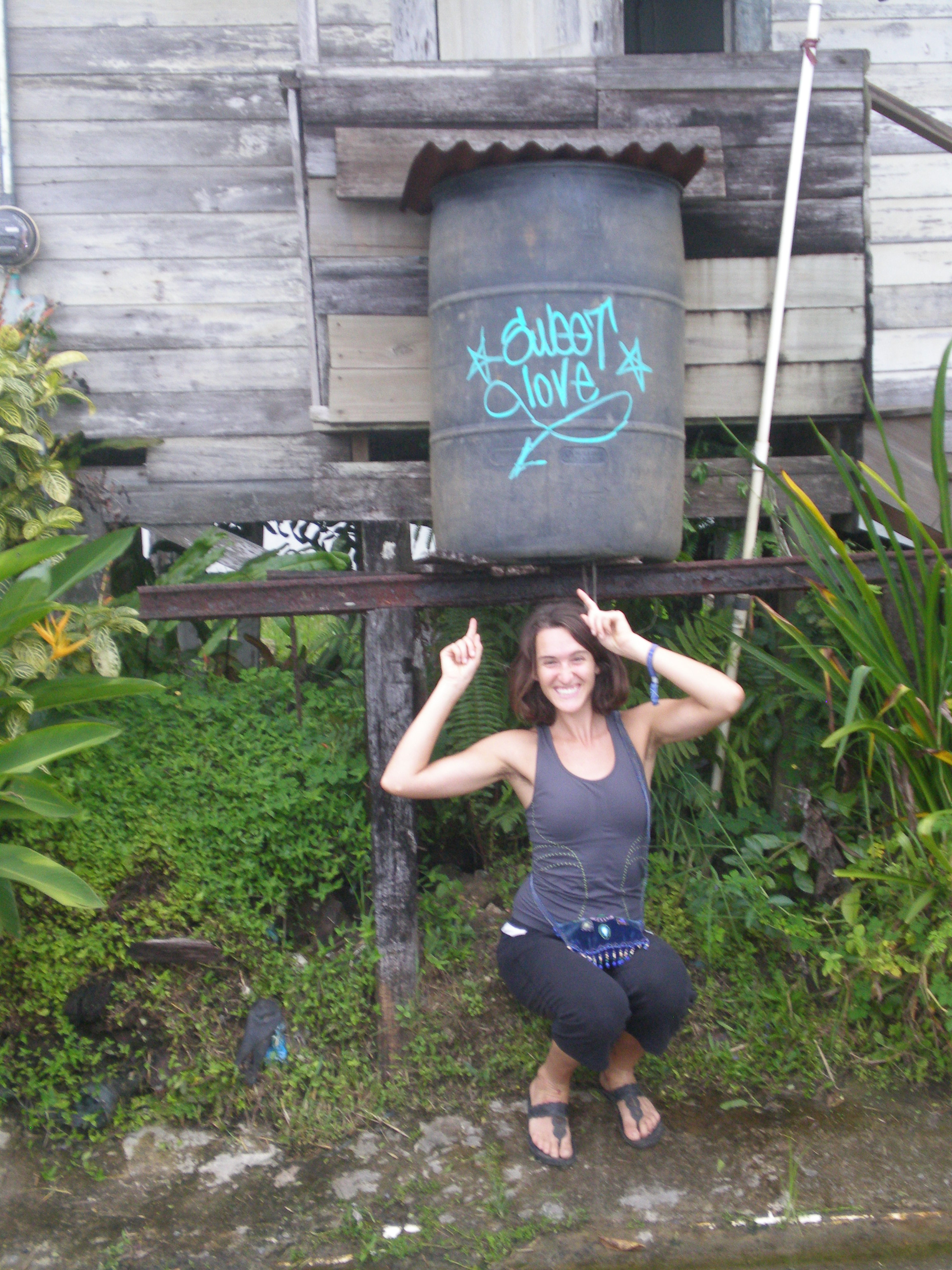
I hope all your days are filled with sweet, sweet love.

I hope all your days are filled with sweet, sweet love.
Envisionary Enlightenment

Attitude of Gratitude:

I’m thankful that I’ve been spending the winter at various beach towns away from snow.

I’m thankful for strangers who lend me their computers so I can blog.

I’m thankful for every single thing that happened to me since leaving the La Fortuna area.

Sometimes in life things happen so fast that they don´t even feel like they´re happening. After three weeks of volunteering at Rancho Margot I left to venture to Envision, a music, arts and movement festival in Bahia, Costa Rica. I didn´t have a ticket and I wasn´t registered to volunteer, but I knew I didn´t have anything to lose. Sometimes all you have to do is show up. I don´t think we give ourselves enough credit for showing up. If one thing doesn´t work out, something else will. As long as we enter situations with an open mind and an open heart, things will be all right.

The day we left the ranch (I tagged along with another ranch volunteer who was set to volunteer at Envision), we spent most of the day traveling to Jaco. When we passed through San Jose I felt like someone picked me up and dropped me onto a spinning top. After weeks of solitude at the ranch, the movement,  litter and concrete of the city was overwhelming to say the least. We arrived in Jaco around sunset, ate, slept and caught the 6 a.m. bus to Uvita. When we arrived to Envision, I lined up with all the volunteers to sign-in. I asked them if they needed any extra help, said I was willing to do anything and they signed me up for the Envision Cafe and Tea Lounge. I was ecstatic with the way things were working out.

As the festival went on it quickly became one of my favorite festivals. Part of Envision’s mission is to elevate people to live a more conscious lifestyle through education, music, art and sacred movement. Throughout the day there were countless yoga and dance classes and all sorts of informative workshops on topics like healing plants, building community and feeling empowered. The music (mostly electronic) started at 5 p.m. and went on until 7:30 in the morning. The crowd was a mix of like-minded travelers, festival lovers, Burners and ticos. It was set deep in the jungle with multiple types of palms outlining the grounds  and the nighttime hum of cicadas.

Envision highlights: showing up without a ticket and being able to volunteer, serving people at the Envision Cafe and Tea Lounge, Random Rab’s sunrise set, seeing Rising Appalachia for the first time, discovering a divine love for jackfruit, taking a contemporary dance workshop with the performers of Quixotic, the question and answer session with Alex and Allyson Grey, randomly running into friends from the States and recieving some of the best hugs I’ve ever had.

After Envision I spent two nights in Bahia then joined the rest of the Envisionaries in Dominical which quickly turned into an Envision after-party. The street along the beach usually has typical beach vendors selling towels, jewerly and art, but after Envision many craftsmen joined the vendor row. People camped right behind the vendors and on various spots along the beach. Post-Envision transformed into Occupy Dominical. At any given moment interesting characters swayed and stumbled along that vendor road.

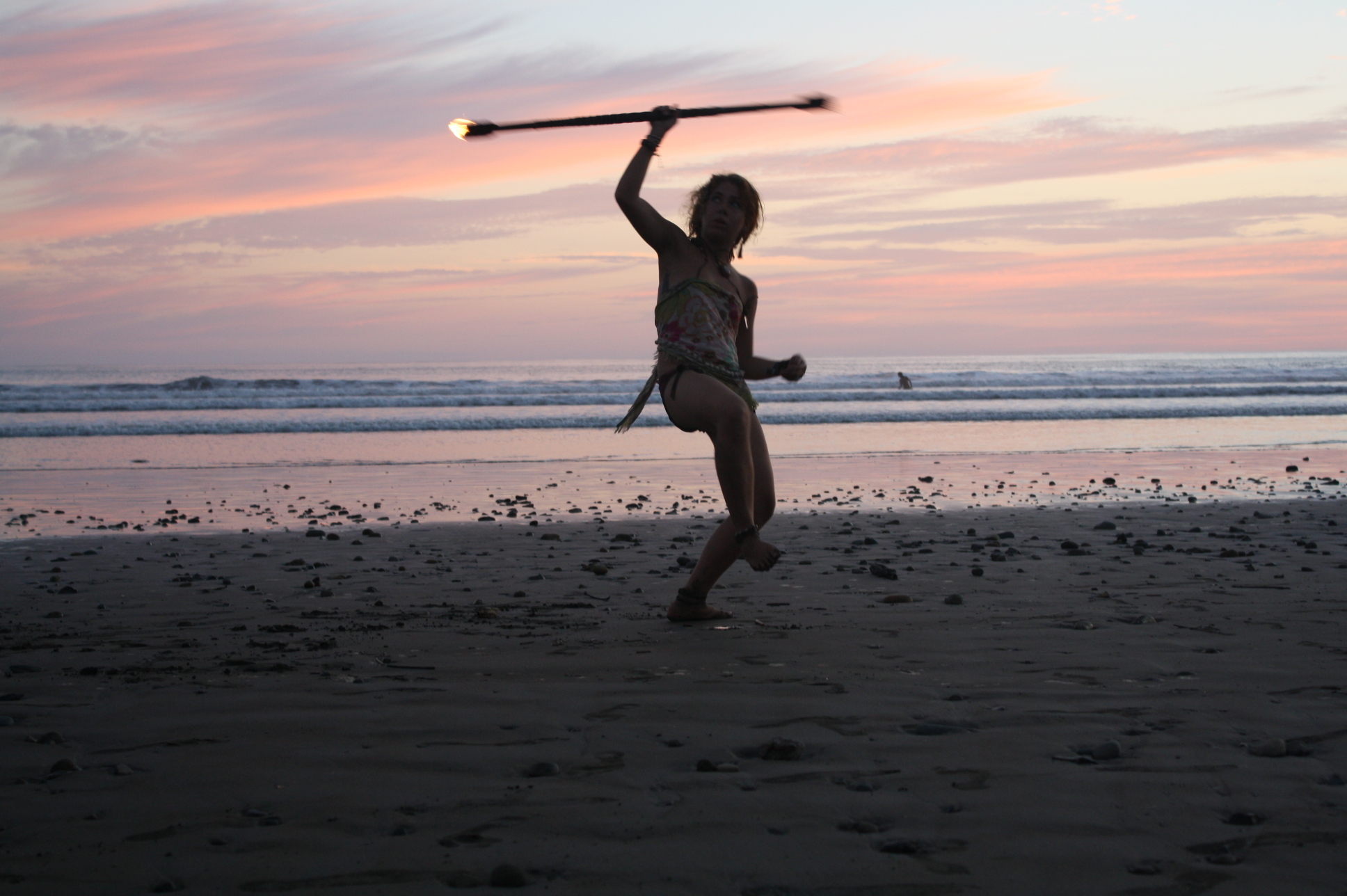
We arrived just before sunset, found an open room for the two of us that transformed to six in Bahia and went straight to the beach. I’ve never seen so many people on one area of the beach for sunset before. Three of us sat close to the water and meditated as a man played his trumpet and the sun sank below the horizon. Everyone clapped and cheered. People drummed, hooped, spun fire, threw sticks, danced.

Dominical

Sunset

French loves

IMG_9083

I spent the next few days falling in love with everything and everyone around me. I had so many great conversations with people I just met. And the beautiful people were everywhere: on the streets, on the beach, at the supermarket, at the hostel. After the festival it was so nice to still see festival friends. It was a chance to get to know them outside the festival while letting go and sayin nos vemos at the same time. A slow, easy transition back to the “real world.” Even though for most of us traveling the real world is a bit like festival life. The festival just gave us a gathering space to merge together.

After Dominical I went to San Jose to regroup while visiting a friend and now I’m writing this from an island in Panama. Life has been filled with so much sweetness.

Sunrise Sessions and Lessons in Perspective

Attitude of Gratitude:

I´m thankful that my friend at the ranch lent me her computer so I could create this blog post. I´m thankful for the merengue and bachata lessons the ranch workers have been giving me. I´m thankful that my friends just showed me Jamiroquai and now I can´t stop dancing. Read my previous blog post here to learn about my attitude of gratitude.

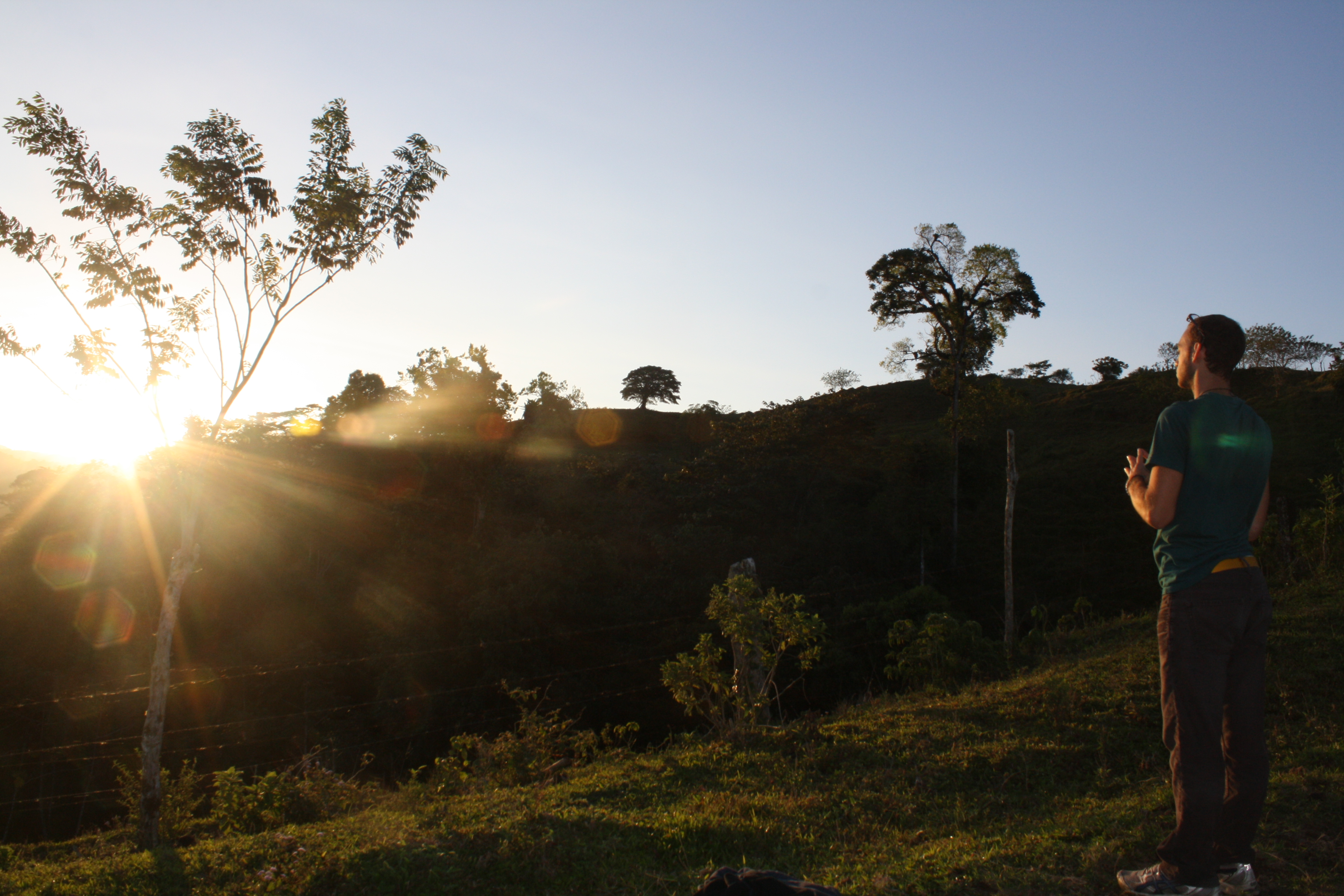
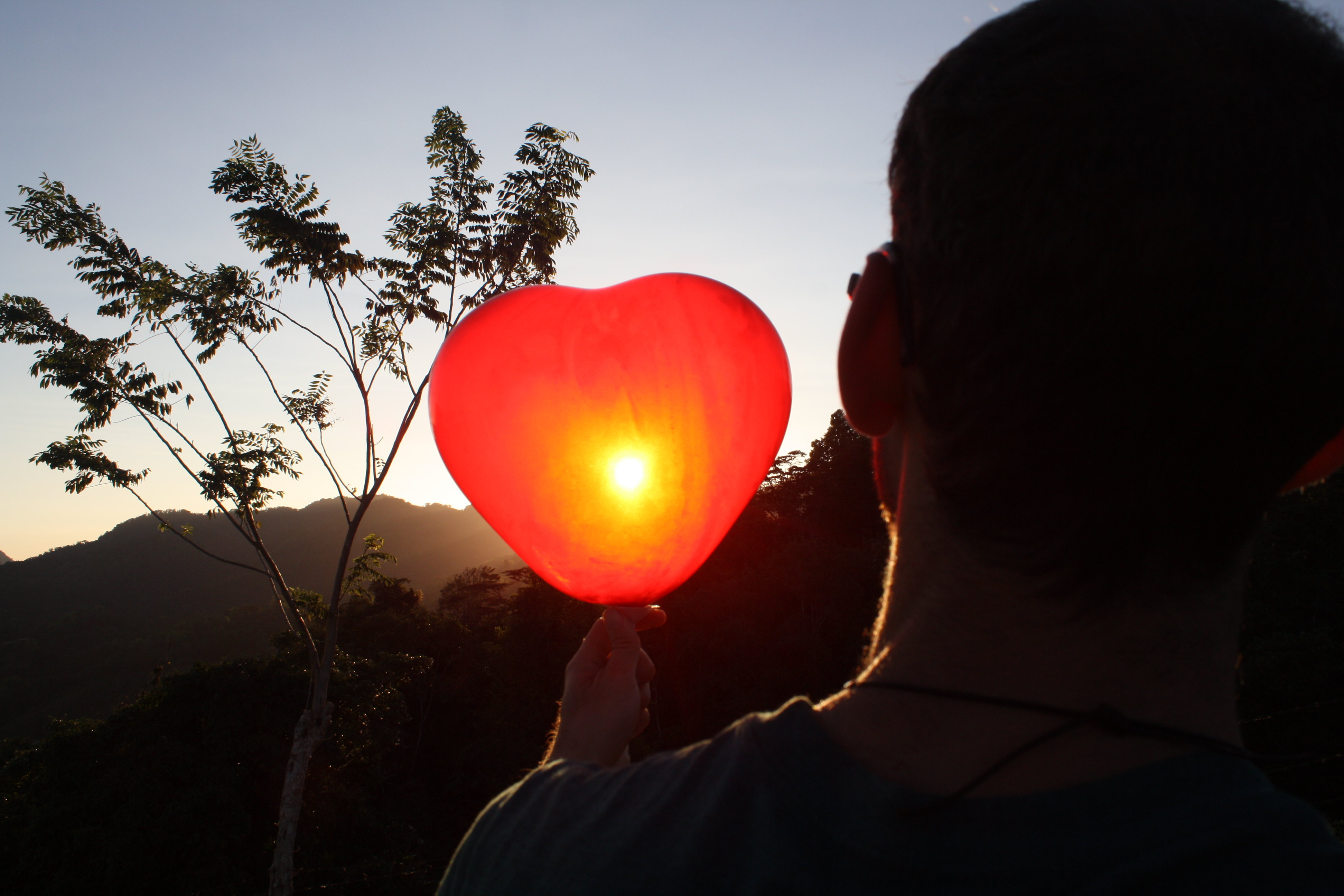
One of my favorite things about being at the ranch has been waking up daily to hike a steep, narrow incline for about 30 minutes to watch the sunrise along the volcano. Witnessing the first breaths of morning, the first movements of the day. The newborn light in the sky. The chirps of noise. The way these stretches of light and sound slice into the stillness, while remaining tranquil, harmonious. This beginning always fills me with inspiration, with belief that anything is possible, with gratitude for being alive.

Everyday is a beginning, a clean slate. It´s one thing to say this and realize it when you wake up, but it´s another to witness the beauty of it enfolding right before your eyes. This daily dose of sunrise fueled me with invigoration and joy for the rest of the day.
sunrise

Brad, another volunteer who became my sunshine and dear friend at the ranch, and I made hiking the mirador for sunrise part of our daily routine. Sometimes we´d watch in awe and silence. Sometimes we´d greet the day by dancing and drumming new beginning into life.  Other days we´d just talk about travel, society, open-mindedness, and being in love with life.

sunrise

sunrise

One of our favorite trees to watch the sunrise from,

One of our favorite trees to watch the sunrise from.

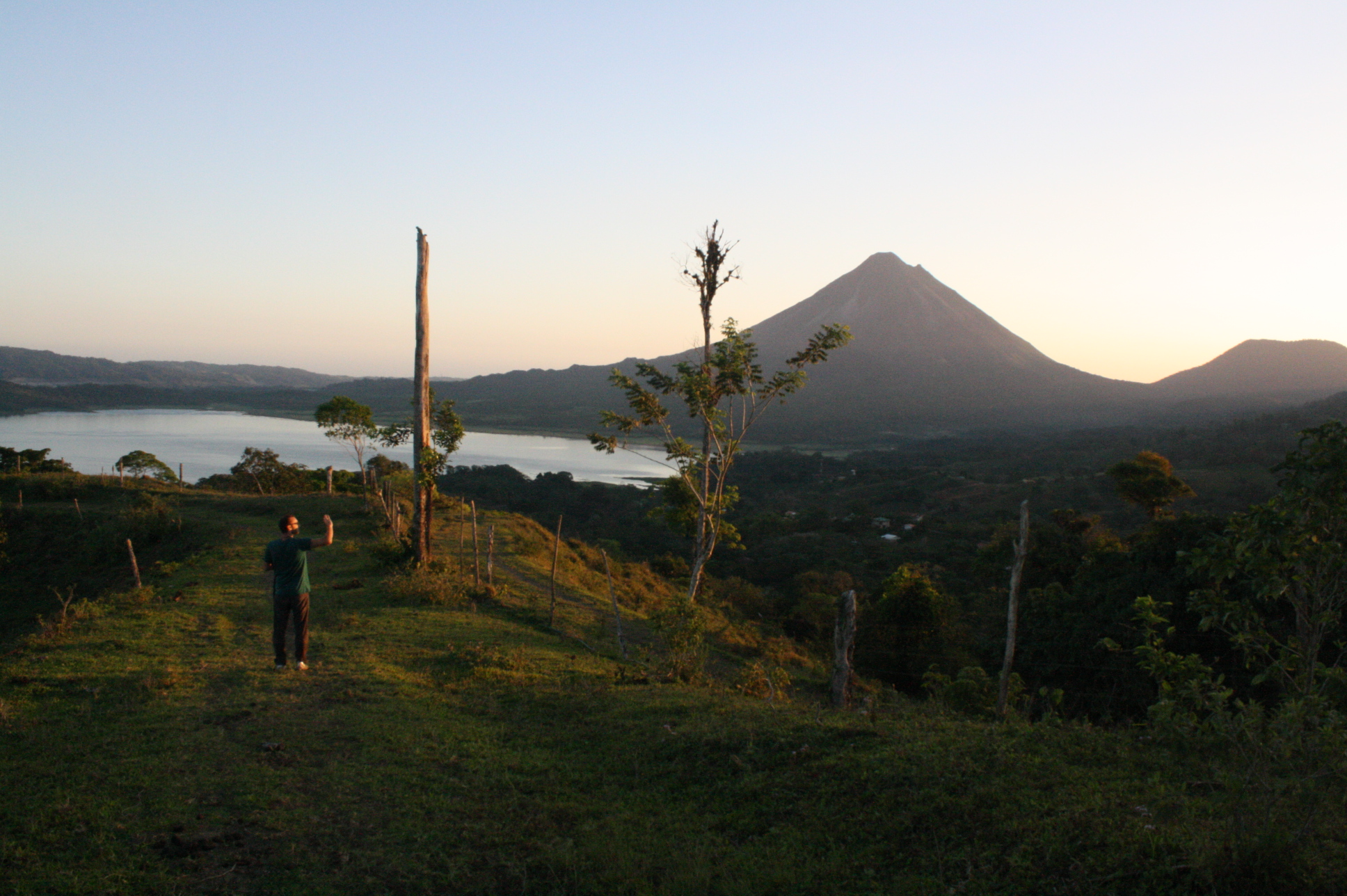
At the top of the mirador on a clear day you can see Lago Arenal, Volcano Arenal, Cerro Chato, the volcanoes on the other side of the lake, the town of El Castillo and the ranch, nestled within a valley sheltered by mountains. Most of the buildings at the ranch melt into the landscape, hidden by the natural green roofs. You can see the outline of the ranch, a few cars in the reception´s driveway, the Caño Negro Rio.

Not until I was off the ranch, gazing at it from above, did I realize the significance of its location. As I stood on top of the mountain looking at the place I´d been living for the past two weeks, a deep sense of appreciation warmed me. Here I had been living in the middle of nowhere, in a location undetectable by the untrained eye, with volcanoes, forests and bodies of water as my neighbors. And yet I had gotten so accustomed to the routine of buffet meals, walking the same path to la casona, and weeding in the garden that I forgot to appreciate where I was. Even in a beautiful lush ranch, the mundane details managed to sneak into my life and steer me away from what´s important. Looking at the ranch from above, my perspective totally changed. Sometimes you need to leave a place in order to appreciate it.

The ranch from above

The ranch from above covered in shadow

The first time this perspective shift happened to me was my first semester of college, 3,000 miles from home. All the sudden everything I despised about my hometown in New Jersey came rushing back to me in the form of nostalgia. When living at my childhood home post-college, I drove around neighboring towns and entered antique shops I´d never set foot in, shops that had been there my whole life. Sometimes we need a perspective wake-up call to rise to the beauty of every moment, to stop and look around, and to discover what´s already there, right in front of our eyes.

And just for fun, here are Brad and I´s sunrise photos from a pajama sunrise session:

sunrise jump

Greet each day with a smile. And a jump, if possible!

sunrise jumpsunrise jumpsunrise yoga

To the wonder of every moment

Attitude of Gratitude:

I’m thankful for the opportunity to immerse myself in nature. I’m thankful to live among incredible creatures. I’m thankful that I’m part of the work exchange program at Rancho Margot. (These thanks are part of my attitude of gratitude series I’ll be including on my blog. Find out why by reading this blog post.)

You never know what you’ll see or what you’ll learn here at the ranch.

When I took off my shoes in the garden, Abilio, the ranch’s agricultural engineer who I like to call Abuelo, told me to take off my socks too. He encouraged me to dig my toes into the dirt. He grabbed a handful, smelt it and said, “This is life.” Everyday I’m learning something new about this life, about living in harmony with nature.

One afternoon the other tour guides taught me about pollination. As they explained flower gender and hummingbirds as subconscious matchmakers, I felt overcome with emotion. In this strange way I felt like crying without precisely knowing why. So intensely I felt the connection to all the plants around me, how everything lives inside of us, how deep our roots run, how nature is constantly living this cycle without our help. Learning what seemed like for the first time how flowers function and how we as humans relate to that. It was like I was the only one missing out on a giant secret. I wanted to kiss every single flower, thank every single tree. On any given day here I get wrapped up in the beauty and wonder of it all.

Everyday I see at least one hummingbird. I’ve gotten used to waking up to the mono congos howling, the pigs squealing or the cows moo-ing.

On the way to la casona after work one day I walked past this in the medicinal garden:
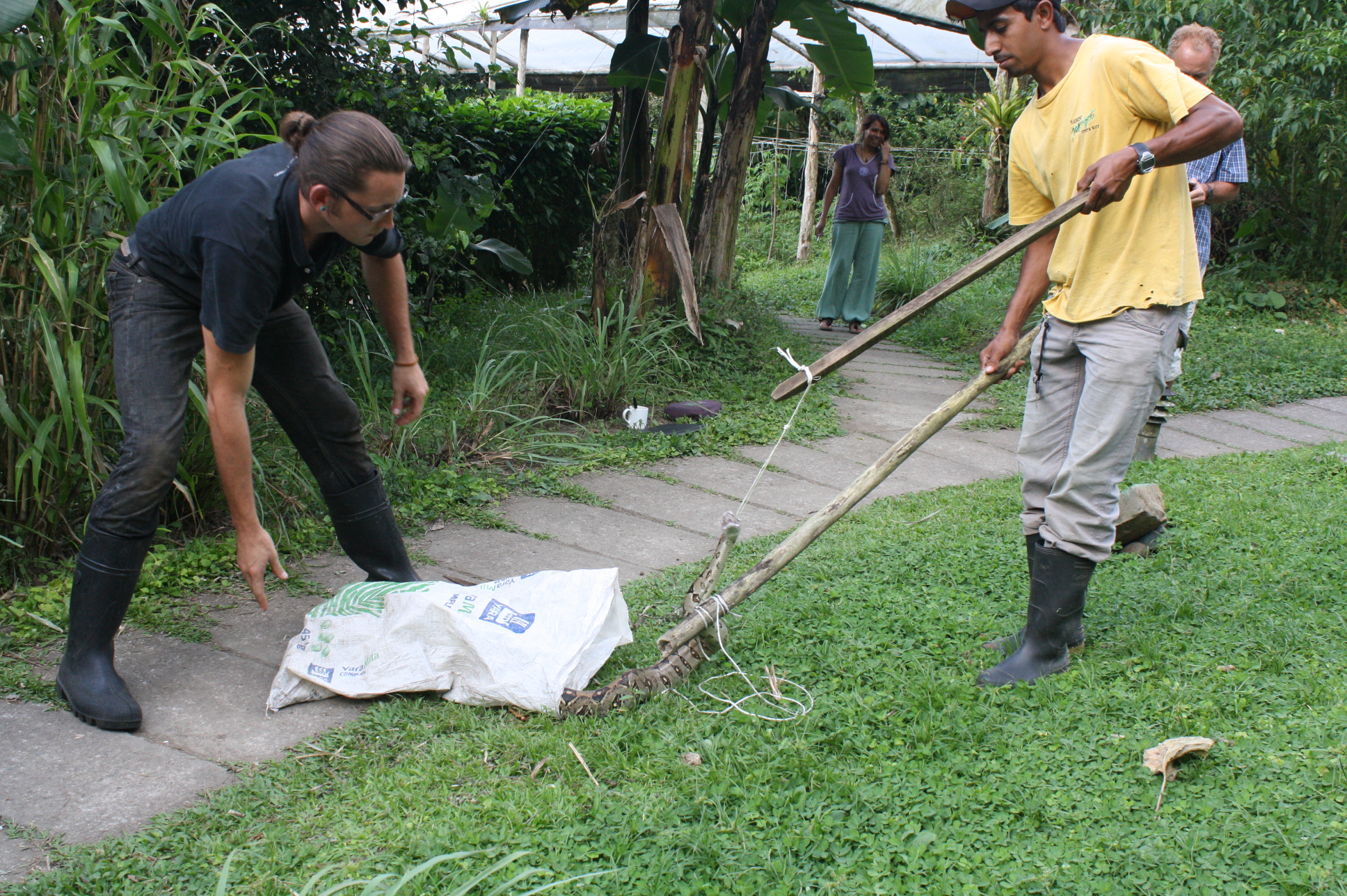
boa

It was my first time seeing a boa constrictor in nature and not in a museum. We placed it in a burlap sack and freed it by the river. When it opened its mouth the hiss was phenomenal, like a projection from the depth of a human throat. boa

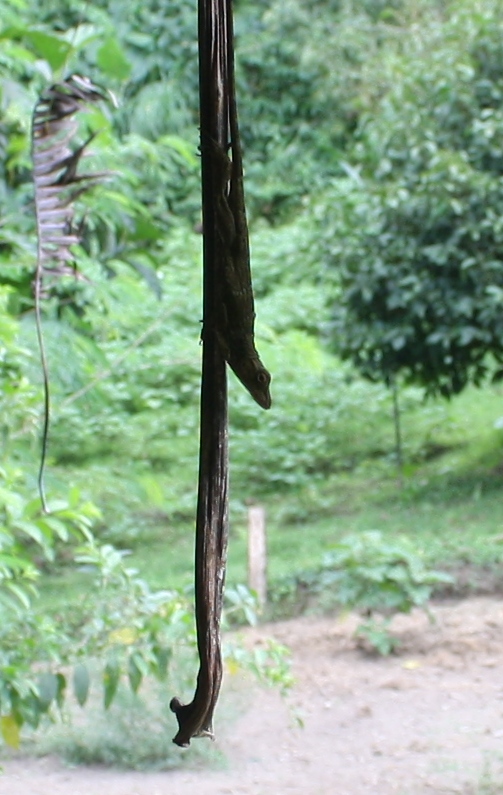
boaAnother day I looked out the window of my room and saw a lime green anole run up the tree. When I pass them on the trail, they look like miniature Tyrannosaurus rexs, awkwardly hobbling along with arms dangling. It let us watch it for awhile on the tree.

Anole

anole

Then it leapt to a branch and changed color to blend in. It chameleoned right before our eyes.

anoleI’d rather watch that than a television anyday. I’m constantly amazed by what I see in nature everyday.

A family of ants crossing the street while carrying leaves.

If you look close enough you’ll see that those green leaves are being carried across the street by a family of ants.

Keep a green tree in your heart and perhaps the singing bird will come

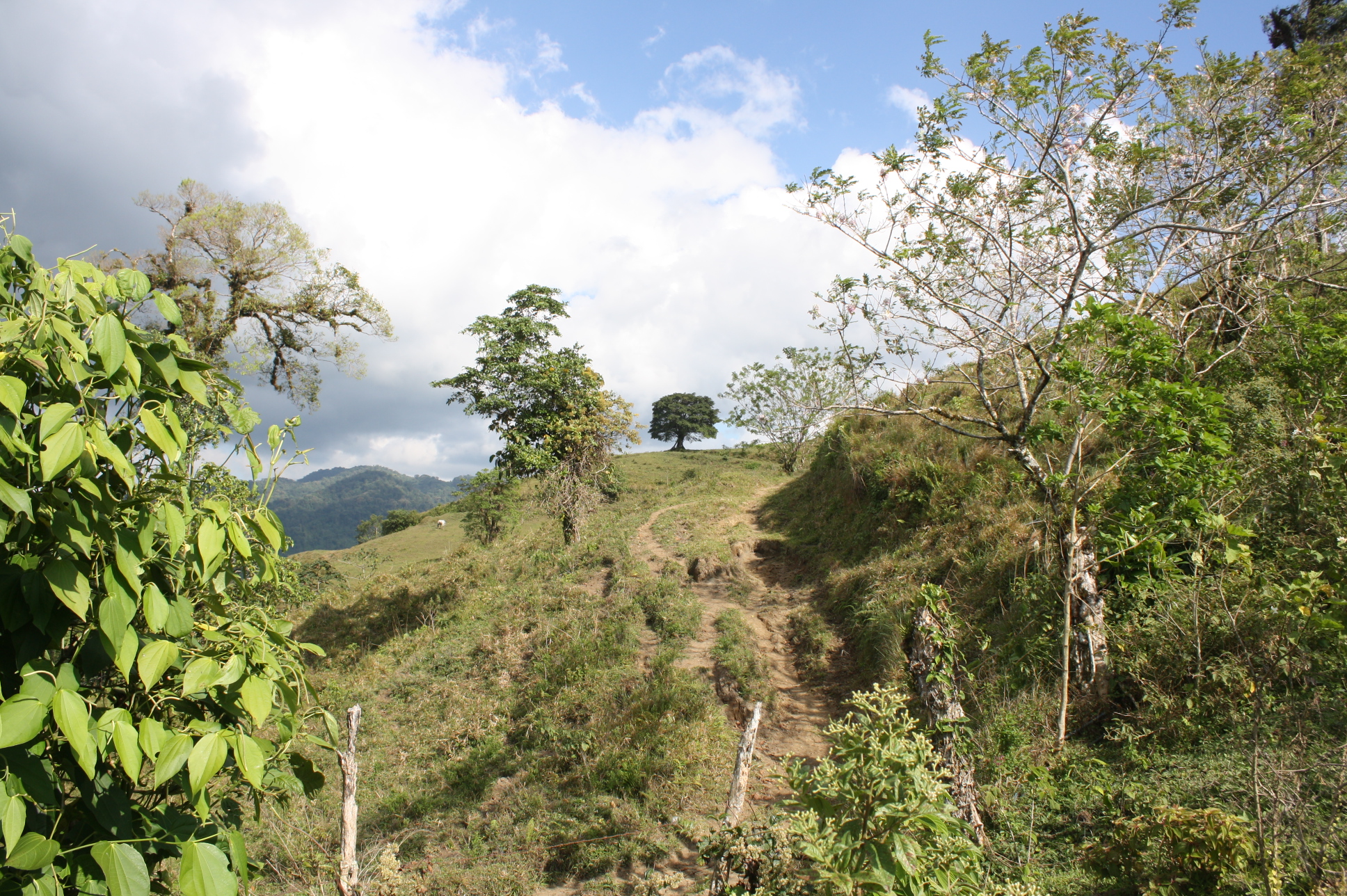
A dirt road has taken me everywhere I’ve been in Costa Rica. The road to Rancho Margot, a mostly self-sufficient eco-resort in the cloud rain forest in the western province of Alajuela, was no different. Except after Rancho Margot there’s only forest and mountains.

The road ends at Rancho Margot where new life begins.

The road ends at Rancho Margot where new life begins.

I’ve committed to a work-exchange program at Rancho Margot for at least one month. I found Rancho Margot by googling ‘yoga retreats and farms in Costa Rica.’ I was torn between what farm to volunteer at first, and then I met someone who had been to the ranch. After a yoga workshop I took in New Jersey, I talked to one of the yoga teachers, Jo Ann Jones. She had a pamphlet in her hand about Costa Rica. Farming came up in conversation and Jo Ann mentioned Rancho Margot. “You have to go. It’s a magical place,” Jo Ann said. My decision was made then and there.

Rancho Margot overlooks Volcano Arenal, which was Costa Rica’s most active volcano up until 2010 and Lago Arenal, Costa Rica’s biggest lake. At the 400-acre ranch we produce our own electricity with hydroturbines; we heat the shower water with compost; we create our own methane gas from animal waste; we grow food without chemicals; we make our own soap and furniture and so much more. Learning about the sustainable steps the ranch implements, makes me wonder why more people and organizations don’t follow suit. There are simple ways to live in symbiosis with nature all while nourishing and preserving the Earth.

The owner of the ranch, Juan Sostheim, opened the first Burger King in Europe and owned a chemical factory in Holland. While vacationing in Costa Rica he stumbled upon a barren horse and cattle pasture. For the past nine years he has been reforesting that land, which is now the ranch, and turning it into a model for sustainability.

At the ranch there’s about 50 workers and a rotating cast of anywhere from 5 to 10 volunteers. I sleep in la casona, in a bunkbed in the voluntarias room. I work a 6-hour day in the vegetable garden and when the tour guides need help, I give tours to guests and visitors. I take daily yoga classes at the outdoor studio on the ranch. I love working in the garden, surrounded by green, being a part of the process of cultivating life. I love giving tours and educating people about our sustainable practices, learning more and more about plants and wildlife all the time.

garden above

View of the garden from above

Part of the vegetable garden

Part of the vegetable garden

path

Part of the path I walk everyday

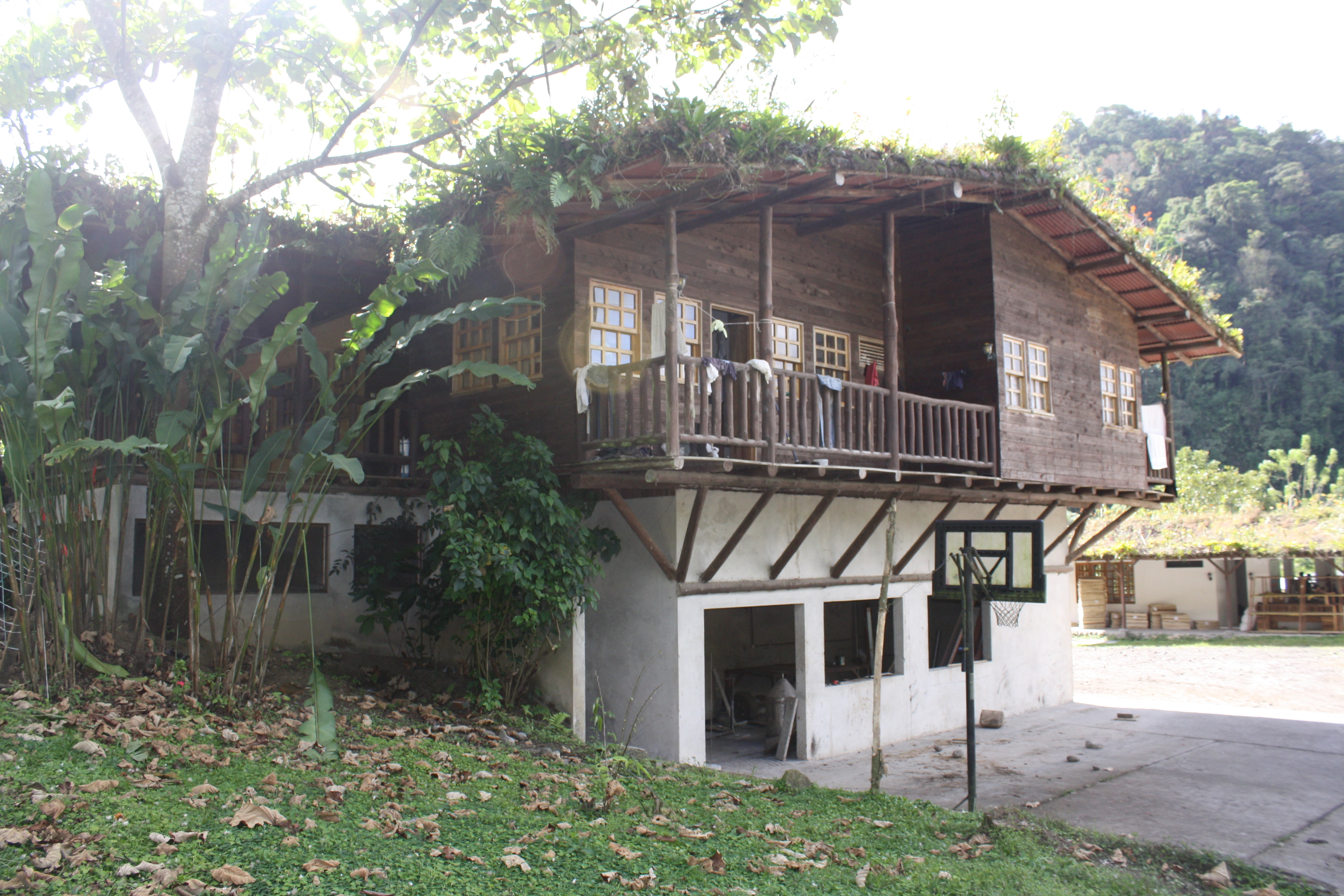
La Casona

La Casona, where the volunteers and workers stay

Baston del Emperador

Baston del Emperador, the King’s Stick.

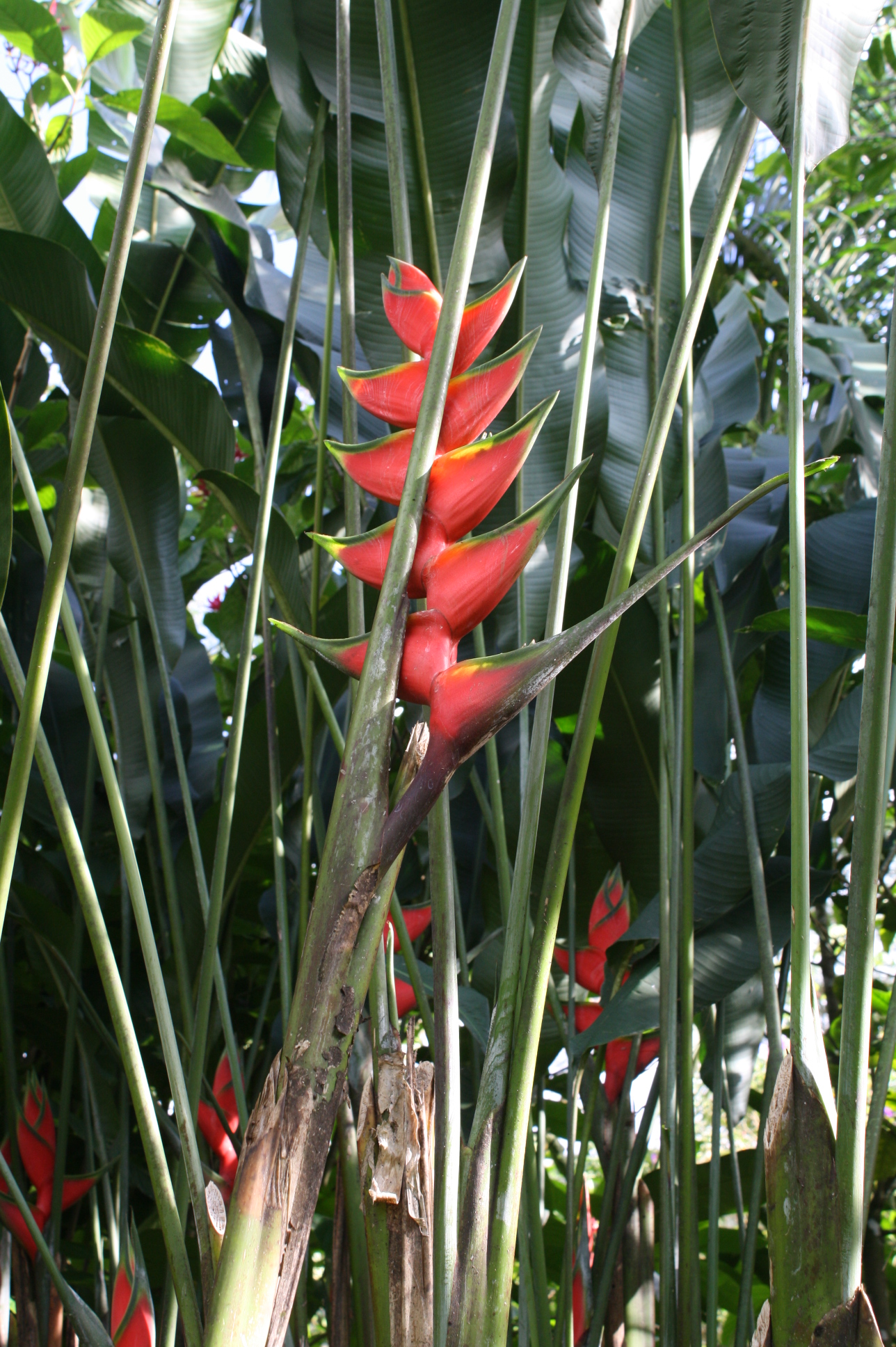
Heliconia, we have tons of  species of these on the ranch. I've seen them in other parts of Costa Rica too.

Heliconia. We have tons of species of these on the ranch. I’ve seen them in other parts of Costa Rica too.

So far everywhere I’ve been in Costa Rica has bordered a body of water. I can always hear the vital life force rushing, always moving. At the Nicoya Peninsula it was the ocean. Here it’s the Caño Negro Rio that’s along the ranch. Instead of the rush of traffic, it’s the rush of a river. Instead of the wail of sirens, it’s the wail of birds. Instead of gray concrete buildings, it’s green growing plants. This presence of nature is always something I want to surround myself with, something I always want to keep alive in my heart.

The day I left Santa Teresa

It was one of those days where you don´t know whether to laugh or cry at the end of it. So I shook my head and did a little bit of both as I thanked the universe for everything that had been happening to me.

“Lord I´ve got to keep on moving,” Bob Marley sung over the speakers at Casa Zen as I was signing my farewell in the hostel´s guestbook. Even though I´d met some wonderful people and learned a lot, Bob Marley reaffirmed what I already knew, it was time to move on. I hugged my friends goodbye and sadness rushed through me. Goodbye. Why did my friend, Adrian, a yoga instructor at Casa Zen, say goodbye as he hugged me? Goodbye was too definite for me. After he left, I realized I should have said ´see you later´ or ´nos vemos.´

To get to La Fortuna from Santa Teresa, I had another long day of travel ahead of me. Buses and ferries and taxis, oh my. I took the 6 a.m. bus outside of Casa Zen to Cobano. There I transferred to the San Jose bus and told the driver I was getting off at San Ramon. Because they oversold the bus I had to stand the whole ride to Paquera, where the ferry was.

When I got off the bus at the pier, I was shocked to see what was in front of me. Adrian, my friend from Casa Zen, was standing there with a huge smile and open arms. “It´s a coincidence,” he said. He happened to be taking the same ferry.

We sat together and talked the whole ride. We spent the first part of the ride making animal noises and the second part of the ride talking about death.

“Are you afraid of death?” He asked me out of nowhere. He told me that all fears stem from a fear of death. To be aware of death is to be aware of life. To live for each moment with the constant knowledge that death can happen at any moment. From that we started talking about attachments and letting go. He said that we´re like monkeys reaching for vines. We grab on to one, use it to help us on our way and then we let go. So we must be attached for a certain amount of time; we cannot be completely unnattached. We are attached to our bodies, and through our bodies we are able to express our minds. Without our bodies, we would just be floating in consciousness. In this way we cannot become deattached.

As I spoke about letting go, Adrian stopped me. “You are referring to letting go in the past tense. We have to let go in the present too. This moment that we´re having already passed.”

He showed me that letting go means letting go of small moments and not just the big moments. Letting go means being able to release every single moment. We agreed how important it is to try to let go of something everyday and then we had to let go of our shared ferry ride. We each went separate ways, but we didn´t say goodbye. We learned to say see you later.

On the next bus ride my mind was still reeling over my conversation with Adrian. I boarded the same bus after the ferry and then got dropped off in San Ramon. From there I had to take a taxi to the next bus station. While I was on my final bus to La Fortuna, a boy with long dreadlocks sat next to me. We found out that where I was going was down the street from where he was going. At the bus station, my ride wasn´t there so without my knowledge Juan phoned Rancho Margot to arrange a ride for me. I was so grateful for his kindness.

After I ate my first meal of the day at a soda, which I was so pleased to find was 500 colones cheaper than anywhere Id been, I walked back to the bus station. A man with gray-tinted facial hair, green eyes, a cowboy hat with feathers attached and a long, thin braid approached me and asked, “Are you coming or going? Let me help you with your bags.”

He lead me around the corner to Red Lava, an information center. He told me he´s on morphine for bone cancer and mentioned the book that´s being written about his life. At Red Lava, a tico teenager with short dreadlocks and lots of friendship bracelets brought my bags upstairs and hid them in a dark corner as he reassured me in perfect English, “Don´t worry, these are incredibly safe.”

Jesus, the cowboy known to the locals as Tomas, asked me if I wanted anything to drink. When I told him I didn´t have money, he said, “Ah some women never change. Come on sweetheart, I´ll buy you something.”

On the way to the supermarket he mentioned the book again and said, “Maybe you´re too young to know about the revolution in Cuba and my father. Did you look at my name on the card? I glanced at the business card he handed me. Jesus Ernesto Guevara. “Che was my father.”

For the rest of the afternoon while I waited for my ride, Che´s so-called son took me around town. He pointed out the best foods and wines to buy and ones not to buy. He picked me flowers and named each one.  He waved at everyone on the street, knew them by name and introduced me to them. Throughout the afternoon he kept making vague references to friends of his like John Lennon and Bob Dylan and referencing dirty jobs he had to do to protect people, jobs like the ones in the movie The Dirty Dozen. He said if I ever needed him, show up in town, mention his name to someone and he´d be there within minutes. When I told him my name he smiled like he knew it all along. “I knew I´d seen those eyes before. My first wife´s name was April. She was both an angel and the devil´s wife.” He said he felt like he was back in the ’70s.

Back at Red Lava I swung in a chair hammock as I continued to wait for my ride. Tomas continued to bring me flowers and he even brought me a baby rabbit. When my ride showed up, Eric, the tico teenager who worked at Red Lava, took off his neckalace that I mentioned I liked and handed it to me. “A present for you. Welcome to La Fortuna.”

When I arrived at Rancho Margot, the first volunteer I met was William. Within five minutes we discovered that he lived on the same floor as my best friend did their first semester of college at University of Nevada Reno.

“There are no such things as coincidences,” he said. No such thing as a coincidence.

Playa Guiones: The Paradise of Surf and Yoga

When you read about Guiones in the travel guidebooks, most of them say something along the lines of:

“The town attracts residents whose idea of Heaven is to perfect their headstand, amble along one of the three absolutely pristine beaches, or paddle out to surf. A town so laid back that each day seems to last a week.”

Everyone I met in Guiones agreed, “People are here to surf or practice yoga.” People travel to Guiones from all over the world to do both. Most of the people I encountered were locals, expats, families or people vacationing. It´s not a crowded tourist town, which I was very thankful to find out. I´d pass the same people on the street multiple times a day.

Playa Guiones (pronounced ge-oh-nays) is a jungle beach town located in Nosara, in the Guanacaste Province on the Nicoya Peninsula. The peninsula is on the west coast of Costa Rica, and it looks like a limb reaching towards the sea. Or if Costa Rica were a seahorse, the Nicoya Peninsula would be the head.

guiones beach

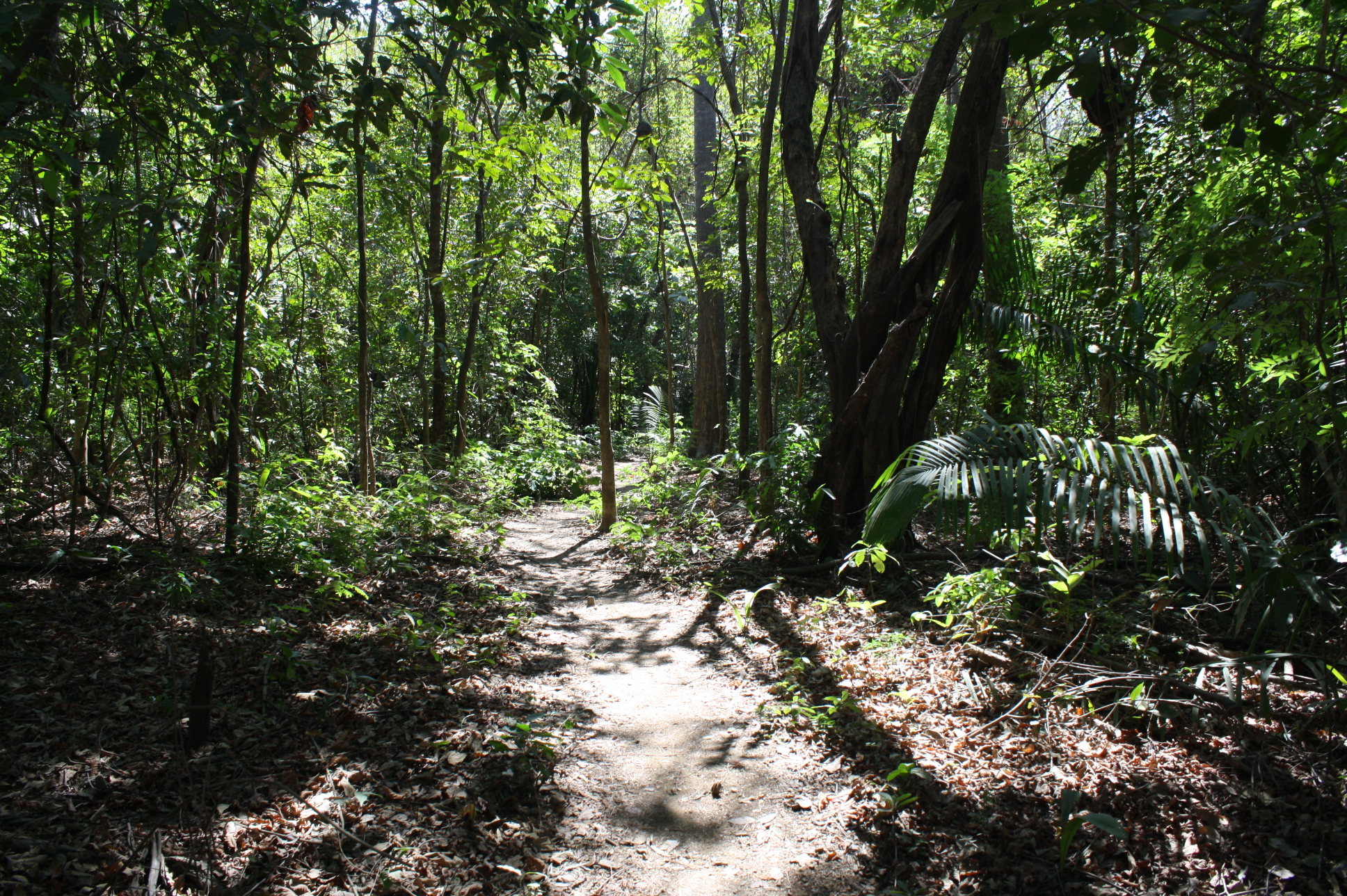
Wherever you need to go, a jungle path will take you there.

Wherever you need to go, a jungle path will take you there.

The province is named after Costa Rica’s national tree, a guanacaste. This tree is pictured on Costa Rica’s 2000 mil bill.  Nosara is named after an indegienous woman who slit her wrists rather than reveal her tribe’s treasure to a rival tribe. Her blood formed the Nosara River.

Guanacaste, the hot and dry province, is said to get more sun than any other part of the country. At this time of the year, January February  the tree leaves and bushes are brittle. It’s almost as if you can hear them breaking from the dryness when you pass.

To get to Guiones from the Liberia Airport we drove along a main road for about an hour and then turned down a 22mile unpaved rocky road. Barely any of the roads in Guiones are paved, and everything is covered in dust. Quads, motorcycles and dirtbikes are main modes of transportation. You see people of all ages riding them, often with other people squeezed between their laps.

A street in Playa Guiones

A street in Playa Guiones

Street signs covered in dusty

Street signs covered in dust

Because of the rocky roads, I was very thankful I brought my Reef flipflops which are very durable, and even more thankful I brought my Vibram Five Fingers. Because of the constant dust, I was thankful I had my bandana always handy to cover my mouth and nose. And because of the darkness after sundown, I was glad I had a headlamp and my flashlight.

The downtown area of Guiones is in the southside of town where there are a few versions of a typical yoga boutique: organic and bamboo clothing, paisley patterned scarves and gemstone jewerly. Everything was overpriced and in those types of shops I didn’t see anything that I thought really captured the spirit of Nosara. I was surprised to find that prices are pretty similiar to prices in the United States. Even the food at mini supers and restaurants. The best and least expensive place was Rosies, a soda on the main road, close to Coconut Harry´s Surf Shop. Sodas are family owned cafes that sell traditional Costa Rican food for great prices.

Downtown Guiones

Downtown Guiones

Downtown Guiones

Downtown Guiones

My favorite part of Guiones is that its a very health-conscious community. Not only are there countless yoga classes, there´s a juice bar, an organic grocery, vegetarian options at restaurants and a farmers’ market on Saturdays. There are also stands at the beach entrance where locals sell, pipa, fresh coconuts for 500 colones or $1. Drinking fresh coconuts daily was one of my favorite parts about being in Guiones. It gets dark early, usually around 6 p.m., and because there aren’t any streetlights, it gets really dark. Bars close around 11 p.m. so people go to bed early too.

A traveler I met who has been all over the world, said that Guiones is one of the most spiritually enriching places he’s ever been. “I think this place draws a certain type of person,” people said to me often. And often followed by, “You´ll travel all over Costa Rica but you´ll come back here.” Guiones gives you the time to look inside yourself, to  melt into the rhythms around you, to relax, to not worry, to take your time.

I too was in Heaven practicing yoga numerous times a day. Here´s a list of the yoga studios I practiced at in Guiones:

(Most studios provide free mats. Most studios have a free community class.)

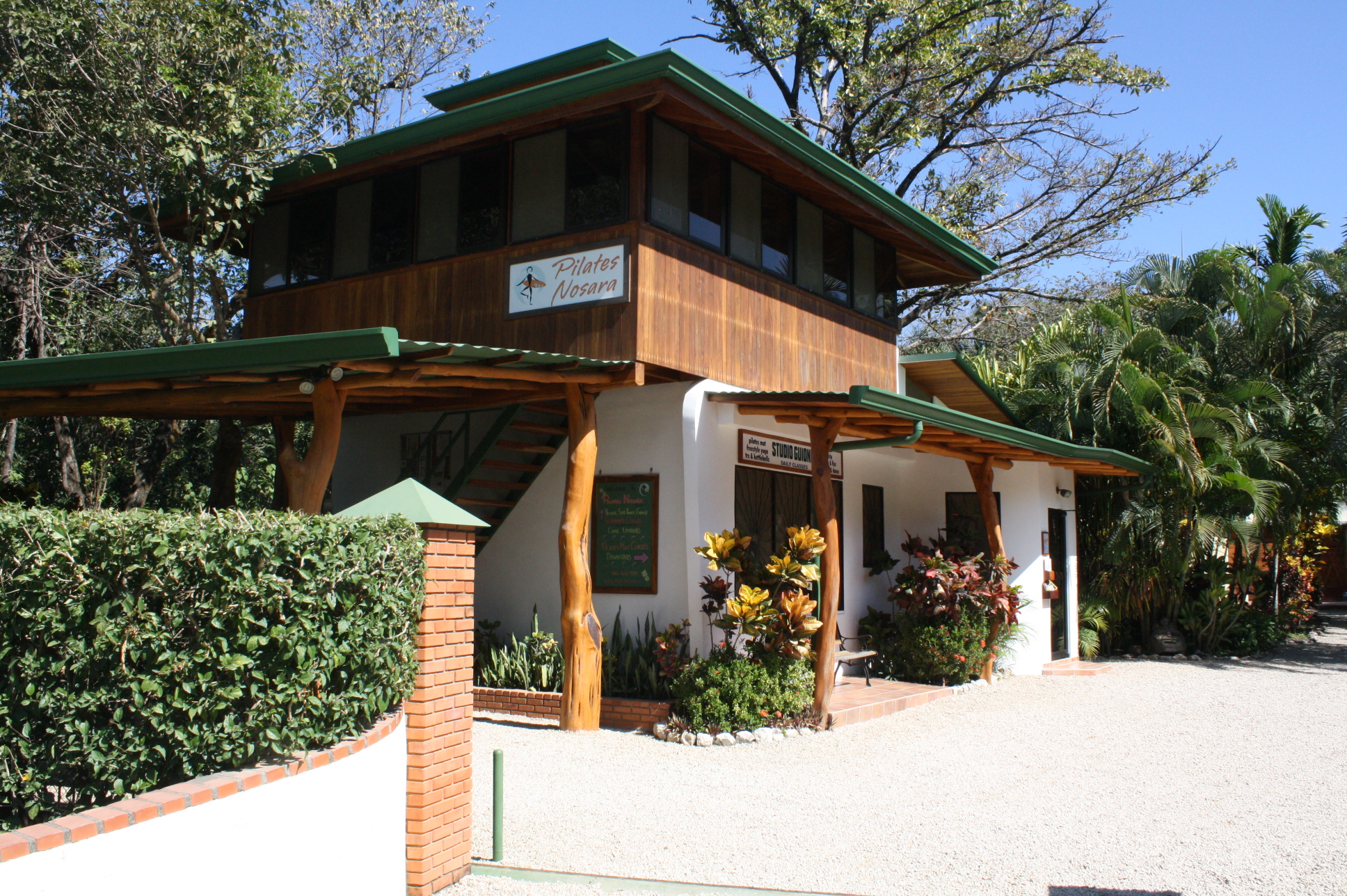
Nosara Yoga Institute 

Nosara Yoga Institute

Nosara Yoga Institute

Nosara Yoga Institute

Nosara Yoga Institute

A world-renowed yoga institute that hosts teacher trainings.

The classes are held in a treetop studio, and yes, it’s exactly what it sounds like. The first time I took a class there (It was a sunset flow class) was also the first time I saw monkeys! You walk through the jungle to get to the institute. I love this studio because of how soothing it is to be eye-level with the tops of trees and how beautiful the surroundings are. It´s one of the most serene places I´ve ever been. They mostly have hatha flow classes. Drop-in classes are $10.

*Personal bias: This is my favorite studio in Guiones.

The Healing Centre at Harmony Hotel

The juice bar at the Harmony Hotel

The juice bar at the Harmony Hotel

Another beautiful outdoor space. The Harmony Hotel is a beautiful space to relax in general. They have huts nestled within the jungle and a wonderful juice bar. They have a variety of classes: kundalini, vinyasa, sandy feet on the beach. I tried aerial silk yoga and acro yoga for the first time here. Most classes have a drop-in rate of $12.

Yoga House

Yoga House

Yoga House

There´s an indoor and outdoor practice space. For the month of January they had a free lecture series on Monday nights sponsered by Blue Spirit’s Omega Series. They mostly have flow and restorative classes. There was a community Kundalini class on Sundays. The drop-in rate is $12.

Heart of Guiones Wellness Center

Wellness Center

Across from Tica Massage. On the same road as Casa Tucan. They offer a free community pilates class on Saturdays. I tried Ashtanga yoga here with Laura Waite and fell in love with the practice.

Blue Spirit, a hotel for yoga retreats, is also located in Guiones.

And now on to lodging:

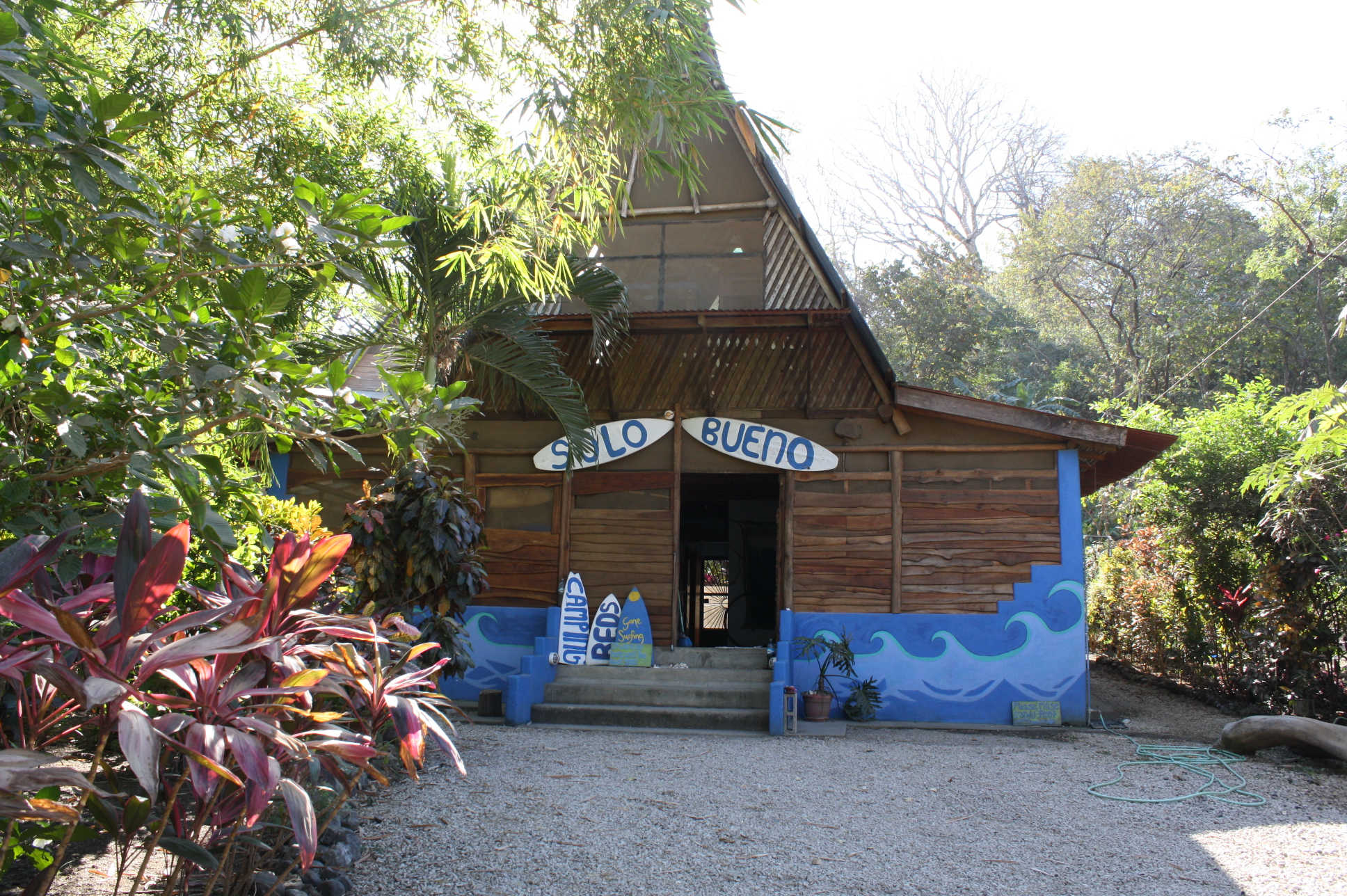
Solo Bueno Hostel:

Solo Bueno

In Espanol this translates to only good. This place is known as a surf hostel. If you look around you’ll notice that many things are made out of broken surfboards.

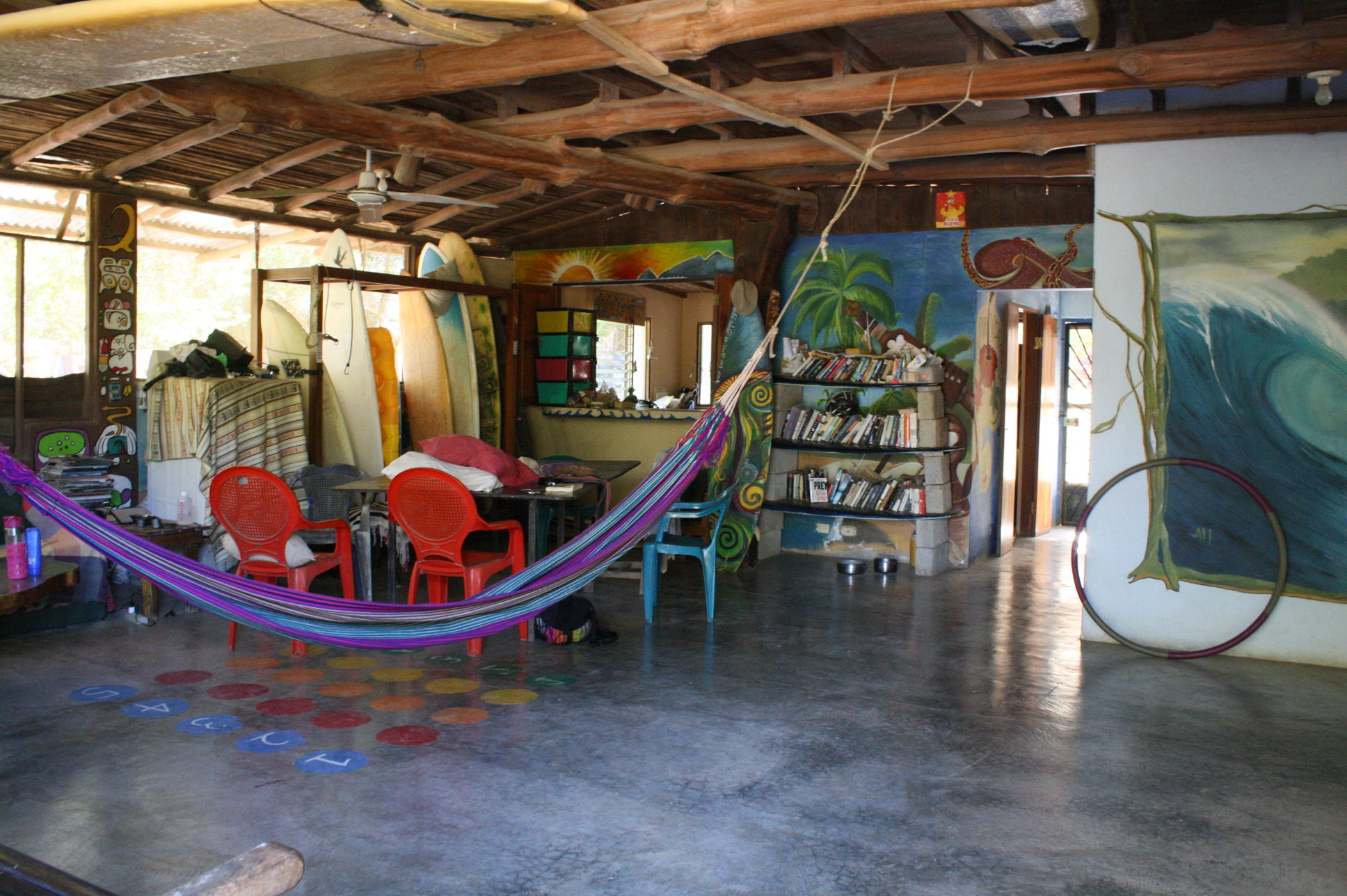
Solo Bueno Common Room

Solo Bueno Common Room

When you walk in the front door there’s a common room with two hammocks, a couch, a table. There’s a communal kitchen with access to a fridge and applicances. There are cubbies to keep your personal food. There are lockers. There’s one room downstairs with three beds and an open room upstairs with all the other beds.

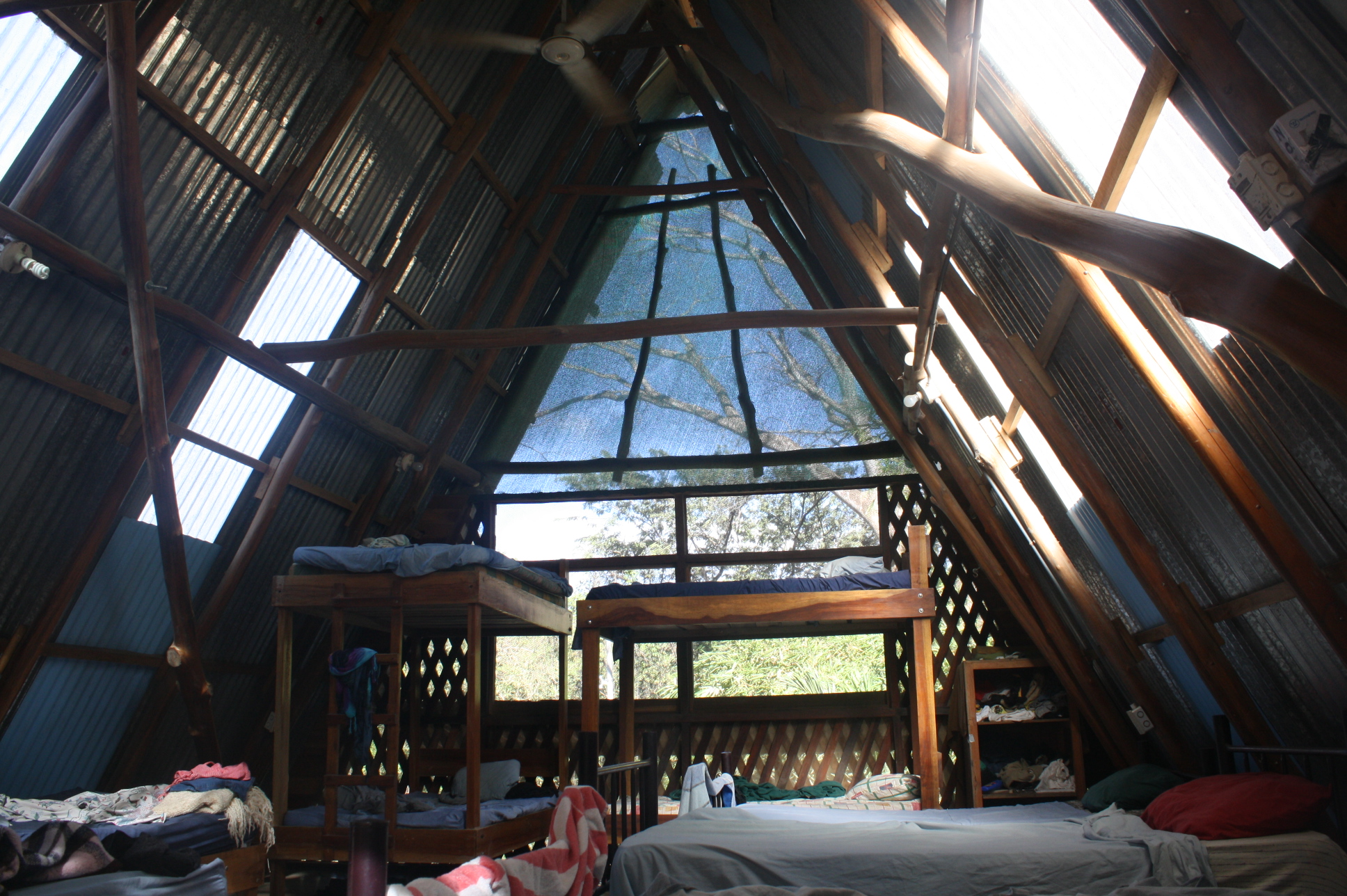
Upstairs room

Upstairs room

A bed is $14/night, camping is $10/night. If you stay for a week you get a reduced rate of $13 or $9/night. Because of the size, this place feels much homey-er than most hostels I have stayed at.

A few other inexpensive places to stay in Guiones:

4 You Hostal

Nosara Beach Hostel

Kaya Sol

The Gilded Iguana

Random Tidbits about Guiones:

With most of the toilets in Guiones and most parts of Costa Rica, you have to dispose toilet paper in a wastebasket. You can’t flush anything else down the toilet because of fragile jungle septic systems.

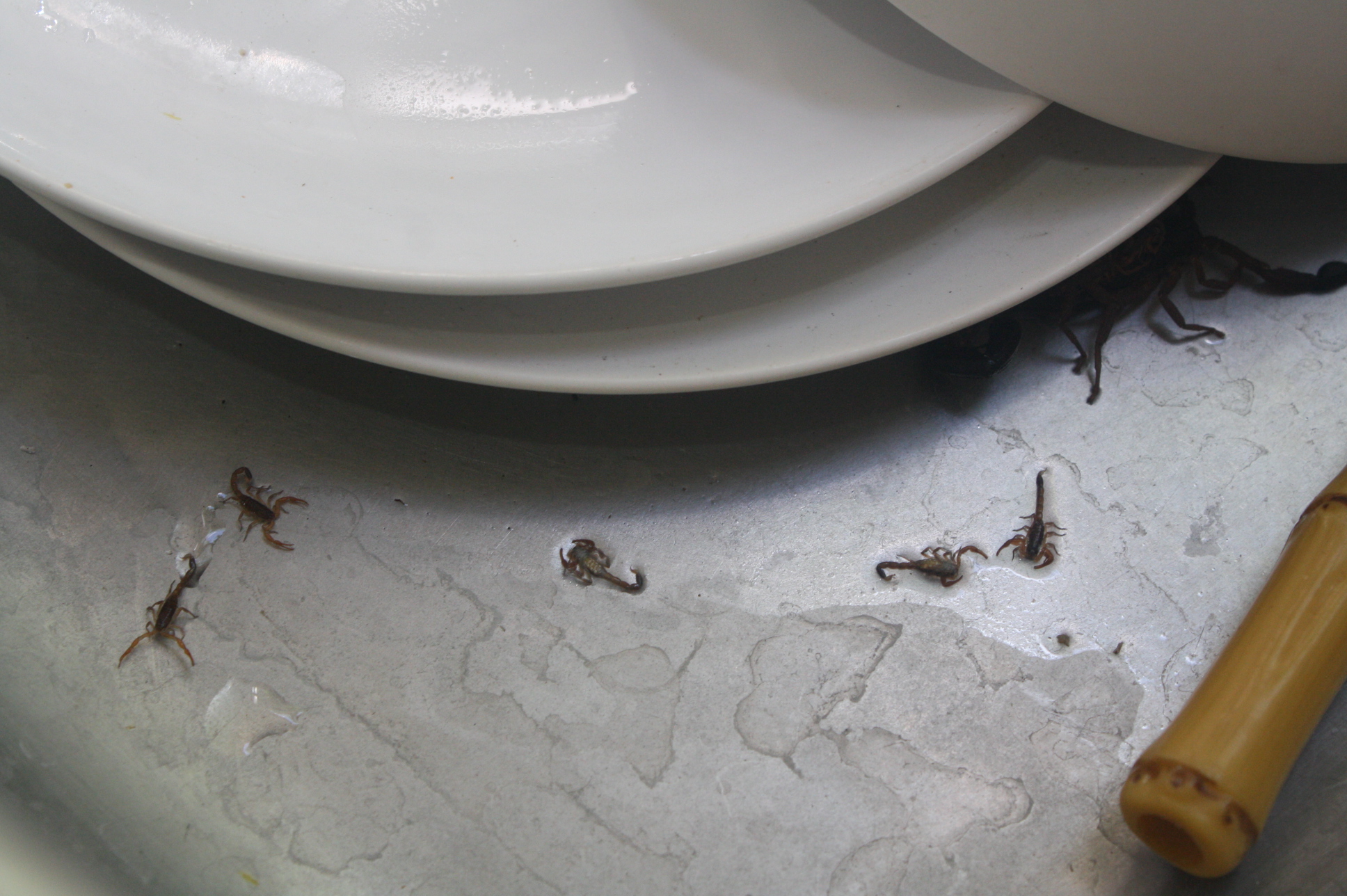
Keep an eye out for scorpions and snakes.

This family was in my friend´s sink.

This family was in my friend´s sink.

Nicaraguans walk the beach selling pottery, but they won´t bother you if you´re not interested. Other craftsmen set up tables outside the section of the beach by town mainly selling jewelry. But you really need to be aware of swindlers like this one:

Fin, the best jewelry maker in town.

Fin, the best jewelry maker in town.

Earth Jam Festival at Plymouth State University

Over the weekend my friends and I roadtripped to central New Hampshire for Plymouth State University’s Earth Jam Festival.

We lucked out with a sunny Saturday with temperatures in the 50s-60s. (It was snowing when we drove up.)

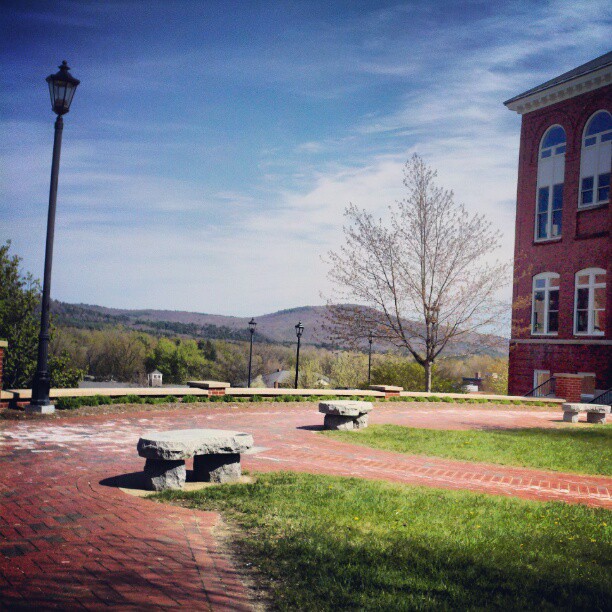
PSU is wedged between one of the most beautiful parts of the East Coast: the White Mountains and NH’s lake region.

From campus you can see the White Mountains.

Plymouth is a quaint college town with a down home New England feel. Boutiques, a bookstore, an artisans’ co-op, a few pizzerias and bakeries dotted Main Street, which stretched for maybe a mile or two.

One of my favorite paintings at Artistic Roots. Artist: Fred Nold

The artisans’ co-op, Artistic Roots, was my favorite shop. Local artists display and sell their work there and split working time.

I love the feeling of exploring a town for the first time, of aimlessly wandering into shops and learning the character of a place and its people. I love talking to locals about the city they live in and what the place means to them.

After exploring town we went to campus for the festival. With an undergrad population of 4,3000, PSU has a comfortable small town feel. Aesthetically, it’s the kind of place with that distinctive classic New England look. But what made PSU special was the lack of pristineness. It was aged and beautiful but not so kept up that it appeared stiff. The grass was played on and lived in; some buildings were washed out and faded; vines clung to some walls.

Earth Jam is an annual free event hosted by Common Ground, a student environmental and social justice organization.

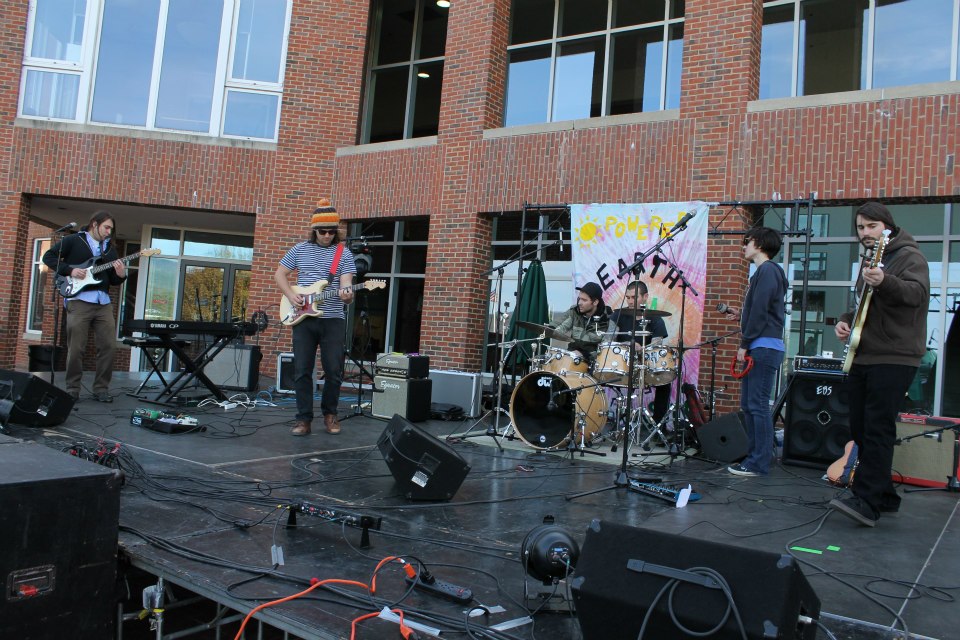
Hula hooping, slack lining, face painting, tie-dying, live music playing– that’s what sunny days are made of. Earth Jam consisted of those activities and more from noon till 11 p.m.

It felt so good to be a part of a festival again even if it was a small one day event. As I hula hooped barefoot, I grinned, knowing that festival season and happy days are just around the corner.

The stage ran on solar energy.

NJ band Indian Princess

While I was at the artisans’ co-op, I had a conversation with one of the artists about appreciation and priorities. We talked about her proximity to the White Mountains and how often she actually hikes. We agreed that nature nourishes us and spending time outside feeds our souls, yet we often get so caught up in other things that we forget what’s most important. We forget to take the time to really look around us and realize our surroundings. Why do we do this? Do we get so used to our realities that we forget to take a breath and look around?

Our conversation sparked some questions that I wanted to share with you all and think about myself:

What are your priorities? Where does nature and appreciating the Earth stand on this list?

What natural surroundings (forests, mountains, lakes, etc.) are around your home? How often do you take time to explore these places and appreciate them?

What makes you feel the most nourished, happy, whole?

How can you incorporate these activities (the nourishing, happy ones) more into your everyday life? Is there anything you can cut out of your world/spend less time on so you can spend more time doing what you love?

Feel free to share your responses in the comments section. I’ll be thinking about the questions as well and possibly posting another post with my answers.

Cheers to a continuous blooming and awakening into a nourished, happy, and whole life…for all of us.

Patagonia: Hiking to Heaven in El Chaltén

Getting outside brings out the best of what’s inside you. When I’m surrounded by nothing but mountains, trees, and sky, I can’t help but feel like I’m more a part of the Earth. When I hike, I hike to be outside, to be captivated by nature, to experience the natural rhythm of life, to learn how to be more in rhythm with this rhythm, and to learn how to listen to the silence and sounds that are already there without me.

This wonderful mass of the universe that we live on is already moving, breathing, living, and functioning on its own, without us. To be able to experience that buzz of life without interruption and to really feel like a part of it all. That is why I go hiking. I experienced that and more the day we hiked the Laguna de los Tres route in Chaltén.

Our first viewpoint: Laguna Piedras Blancas

With our Backroads group we started the hike around 9 a.m. Four of us finished the hike around 9 p.m., completing a 12-hour hiking day, encompassing 13.4 miles while summiting a 4,000 foot peak. The day, exhilarating, overwhelming, and exhausting, was one of the best hiking days I’ve ever had.

Like almost all of the days on our trip, every element of the weather came together to be the perfect formula for a hike. The sky was clear; there was no wind; and the air wasn’t too warm or too cold (temperature in mid-50s to mid-60s). But don’t be fooled by this too-good-to-be-true weather report.

Travel Tip: With Patagonia weather, you never know what you’re going to get. Be prepared (both mentally and gear-wise) for high winds, frequent and unpredictable showers (rain or snow), and intense sunshine at any time of the year.

We hiked through forests, fields, mountains, and stopped along rivers and lakes. One minute we were enclosed by tree branches with only glimpses of sky and peaks. The next we were walking into a wide open field, sky stretching all around us, with low, scrubby bushes at our feet. The next we stood on top of a mountain with snow-capped peaks staring back at us. With each step, we experienced such vivid contrasts.

Laguna de los Tres, the lagoon of the three, is known as the best viewing spot for the Fitz Roy mountain range. De Los Tres refers to the three highest peaks you can see from the lake’s shore: Fitz Roy (11,073 ft), Poincenot (9,849 ft), and Saint-Exupéry (8,392 ft).

                  The peak above the man in the gray is Saint-Exupéry and then to the right there’s Rafael, Poincenot and Fitz Roy.

Fitz Roy is the highest spire in Argentine Patagonia. Even though it’s less than half the size of the world’s greatest peaks, it’s one of the hardest peaks to climb. The difficulty is part challenge and part unpredictable weather conditions. The area has also been pretty inaccesible until the more recent developments of Chaltén. Hundreds of people may reach the summit of Mount Everest in a day, but Monte Fitz Roy may only be successfully ascended once a year.

Saint-Exupéry is named in memory of Antoine de Saint Exupéry, a French aviator who delivered mail to Patagonia by plane in the early 1930s. He’s also the writer of the best-seller, “Le Petit Prince” (The Little Prince). He disappeared while flying over the northern part of Corsica. His death remains a mystery.

Poincenot is named after Jacques Poincenot, a member of the French expedition set to conquer Fitz Roy in 1952. While attempting to cross the Fitz Roy river, Jacques fell in and died. His team carried on and named the peak in his memory.

After about 5 miles of hiking through the forest and fields, we decided to power on for the climb to Laugna de los Tres. Up until this point the views had already been incredible. But it was about to get even better.

While mapping out the trail in the dirt with his hiking pole before our final steep climb, David, our local guide, said, “You’re going to arrive at a place where the mountains make you say, ‘Wow.’ If you don’t say that then you haven’t arrived.”

Laguna de los Tres: Our ‘wow’ viewpoint from the top. I think we arrived.

Once we reached the top we stopped to eat lunch. I wanted to stay there forever. Not only were the highest peaks in front of us, but behind us more mountains rolled on, fields spread, and the river snaked into the horizon. We were on top of the world. There’s nothing more rewarding than a view like that after a long hike and a steep climb.

Avalanche ring

As soon as we finished eating lunch, an avalanche erupted into the water. It was such a powerful booming noise. We just happened to be at the right place at the right time to hear it.

When we started to walk down one of the peaks, a cloud shaped like a halo formed over the peak in front of us. Once again we were in the right place at the right time. If you take the time and effort, the Earth will reveal its magnificence to you. You will be rewarded in ways you can’t even imagine.

Cloud halo

To know that this will always be here- this all knowingness that the forest already holds, that the mountains already whisper, shakes me to the core in the best possible way. I’ve always felt another kind of spiritual presence in the woods and I could never really relate to that feeling with mountains, but on this day I did. Even just staring at them in the distance. Being surrounded by nothing else.

The rest of the Backroads group hiked ahead and David stayed with my Aunt, Susan and I.  For the hike back, David was our personal tour guide. He stopped us every five minutes to teach us about our surroundings—why the clouds were shaped like they were, how the rocks formed, what happened to the trees, etc, etc. It was such an incredible way to experience hiking in Patagonia. David was so generous with his time, so extremely knowledgeable and helpful. He’s also an excellent photographer. You can view his pictures here.

We hiked at our own pace, taking our time to really absorb everything. Aside from taking pictures of every single thing I saw, I wanted to fully absorb my surroundings. I wanted to really look at things: pebble-sized rocks, skinny trees, huge mountains. I wanted to understand my surroundings as best as I could. I like to take my time, especially when I hike.

To observe is to truly be in the moment.

Some of our views on the hike back:

Another view of Fitz Roy

Even the rocks in Patagonia are happy.

Laguna Capri

It’s hard not to look back when things are this beautiful.

On our final descent, the sun started to set over Chalten. This picture does no justice.

There’s a lot of useful information online about this hike if you’d like to take the same route.

How we did it:

From Chaltén shuttle 20 minutes to Hosteria El Pilar, a hotel 17 kilometers (10 miles) from town. Take the trail to the right of the Hosteria, keeping the river on the right. Continue straight; follow sign for Rio Blanco. After about 5 km you’ll reach a T-intersection. Turn right to pass through Campamento Poincenet. Turn left to go back to Chaltén. If continuing on, follow signs for Laguna de los Tres and Campamento Rio Blanco.

The hike back:

After climbing down the mountain, pass through a flat section of wetlands and wooden boardwalks. Turn LEFT at T-intersection toward El Chaltén and Laguna Capri. At next intersection veer RIGHT uphill and turn RIGHT toward Laguna Capri. Continue straight through Campamento Capri and follow signs for Chaltén.

And of course after the hike, don’t forget to stop in at La Cerveceria, a local microbrewery. A very rewarding stop after a full day of hiking.

Happy Trails!

Patagonia: El Chaltén: The Heart of Patagonia

You know how certain places give off a certain feeling and in return evoke a certain feeling within you? El Chaltén is one of those places. It’s a town that completely captures you. It’s a certain kind of paradise.

El Chaltén is a small village set within a valley at the base of the Cerro Fitz Roy and Cerro Torre mountain ranges, the two most iconic mountain ranges in Argentina. Known as the unofficial national trekking capital of Argentina, the town is a part of the Parque Nacional Los Glaciares.

El Chaltén formally became a town in 1985 when a territorial dispute between Argentina and Chile intensified. To fully claim the land the clever Argentines built houses and started living there. When it was time to make a decision, Argentina got the land because they already occupied it.

Before Chaltén was an official town, early pioneers inhabited the area. Andreas Madsen, one of the most well known pioneers in Chaltén, came to Argentina from Denmark in the early 1900s. When we hiked in Chaltén we saw his house in the distance and our guide told us the story.

Andreas Madsen worked as a cook on an expedition with the famous Argentine explorer, Perito Moreno. So enamored by the natural landscape he built a farm, Estancia Fitz Roy, and settled there with his house facing the mountain. He returned to Denmark to find the love of his life, found her, married her and brought her back to Patagonia. They raised their four children (one named Fitz Roy) on the farm. They were truly out in the middle of nowhere, living off the land and surviving through Patagonia’s harshest conditions.

                                “Patagonia!” he cried. “She is a hard mistress. She casts her spell.

                               An enchantress! She folds you in her arms and never lets go.” 

I found this picture of the Madsen house online.

Andreas wrote two books: “Patagonia Vieja (Old Patagonia)” and “Cazando Pumas (Hunting Pumas)” which I’d love to read, but I can’t seem to find much information about online.

I absolutely loved everything about El Chaltén. Similar to saying just Calafate, you can refer to it as Chaltén. The name is prononuced exactly as it looks. Chal and then ten.

Chalten From Above

Chaltén felt much more real to me than Calafate. There was no center of town or shops overdone with souvenirs. There were no supermercados, just a few grocery markets. Most of the people there were there to climb, hike or explore the outdoors. Chaltén felt the way Patagonia should feel.

This slideshow requires JavaScript.

You know when you meet someone that listens so intently and truly cares about what you have to say, someone that isn’t afraid to express their feelings, someone that touches your life just by being present, someone that is so refreshing to meet, someone that is completely real. Chaltén is that person. Chaltén is genuine, down to earth, simple and peaceful. When it’s located in such a beautiful part of the world and inside a national park, it’s hard for a place not to posses those characteristics.

There’s something about mountains that bring serenity to a place, to people who live there. Chaltén rests comfortably at the mountains’ feet, like a child being watched over by a grandfather. The mountains exude their wisdom and patience down to Chaltén. Can you imagine being invigorated with this every single day?

Pondering the possibilities of the day by gazing out our hotel room’s window.

Chaltén is one of those places that still belongs completely to the Earth. Some streets are paved; some streets are just mud and gravel. I can’t find a reliable source online, but it seems that the town’s permanent population is generally around 1,000 people, maybe less. With a lot of the houses it was hard to tell what stage the construction was in. I couldn’t tell whether they were abandon or being fixed up. There isn’t an efficient home telephone network or cell phone service; internet connection is slow and expensive. There are no banks or money exchange places. I think there’s one ATM. No mayor, churches, newspapers. Because these general distractions from life are eliminated in Chaltén, you feel even more plugged in with the natural environment. You feel incredibly connected to nature.

Tips: There is no fee to go hiking or climbing in the park. If you plan on climbing you just need to register with the park service before you go.

The name Chaltén derives from the native Tehuelche’s word which means “smoking mountain.” The Tehuelches called the Fitz Roy mountain, “Chaltén” because there was always a cloud of smoke around its peak. They thought it could even be a volcano.

Perito Moreno renamed the mountain Fitz Roy in honor of Robert Fitz Roy, the captain of the Beagle, Darwin’s ship. But the name for the town stuck.

Chaltén is about a three hour bus ride from Calafate. Before the airport was built in Calafate in 2000 the only way to Chaltén was a ten hour bus ride from Rio Gallegos.

We spent three nights in Chaltén at the hotel Los Cerros. We spent two and a half days hiking in the national park. Those days were some of the most incredible days of my whole life. Stay tuned for another post that includes jaw-dropping pictures of the days spent hiking in Chaltén.

I left piece of my heart in Chaltén and will definitely make my way back someday.

Our hotel in Chaltén

View from our room